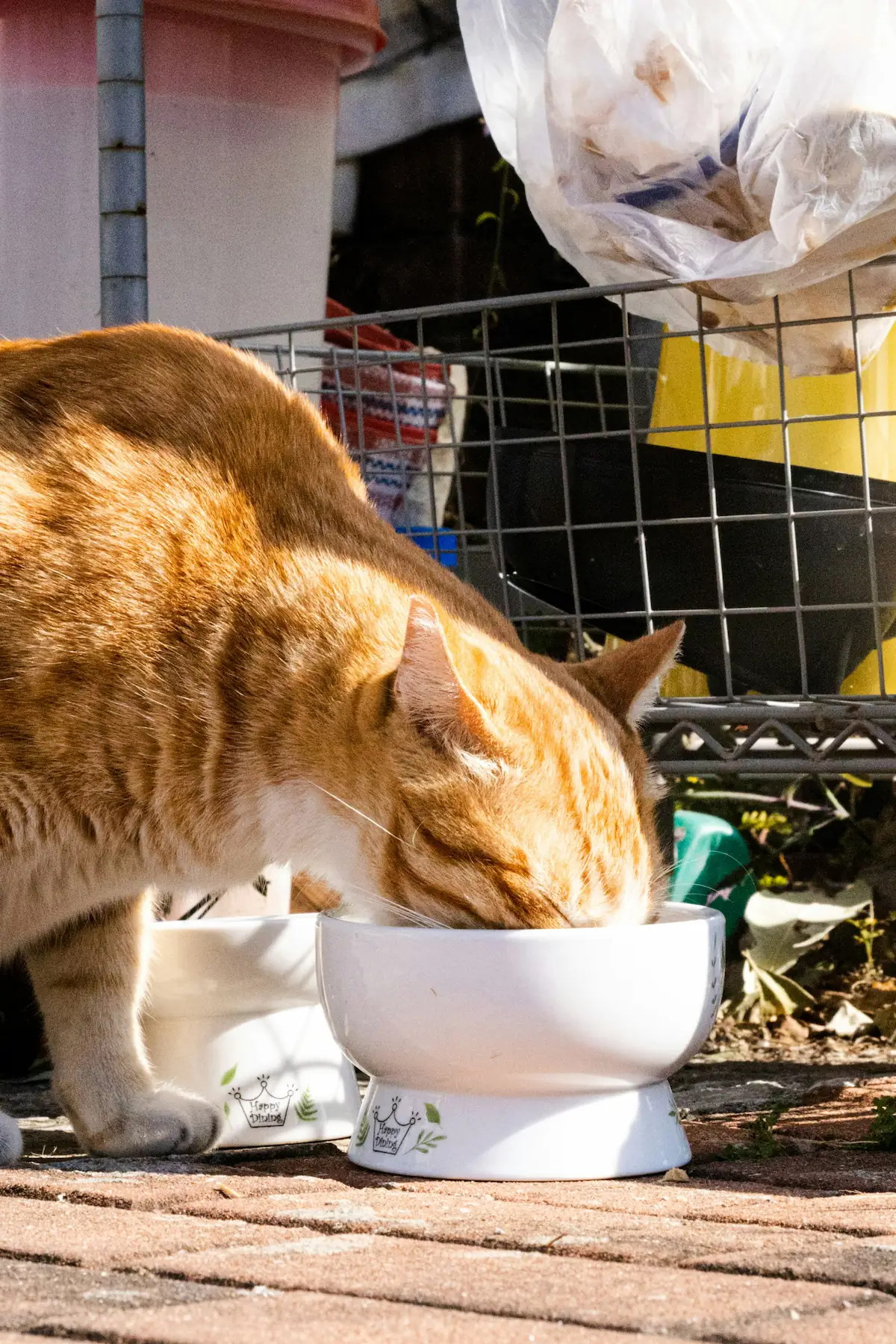
A senior diet for cats can feel confusing because older cats do not all age in the same way. Some cats keep eating their usual food happily for years, while others become fussier, lose weight, gain weight, drink differently, or seem less comfortable at mealtimes.
This does not mean you need to change everything at once. For many senior cats, the most helpful starting point is to watch appetite, weight, drinking, toileting, mouth comfort and routine, then speak to your vet before making major diet changes.
Disclaimer: This article is for educational purposes only and is not a substitute for professional veterinary advice. If your cat is losing weight, eating less, vomiting frequently, drinking differently, or acting unlike themselves, speak to your vet.
Key takeaway: A senior diet for cats is not about finding one perfect food. It is about watching appetite, weight, hydration, comfort and routine, then speaking to your vet before making major diet changes, especially if your cat is losing weight, eating less, drinking differently or has a health condition.
Quick answer: what is a good senior diet for cats?
A good senior diet for cats is one that supports your cat’s appetite, weight, hydration, comfort and overall health. Some older cats do well on their usual food, while others may need a different texture, senior-labelled food, or vet-guided diet changes.
There is no single best diet for every senior cat. If your cat is eating less, losing weight, drinking differently, vomiting, having diarrhoea, or acting unlike themselves, speak to your vet before making major food changes.
Does a senior cat need a different diet?
Not always. Some older cats continue to do well on their usual food, especially if they are eating normally, maintaining a steady weight, drinking as expected and seeming comfortable.
Other cats may benefit from a senior-labelled food, a different texture, a more predictable feeding routine, or a vet-guided diet change. Age matters, but it is not the only factor.
When thinking about food for an older cat, it helps to consider:
- appetite
- weight changes
- drinking habits
- dental or mouth comfort
- vomiting or diarrhoea
- litter tray changes
- known health conditions
- whether your cat still enjoys their food
Avoid sudden food changes unless your vet has advised otherwise. Older cats can be sensitive to changes in flavour, texture, smell and routine, so it is usually better to make diet decisions calmly and with the bigger picture in mind.
Senior diet for cats at a glance
If you are not sure which food, appetite, weight or hydration issue fits your cat best, this quick guide can help you choose the most useful next article.
| What you are wondering | Why it matters | Helpful next guide |
|---|---|---|
| How do I choose senior cat food? | Age, weight, appetite and health all matter | Senior cat food |
| How should I feed an older cat day to day? | Routine can help older cats feel settled | Feeding an Older Cat |
| Why is my senior cat eating less? | Appetite changes should be tracked, especially if repeated | Senior cat appetite changes |
| What if my senior cat is not eating? | Missed meals in older cats should be taken seriously | Senior cat not eating |
| Why is my senior cat losing weight? | Weight loss can be gradual and easy to miss | Senior Cat Weight Loss |
| Why is my senior cat gaining weight? | Activity, portions and health changes can all affect weight | Senior cat weight gain |
| How can I track weight at home? | Trends are more useful than guessing by eye | Senior Cat Weight Tracking |
| How do I weigh my cat safely at home? | A simple routine can make weight changes easier to notice | How to Weigh Your Cat at Home |
| Is my senior cat drinking enough? | Hydration and food moisture can affect what owners notice | Senior Cat Water Bowl Placement |
| Why is my senior cat drinking more? | Drinking changes are worth tracking alongside appetite and weight | Senior cat drinking more |
| Why is my older cat drinking less? | Lower drinking can be harder to spot | Senior Cat Not Drinking |
| Could mouth discomfort affect eating? | Teeth, gums and mouth changes can alter how cats eat | Senior Cat Dental Health |
| Could a health condition affect diet choices? | Medical conditions need vet guidance before diet changes | Diabetes in Older Cats |
What changes with feeding as cats get older?
Feeding can change in small ways as cats age. Some cats become slower eaters. Some become more sensitive to food texture, smell or temperature. Others may still seem enthusiastic at the bowl but gradually lose or gain weight.
A change in feeding does not automatically mean something serious is wrong. But it is worth paying attention when the pattern is new, repeated, or happening alongside other changes.
You may notice:
- your cat eats smaller amounts
- meals take longer
- your cat walks away and comes back later
- food is dropped from the mouth
- your cat seems fussier about texture or smell
- weight changes even though meals look similar
- drinking or litter tray habits change too
The safest approach is to track what is happening rather than guessing. How much food is offered is not always the same as how much your cat actually eats.
Wet food, dry food and senior cat food
There is no single best food type for every senior cat.
Wet food may help some cats take in more moisture and can be easier for some older cats to manage. Dry food may suit some routines and some cats continue to enjoy it. Some cats do well with a mix of wet and dry food.
The right choice depends on your cat’s health, appetite, teeth, preferences, weight and vet guidance.
For a more focused guide, see Senior cat food.
Try not to judge food only by the word “senior” on the label. A senior-labelled food may be suitable for some older cats, but your cat’s overall condition matters more than marketing wording alone.
Appetite changes, eating less and not eating
Appetite changes can be one of the first things owners notice in an older cat. A senior cat may eat less because of routine changes, stress, mouth discomfort, pain, illness, or changes in smell and taste.
You do not need to diagnose the cause yourself. What matters is noticing the pattern.
Useful things to track include:
- when the appetite change started
- whether your cat is eating less or refusing food completely
- whether favourite foods are still accepted
- whether your cat approaches the bowl but walks away
- whether weight, drinking, toileting or behaviour has changed too
For a broader look at appetite patterns, see Senior cat appetite changes.
If your older cat is not eating, see Senior cat not eating.
An older cat eating much less, missing meals, or refusing food should not be watched for too long without veterinary advice.
Weight loss, weight gain and tracking trends
Weight changes in senior cats can be easy to miss. A long-haired cat may look the same for a while, and gradual changes can be hard to spot when you see your cat every day.
Both weight loss and weight gain are worth tracking.
Weight loss may show as:
- a bonier spine, hips or shoulders
- a looser collar
- reduced muscle over the back legs
- eating normally but looking thinner
- eating less and becoming lighter
Weight gain may show as:
- a rounder body shape
- less interest in movement
- difficulty grooming certain areas
- heavier landing when jumping down
- changes in portion sizes or treat habits
For more detailed guidance, see Senior Cat Weight Loss and Senior cat weight gain.
It can also help to track weight trends over time. See Senior Cat Weight Tracking and How to Weigh Your Cat at Home.
The aim is not to obsess over every small change. It is to spot patterns early enough to have a clearer conversation with your vet.
Hydration and drinking changes
Hydration is closely linked with diet, especially in older cats. Some cats get part of their moisture from wet food, while others rely more heavily on water bowls or fountains.
Drinking changes are worth noticing because they can be easy to overlook.
You may notice:
- the water bowl empties faster
- your cat visits the bowl more often
- urine clumps are larger
- your cat seems less interested in water
- your cat drinks from unusual places
- appetite and drinking change together
For practical guidance on bowls, fountains, placement and food moisture, see Senior Cat Water Bowl Placement: Bowls, Fountains and What Actually Helps Older Cats Drink.
If your cat is drinking more than usual, see Senior cat drinking more.
If your cat seems to be drinking less, see Senior Cat Not Drinking.
If you are worried about signs of dehydration, see senior cat dehydration.
Do not try to treat hydration concerns at home without veterinary guidance. The safest step is to notice what has changed and speak to your vet if the change is new, repeated, or paired with appetite, weight, toileting or behaviour changes.
Dental comfort and eating changes
Mouth comfort can affect how an older cat eats. Some cats still approach the bowl but chew differently, drop food, prefer softer textures, back away from meals, drool, or develop bad breath.
These changes can be mistaken for fussiness. Sometimes a cat’s food preference really does change with age, but eating changes can also be linked with teeth, gums or mouth discomfort.
For a broader guide to teeth, gums, bad breath, drooling and mouth changes, see Senior Cat Dental Health.
Speak to your vet if eating changes are new, repeated, or paired with signs such as drooling, bad breath, pawing at the mouth, weight loss, or seeming uncomfortable around food.
Health conditions and diet changes
Some health conditions can affect food choices, so it is best to speak to your vet before making major diet changes, especially if your cat has a known condition or new symptoms.
This can include situations where a cat has:
- kidney disease concerns
- diabetes concerns
- ongoing weight loss
- repeated vomiting or diarrhoea
- dental or mouth discomfort
- appetite and drinking changes together
This article is not a guide to medical diets. If your cat has a diagnosed condition, your vet is the right person to advise on food choices.
For related owner-observation guides, see senior cat kidney disease early signs and Diabetes in Older Cats.
What to track before changing food
Before changing your senior cat’s food, it helps to gather a few simple notes. This can make a vet conversation clearer and reduce guesswork.
You can copy these points into a note on your phone before speaking to your vet.
Senior cat diet change checklist
Track:
- current food and amount offered
- what your cat actually eats
- appetite changes
- weight trend
- drinking changes
- vomiting or diarrhoea
- litter tray changes
- chewing, drooling or bad breath
- energy, hiding or behaviour changes
- any recent food or routine changes
- any recent vet advice or known health conditions
You do not need perfect records. Even a few notes over several days can help you see whether this is a one-off change or a pattern.
When to speak to your vet about your senior cat’s diet
Speak to your vet if:
- your cat is eating much less or not eating
- weight loss is ongoing
- drinking changes are clear or repeated
- vomiting or diarrhoea is repeated
- your cat seems painful, weak, withdrawn or unlike themselves
- you are considering a major diet change
- your cat has kidney disease, diabetes or another known condition
- appetite, weight, drinking and toileting changes appear together
It is especially important not to assume that eating less, losing weight, or drinking differently is “just old age”. These changes can have many possible causes, and your vet can help you decide what to check next.
FAQs
Do senior cats need special senior cat food?
Not always. Some older cats do well on their usual food, while others may benefit from a senior-labelled food depending on weight, appetite, health and vet guidance. Age alone should not be the only reason to change food.
Is wet food better for senior cats?
Not always. Wet food may help some cats take in more moisture, while dry food may suit some routines. Some cats do well with a mix. The best choice depends on the individual cat, their health, and your vet’s guidance.
Why is my senior cat eating less?
A senior cat may eat less for many reasons, including routine changes, stress, mouth comfort, discomfort or feeling unwell. If eating less is new, repeated, or paired with weight loss or behaviour change, speak to your vet.
Why is my senior cat losing weight but still eating?
Weight loss can happen gradually and may not always match what owners see at the bowl. Some cats may appear to eat normally while still losing weight. Ongoing weight loss is worth discussing with your vet.
Should I change my cat’s food as they get older?
Not automatically. A food change may help some cats, but it is best to consider appetite, weight, hydration, health and vet advice first. Avoid sudden changes unless your vet has told you otherwise.
When should I speak to my vet about my senior cat’s diet?
Speak to your vet if your cat is eating less, losing weight, drinking differently, vomiting, having diarrhoea, seeming unwell, or if you are considering a major diet change.
Final thoughts
There is no single perfect senior diet for every cat. Some older cats do well on familiar food, while others need changes because of appetite, weight, hydration, mouth comfort or health.
The most useful thing you can do is watch the pattern. Notice what your cat eats, how their weight changes, how they drink, how they use the litter tray, and whether their behaviour feels different.
You do not need to panic or change everything at once. Calm tracking, a steady routine and timely vet guidance are safer than guessing or making sudden diet changes.
External references
International Cat Care — Should I feed my cat wet or dry food?