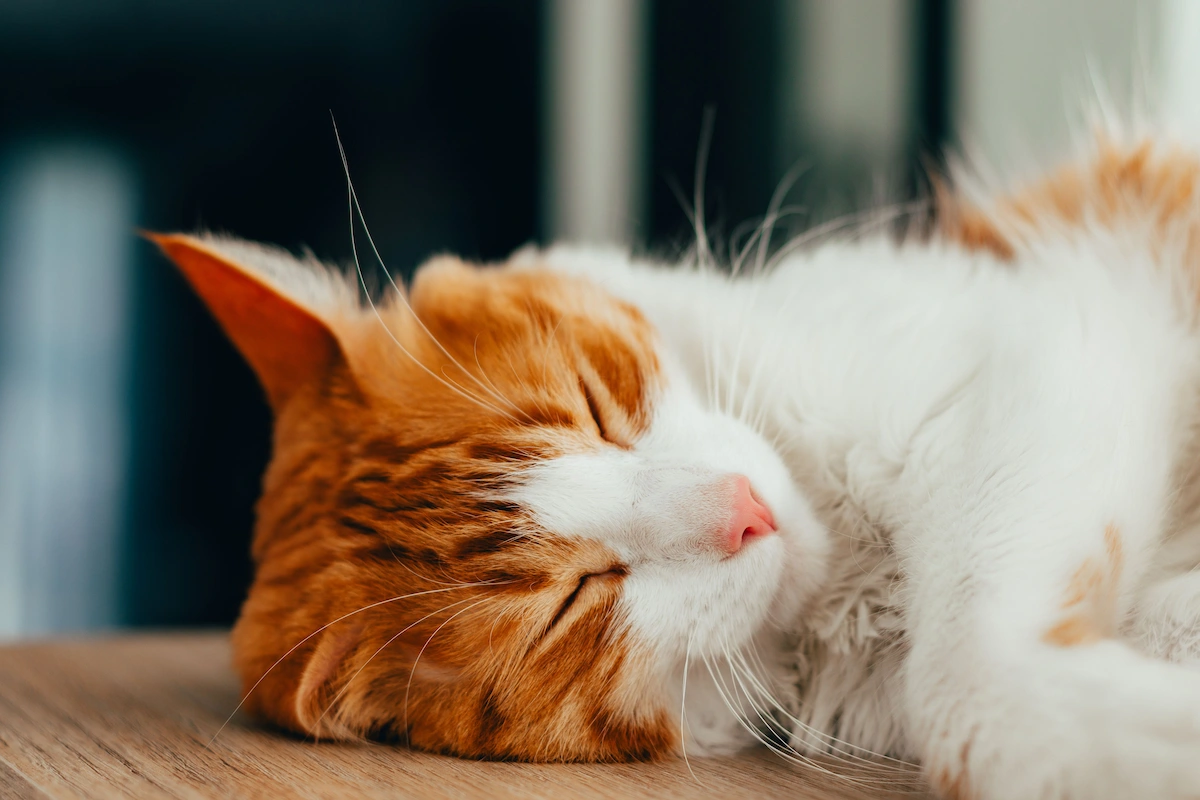
Noticing senior cat breathing changes during sleep can be unsettling. Older cats often sleep for longer periods, so it is natural to notice small changes in their breathing, sounds, or sleeping position more than you used to.
Some changes may be mild and short-lived, especially during dreaming or when your cat is curled up in a certain position. But new, repeated, noisy, faster, or effortful breathing should not be brushed off as “just old age”.
Disclaimer: This article is for educational purposes only and is not a substitute for professional veterinary advice. If your cat is breathing with obvious effort, seems distressed, has open-mouth breathing, collapses, or you are worried they cannot breathe comfortably, seek veterinary advice promptly.
Key takeaway: Occasional soft snoring or small rhythm changes during sleep may be normal for some cats, but new, persistent, noisy, faster, or effortful breathing in a senior cat is worth mentioning to your vet.
Quick answer: are senior cat breathing changes during sleep normal?
Some variation can happen during deep sleep, dreaming or when your cat lies in a position that changes airflow slightly. Familiar, occasional soft snoring may also be normal if your cat is otherwise eating, moving and behaving as usual.
Pay closer attention when the breathing change is new, louder, faster, happening more often or linked with coughing, appetite changes, hiding, low energy or visible effort.
Breathing effort matters more than sound alone. Speak to your vet promptly if your cat appears to be working hard to breathe, breathes with their mouth open, seems distressed or cannot settle comfortably.
Why breathing can look different while a senior cat sleeps
Senior cats often sleep more deeply and for longer stretches. This gives owners more chances to notice things that may have been easy to miss before.
You may notice:
- a slightly different breathing rhythm during sleep
- soft snoring
- brief faster breathing during dreams
- louder breathing in certain positions
- small pauses or rhythm changes that settle quickly
Age can make you more aware of these changes, but age itself is not a diagnosis. A senior cat’s breathing may change for many reasons, including sleep position, weight changes, nasal congestion, stiffness, discomfort, or underlying health issues.
That does not mean every change is serious. It does mean new patterns are worth observing calmly and mentioning to your vet if they persist.
For broader age-related health context, you may also find our senior cat health guide helpful.
What normal sleeping breathing may look like
A relaxed sleeping cat usually looks comfortable. Their breathing should appear easy rather than forced.
Normal sleeping breathing may include:
- quiet chest movement
- a relaxed body position
- breathing that settles after a dream
- occasional soft snoring
- small rhythm changes while asleep
- waking normally and behaving as usual afterwards
The key comparison is your own cat’s normal pattern. A breathing sound that has always been mild and unchanged may be less concerning than a new sound that appears suddenly in an older cat.
Senior cat breathing changes during sleep: what to watch
Use this table as a calm observation guide. It is not a diagnostic checklist, but it can help you decide what to note before speaking to your vet.
| What you notice | What to note |
|---|---|
| Louder breathing | Is it new, occasional, or happening most nights? |
| Snoring | Is it soft and familiar, or new and louder? |
| Faster breathing | Does it settle quickly, or repeat when resting? |
| Uneven rhythm | Is it brief during dreaming, or frequent and unusual? |
| Belly movement | Is it gentle, or does breathing look like effort? |
| Waking during sleep | Does your cat seem uncomfortable or restless? |
| Open-mouth breathing | Seek veterinary advice promptly. |
If you are unsure whether your cat is breathing comfortably, it is safer to ask your vet than to wait and guess. Cornell Feline Health Center explains that cats with breathing difficulty may show signs such as rapid breathing, open-mouth breathing, coughing, or changes in posture.
Noisy breathing or snoring while asleep
Sleep breathing can sometimes sound noisier because of position or relaxed tissues. The more useful distinction is whether the sound is familiar and unchanged, or new and becoming more noticeable.
If snoring itself is the main change you are noticing, see our Do Cats Snore? guide for a closer look.
If the concern is a broader change in breathing rhythm, speed or effort during sleep, continue with the sections below.
Faster breathing while asleep
A brief spell of faster breathing during dreaming may settle quickly. Cats can twitch, move their paws, or breathe a little differently during active sleep.
The concern is stronger when faster breathing:
- happens repeatedly at rest
- continues when your cat is awake
- appears with visible effort
- is paired with coughing, weakness, hiding, appetite loss, or low energy
- is new for your cat
Try not to focus only on one moment. Look for a pattern. Is your cat breathing faster every time they sleep? Does it happen after mild activity? Does it stop when they change position? Does your cat seem comfortable or unsettled?
For a fuller guide, see fast breathing in a senior cat.
Breathing effort matters more than breathing sound
A cat can have noisy breathing and still look relaxed. Another cat may be quiet but clearly working harder to breathe.
Signs of breathing effort may include:
- obvious belly movement
- the chest or sides moving more than usual
- a stretched neck or unusual posture
- restlessness or inability to settle
- open-mouth breathing
- weakness or collapse
- gums or tongue that look blue, grey, or unusually pale
These signs should not be watched at home to “see how it goes”. The Royal Veterinary College notes that signs such as rapid breathing, open-mouth breathing, exaggerated chest or belly movement, blue gums, collapse, or being unable to settle can be linked with respiratory distress.
If breathing changes appear alongside other possible heart-related signs, our Senior Cat Heart Disease guide may help you understand the wider pattern to describe to your vet.
What to write down before speaking to your vet
A few simple notes can make the conversation easier.
Sleep breathing observation checklist
Before your appointment, write down:
- when you first noticed the change
- whether it happens every sleep, most nights, or only occasionally
- whether it also happens when your cat is awake
- whether the breathing sounds like snoring, wheezing, congestion, clicking, or is louder than usual
- whether your cat seems relaxed or uncomfortable
- whether the breathing settles after changing position
- whether there is coughing, sneezing, nasal discharge, appetite change, weight loss, hiding, weakness, or lower energy
- whether anything in the room has changed, such as dust, smoke, aerosols, fragrance, or new bedding
A short, calm video can also help your vet understand what you are seeing. Record only if you can do so without disturbing your cat.
Do not delay veterinary advice to get a video if your cat seems distressed or is struggling to breathe.
When to mention breathing changes during sleep to your vet
Not every mild sound is an emergency. But senior cats benefit from earlier conversations when something changes.
Mention it at a routine or booked check if:
- mild snoring is new but your cat is otherwise normal
- breathing sounds different over several nights
- the change seems linked to sleeping position
- your cat is eating, moving, and behaving normally, but you are noticing a pattern
Speak to your vet sooner if:
- breathing seems faster repeatedly at rest
- the change is new and persistent
- noisy breathing wakes your cat or interrupts sleep
- your cat is coughing, hiding, eating less, losing weight, or has lower energy
- you are not sure whether your cat is comfortable
Seek prompt veterinary advice if:
- your cat breathes with obvious effort
- your cat breathes with their mouth open
- your cat seems distressed, weak, collapsed, or unable to settle
- their gums or tongue look blue, grey, or unusually pale
- you are worried they cannot breathe comfortably
This is not about panic. It is about not dismissing a breathing change that may need professional assessment.
Final thoughts
A familiar soft snore or brief rhythm change during dreaming is not always a reason to worry. What matters more is whether the breathing pattern is new, repeated, faster, noisier or visibly effortful.
Notice whether the change settles, whether it also happens while your cat is awake and whether appetite, energy, coughing, hiding or behaviour have changed.
Speak to your vet when the pattern is new or persistent. Seek prompt veterinary advice if your cat breathes with obvious effort, uses their mouth to breathe, seems distressed, collapses or cannot settle comfortably.
FAQs
Is it normal for a senior cat to breathe differently while sleeping?
Small changes can happen during dreaming, deep sleep or certain sleeping positions. A new, persistent, noisy, faster or effortful breathing pattern is more worth mentioning to your vet.
Why is my older cat breathing loudly while asleep?
Loud breathing may be linked to sleep position, snoring, nasal noise, weight changes, or other health factors. If it is new, louder than usual, or paired with other changes, speak to your vet.
Should I worry if my senior cat breathes fast during sleep?
A brief change during dreaming may settle quickly. Speak to your vet if fast breathing repeatedly happens at rest, continues while your cat is awake or appears alongside visible effort, weakness, appetite changes or unusual behaviour.
What should I tell my vet about my cat’s sleep breathing?
Tell your vet when it started, how often it happens, whether it also happens when your cat is awake, what it sounds like, and whether there are changes in appetite, weight, energy, coughing, hiding, or drinking.
Should I record my cat breathing while asleep?
A short, calm video can help your vet understand what you are seeing. Do not disturb your cat to get a video, and do not delay veterinary advice if your cat seems distressed or is struggling to breathe.
External references
Cornell Feline Health Center: Dyspnea — Difficulty Breathing
Royal Veterinary College: Respiratory distress in cats and dogs