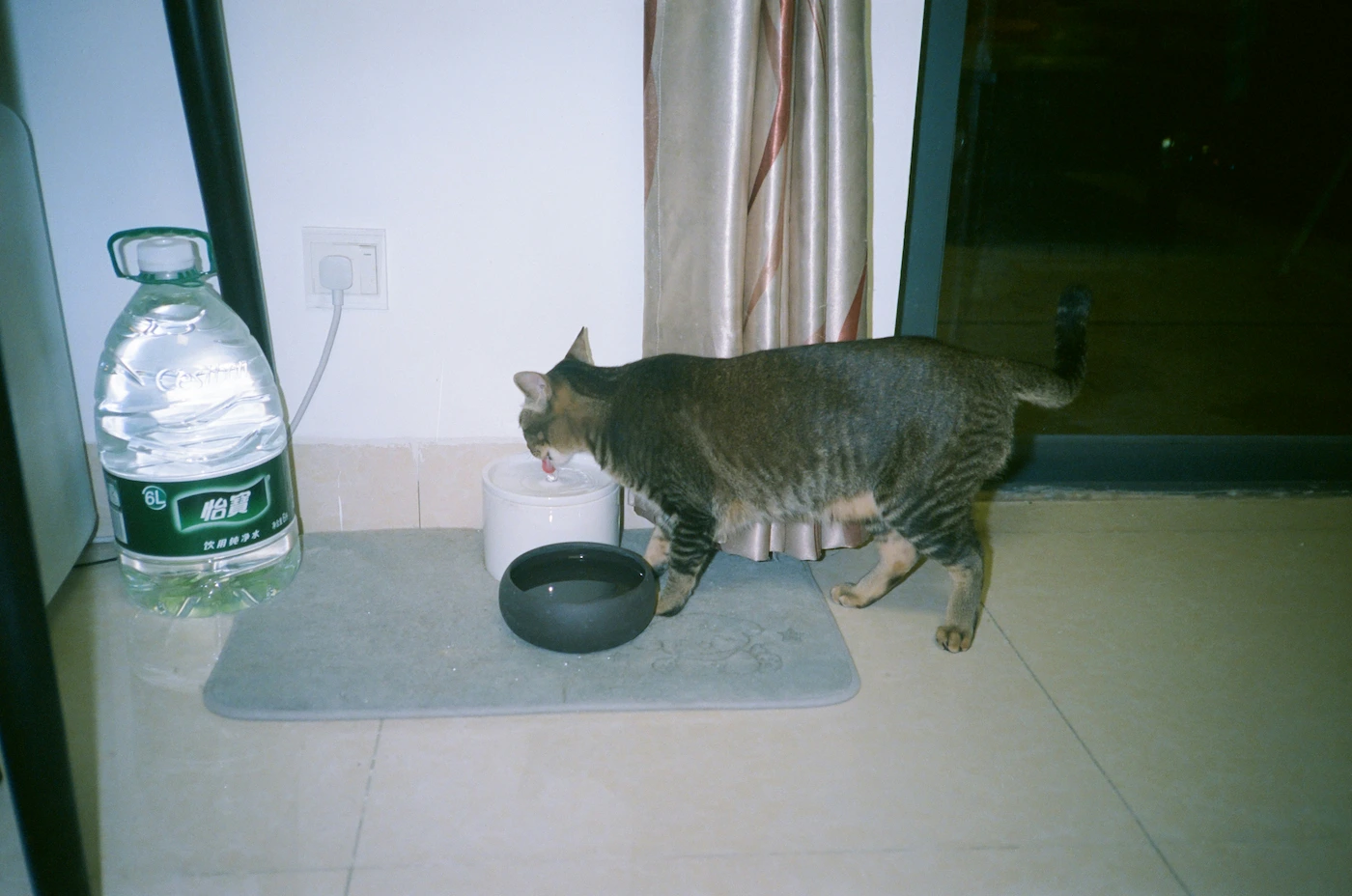
Senior cat drinking more can be easy to miss at first. You may simply notice the bowl emptying faster, more visits to the water bowl, or larger litter tray clumps than usual. A change like that does not tell you the cause on its own, but in an older cat it is worth paying attention to. Cats Protection notes that appetite and fluid intake may change as cats age, and also advises owners to speak to their vet if they notice changes in behaviour.
Disclaimer: This article is for educational purposes only and is not a substitute for veterinary advice. If your older cat is drinking much more than usual, losing weight, being sick, or seeming unlike themselves, speak to your vet.
Key takeaway: If your senior cat is drinking more than usual, do not assume it is just age. A clear change in thirst is worth noticing, especially if it comes with weight loss, appetite changes, vomiting, litter tray changes, or behaviour changes.
Is it normal for a senior cat to drink more?
Some variation in drinking can happen for simple reasons. Food moisture is one example. Cornell explains that cats eating wet food may drink less directly, while cats eating dry food usually take in more of their daily water by drinking. Warm weather, central heating, and changes in routine can also make drinking more noticeable.
Cats Protection notes that older cats may show changes in appetite and how much water they drink, and advises owners to monitor eating, drinking, and toileting changes and report them to a vet.
What drinking more can look like at home
You do not need exact measurements to notice that something has changed. What owners often spot first is a pattern such as:
- the water bowl emptying faster than usual
- more frequent visits to the bowl
- drinking from taps, sinks, or unusual places
- larger or more frequent urine clumps in the litter tray
- returning to water sources more often through the day
That kind of practical pattern is often more useful than trying to work out the reason too early.
Possible reasons a senior cat may drink more
There can be several possible reasons, and the safest way to think about this is that increased drinking is a sign to notice, not a diagnosis.
Common senior health problems can be one reason
Cats Protection says age-associated disorders in older cats can include diabetes, hyperthyroidism, and renal impairment. Cornell’s hydration guidance also lists chronic kidney disease, diabetes, and hyperthyroidism among common causes of increased water loss.
That does not mean you should try to guess which one applies. What matters most is noticing that your cat’s thirst has changed and looking at the bigger picture around it.
Food, heat, and routine can also affect what you see
A cat on dry food may appear to drink more simply because less of their water is coming from food. Cornell notes that wet food can contain up to 80% water, so cats eating it may drink less directly from the bowl. Warm weather or a drier indoor environment can also make drinking more obvious.
If your concern is more about water access, bowls or encouraging comfortable drinking habits, our Senior Cat Water Bowl Placement guide may be a better next read.
That said, those factors should not be used to explain away a marked or persistent change in an older cat.
The wider pattern matters more than one symptom
A single sign rarely gives the whole picture. A senior cat drinking more is much more useful to assess when you also look at appetite, weight, litter tray changes, energy, vomiting, coat condition, and behaviour. Cats Protection advises owners to be alert to small clues that an older cat is not right, including changes in eating, drinking, sleeping, or toileting.
Other signs worth watching alongside increased drinking
It is especially sensible to mention the change to your vet if your cat is also showing any of the following:
- weight loss
- eating more or less than usual
- peeing more
- vomiting
- sleeping more or seeming flat
- poor coat condition
- behaviour changes
If your cat is also losing weight, you may find Senior Cat Weight Loss: Common Reasons and When to Speak to a Vet helpful next.
Cats Protection’s senior-cat guidance says older cats may show changes in appetite, fluid intake, bowel or urinary function, coat condition, and behaviour as they age, and that owners should talk to their vet if they notice changes.
When to mention it to your vet
It is worth mentioning increased drinking if:
- the change is clear and persistent
- your cat is also losing weight
- appetite has changed
- litter tray output looks different
- your cat is vomiting
- energy or behaviour seems off
- your cat just seems unlike themselves
Cats Protection notes that older cats may show changes in appetite and how much water they drink, and advises owners to monitor eating, drinking, and toileting changes and report them to a vet.
If your cat is suddenly very unwell, weak, collapsing, or not behaving normally at all, that needs urgent veterinary advice.
What to note before the appointment
You do not need a perfect log, but it helps to make a few notes:
If you want a simple way to organise those observations, our Senior Cat Observation Toolkit includes an Eating & Drinking Observation Sheet for recording changes in drinking, appetite, toileting, vomiting and weight.
- when you first noticed the change
- whether food changed recently
- whether the litter tray seems wetter or fuller
- whether your cat has lost weight
- whether appetite has changed
- whether there has been vomiting
- whether your cat seems tired, restless, or different in themselves
- whether they are drinking from new places such as taps or sinks
This kind of simple observation can make the appointment more useful because it gives your vet a clearer picture of what has changed.
The bottom line
Senior cat drinking more is not something to panic about, but it is not something to dismiss either. Some variation in drinking can be influenced by food moisture, temperature, or routine, but a noticeable increase from your cat’s usual pattern is still worth mentioning, especially if other changes are showing up alongside it. The most useful question is not “what does this definitely mean?” but “what else has changed at the same time?”
If you are also noticing weight change, appetite change, vomiting, or litter tray differences, you may find these guides helpful next:
- Senior Cat Weight Loss: Common Reasons and When to Speak to a Vet
- Older cat sleeping more: what’s normal and when to pay attention
- Senior cat peeing outside the litter tray: what to check and when to speak to your vet
If drinking more is happening alongside more frequent litter tray use or other toileting changes, our Senior Cat Toileting Changes guide may help you track the wider pattern.
If drinking more is happening alongside appetite, weight or food preference changes, our Senior Diet for Cats guide may help you look at the wider picture.
FAQs
Is it normal for an older cat to drink more water?
Some variation can happen because of food type, weather, and routine. But a clear increase from your cat’s usual pattern should not be dismissed as normal ageing alone.
Why is my senior cat drinking more than usual?
There can be several possible reasons. Some are simple, such as differences in food moisture, while others can be linked with common health problems seen more often in older cats.
Should I worry if my senior cat is drinking more and peeing more?
That combination is worth mentioning to your vet, especially if it is new or comes with weight loss, appetite changes, or vomiting. Cats Protection highlights urinary-function changes as one of the areas owners should watch in older cats.
What other signs should I watch for?
Weight loss, appetite changes, bigger litter tray clumps, vomiting, lower energy, coat changes, and behaviour changes are all useful signs to note alongside increased drinking.
When should I speak to my vet about increased drinking?
It is sensible to speak to your vet when the increase is clear, persistent, or comes with other changes. Cats Protection advises owners to raise changes in behaviour, eating, drinking, sleeping, or toileting rather than dismiss them.