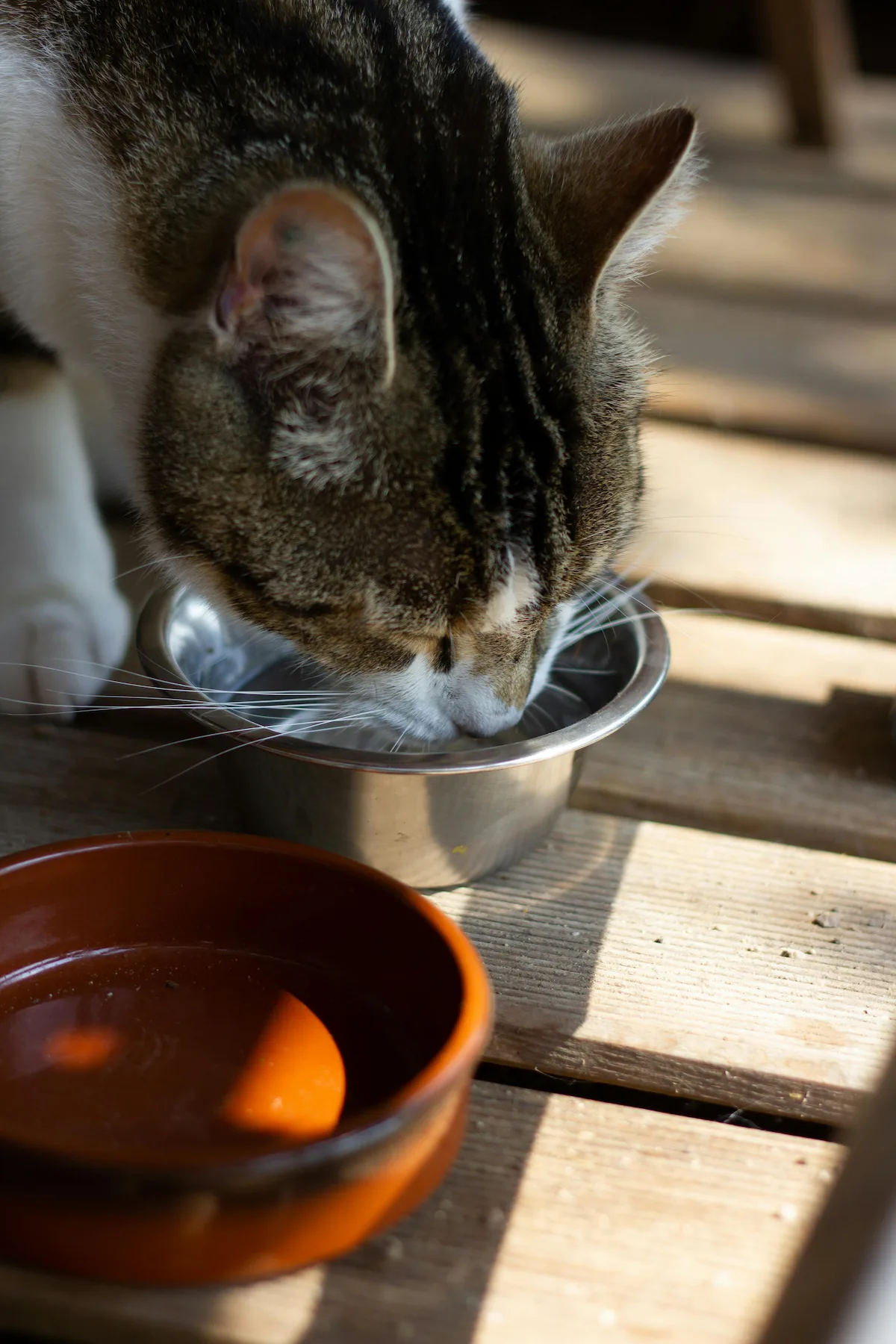
Older cat drinking less can be easy to miss at first. Some older cats have never been big bowl drinkers, and cats that eat wet food may drink less obviously from a bowl than cats eating mostly dry food. What matters most is not whether your cat seems to drink a lot in general, but whether there has been a clear change from their usual pattern.
Disclaimer: This article is for educational purposes only and is not a substitute for veterinary advice. If your cat seems weak, dehydrated, is eating less, vomiting, or behaving differently, speak to your vet.
Key takeaway: A quieter water bowl is not always a sign of trouble, especially if your older cat eats wet food. What matters more is a new or persistent drop from their normal pattern, especially if it comes with changes in appetite, litter tray use, weight, comfort, or behaviour.
Is it normal for an older cat to drink less?
Sometimes, yes.
Some older cats appear to drink less simply because:
- they eat more wet food
- they drink little and often when no one is watching
- their routine has shifted slightly
- they have always been fairly quiet drinkers
But “normal” should not mean ignoring a change.
The better question is: is your older cat drinking less than they usually do? A noticeable change matters more than any fixed amount in the bowl. Cats eating canned food may drink less from a bowl, while still needing adequate overall fluid intake. Cornell also notes that reduced intake can happen alongside weakness, reduced appetite, dental problems, or poor access to water, which is why the wider pattern matters.
How to tell whether your older cat is really drinking less
It is easy to focus on the bowl and still miss the bigger picture. A better approach is to look at a few simple clues together.
Look at the pattern, not one quiet day
One quieter day on its own does not always mean much. Cats can vary a bit from day to day.
More useful questions are:
- Has this been going on for several days?
- Does the bowl stay fuller than usual?
- Have you noticed less interest in drinking overall?
- Does this feel different from your cat’s normal routine?
A pattern is usually more meaningful than a single moment.
Think about what your cat is eating
If your cat is eating more wet food than usual, they may seem to drink less from the bowl because wet food contains much more moisture. Cornell specifically notes that canned-food-fed cats often drink less visible water than dry-food-fed cats.
That does not mean every low-drinking pattern is nothing to worry about. It just means the bowl alone does not tell the whole story.
Look at the litter tray too
If your older cat is truly taking in less fluid, you may also notice:
- smaller urine clumps
- fewer wet patches
- less frequent trips to the litter tray
This is not about trying to diagnose anything at home. It is simply a useful way to judge whether the change seems real.
Check whether the bowls are still easy to reach
Sometimes the issue is not the water itself. It is the setup.
Ask yourself:
- Is the bowl upstairs or far from where your cat now rests?
- Do they seem stiff getting to it?
- Is the bowl near noise, other pets, or a busy area they now avoid?
- Do they hesitate to lower their head?
Cornell’s older-cat care guidance advises making sure senior cats have easy access to clean water, food, and litter trays, which becomes more important as mobility and routine change with age.
What can make an older cat seem to drink less?
This article is not about diagnosing the cause, but there are a few broad patterns worth knowing about.
More moisture from food
A cat eating wet food may get more fluid from meals and show less obvious bowl drinking. This can make a cat seem to drink less visibly from a bowl.
Eating less overall
If your cat is eating less, they may also be taking in less moisture overall. Lower drinking and lower appetite often matter more when they happen together than when either appears on its own. Cornell lists decreased appetite as one reason a cat may have reduced water intake.
Mouth discomfort
Some older cats may seem less comfortable approaching food or water if there is mouth discomfort. You do not need to work out whether that is the reason yourself, but it is a useful pattern to notice if drinking less comes with eating changes, bad breath, or hesitation at the bowl. Cornell includes dental problems among the things that can reduce water intake.
Stiffness or reduced mobility
An older cat may drink less simply because reaching the bowl has become less comfortable. This can be easy to miss if they are otherwise quiet and settled. Cornell’s older-cat guidance recommends easy access to water for this reason.
Weakness or seeming unlike themselves
Drinking changes can also happen as part of a broader change in how your cat seems overall. Cornell notes that weakness can be one reason for decreased intake.
Older cat drinking less: what else to watch
Drinking changes are usually more helpful when you look at them alongside the rest of your cat’s daily pattern.
A change in drinking is more worth mentioning when it comes with one or more of the following:
- eating less
- smaller urine clumps
- weight loss
- vomiting or diarrhoea
- sleeping more and seeming quieter than usual
- hiding more
- difficulty getting to bowls, litter trays, or favourite spots
- behaving differently from their usual self
These do not tell you exactly what is wrong. They simply help you judge whether the change looks like part of a bigger shift rather than a harmless one-off.
If lower drinking comes with eating less too, you may also find Senior cat not eating: what to check first and when to speak to your vet helpful.
For broader context on age-related changes, see Senior Cat Health: A Practical Guide for Older Cats.
When to speak to your vet
If your older cat is drinking less, it is sensible to speak to your vet if the change is clear, keeps happening, or appears alongside other changes.
That includes situations where your older cat is drinking less and:
- eating less as well
- producing less urine than usual
- losing weight
- seeming weak, tired, or withdrawn
- vomiting or having diarrhoea
- struggling with mobility or access
- seeming uncomfortable
- behaving differently from their normal self
If your concern is that your cat is barely drinking or not drinking at all, our guide to senior cat not drinking explains what to watch and when to speak to your vet.
Cornell’s hydration page says dehydration may be associated with signs such as lethargy, tacky gums, sunken eyes, and reduced skin elasticity, but also notes that skin elasticity can be less reliable in geriatric cats. That is a good reason not to rely too heavily on home checks or feel you must prove dehydration before asking for help.
A useful rule is this: if your cat’s normal pattern seems to have changed, it is worth paying attention.
What not to assume
There are a few assumptions that can make this harder than it needs to be.
Do not assume a quiet drinker is automatically unwell
Some cats do drink very discreetly, especially if they eat wet food.
Do not assume wet food explains everything
Wet food can reduce visible bowl drinking, but it should not be used to brush off a clear overall change.
Do not assume you need an emergency sign before acting
You do not have to wait until your cat looks obviously dehydrated or very unwell before speaking to your vet. A persistent change with other signs is enough reason to mention it.
A simple checklist: is my older cat really drinking less?
Use this quick check to step back and look at the whole pattern.
- Has this change lasted more than a day or two?
- Has their food changed recently?
- Are they eating less as well?
- Are urine clumps smaller than usual?
- Are the water bowls still easy to reach?
- Do they seem stiff, weak, quieter, or less comfortable?
- Does this feel like a genuine change from normal?
If several of those answers point to “yes”, it is reasonable to speak to your vet.
Gentle home checks that are reasonable
You do not need to turn your home into a monitoring station.
Reasonable things to do include:
- refreshing water regularly
- making sure bowls are easy to reach
- placing water near favourite resting areas if needed
- noticing any change in food intake
- checking whether litter tray output also seems different
- watching for wider changes in comfort or behaviour
Cornell’s senior-cat guidance supports keeping water easy to access for older cats, especially if their movement or routine has changed.
Wrap-up
Older cat drinking less is not always a sign that something is seriously wrong. Some older cats drink less visibly, especially if they eat wet food or have always been quiet drinkers.
What matters most is change from your cat’s usual pattern.
If the shift is clear, keeps happening, or comes with changes in eating, litter tray use, weight, comfort, or behaviour, it is worth speaking to your vet.
If drinking less is happening alongside changes in peeing, pooing or litter tray habits, our Senior Cat Toileting Changes guide may help you look at the wider picture.
If drinking less is happening alongside appetite, weight or feeding changes, our Senior Diet for Cats guide may help you look at the wider pattern.
FAQs
Is it normal for an older cat to drink less?
Sometimes. Some older cats drink less visibly, especially if they eat wet food. What matters most is whether there has been a clear change from their usual pattern.
Can wet food make my older cat seem to drink less?
Yes. Wet food contains much more moisture than dry food, so some cats who eat wet food drink less from a bowl.
When should I speak to my vet if my older cat is drinking less?
It is sensible to speak to your vet if the change is new, persistent, or comes with eating less, reduced urine output, weight loss, weakness, vomiting, or behaviour changes.
Could my older cat be drinking less because the bowl is hard to reach?
Yes. Practical access can matter, especially in older cats. Cornell advises making sure senior cats have easy access to water, food, and litter trays.