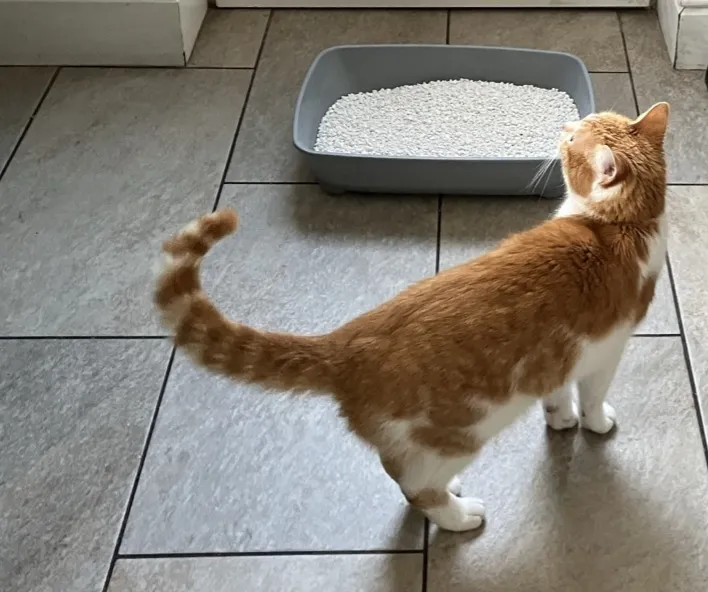
If your senior cat starts peeing outside the litter tray, it’s easy to feel stuck between “is this behavioural?” and “is something wrong?”. In older cats, it is often linked to comfort, access, routine, stress, or an underlying health issue that needs checking.
Disclaimer: This article is for educational purposes only and is not a substitute for professional veterinary advice. If your cat seems unwell, in pain, or you are worried, speak to your vet.
Quick answer: senior cat not using litter tray
Senior cat not using litter tray habits are worth checking, especially if the pattern is new, sudden, or becoming more frequent. In older cats, this may be linked to tray access, comfort, stress, routine changes, mobility issues, or a health change that needs veterinary advice.
Start with safe checks such as tray height, location, cleanliness, litter type, night-time access and whether your cat seems to be rushing, straining, drinking more, hiding, or acting differently.
This guide will help you:
- work out what pattern you are seeing
- check the safest, most common home factors first
- spot the signs where it is best to speak to your vet sooner
Key takeaway: In a senior cat, peeing outside the litter tray is a meaningful change. Start with quick, low-risk checks such as tray access, litter, location, and recent routine changes. Speak to your vet promptly if you notice pain, blood, repeated trips, or a sudden shift in habits.
First, work out what is actually happening
Before changing lots of things at once, try to work out what pattern you are seeing. That makes the next steps much clearer.
1) Peeing
This often looks like:
- a larger puddle on the floor
- accidents on soft items such as bedding, bathmats, or laundry
- accidents near the tray
- episodes that happen after waking, after meals, or when the tray setup has changed
2) Spraying
This often looks like:
- small amounts rather than a full puddle
- urine on vertical surfaces such as walls, doors, or furniture legs
- repeated “message spots” in the same area
3) Missing the tray
This often looks like:
- pee right beside the tray
- half-in, half-out accidents
- hesitation getting into the tray
- stiff, awkward, or rushed movement
If you are not sure which pattern fits best, that is fine. The next checks still apply, and a few notes about what you are seeing can be helpful if you speak to your vet.
Start with these safe checks
A lot of out-of-tray peeing in older cats comes down to comfort, access, routine, or setup. These are the safest things to check first.
Step 1: Make the litter tray easy for an older body
A lot of “out of the tray” peeing in older cats is really “I could not get there comfortably in time”.
Quick checks:
- Can your cat step into the tray easily?
- Is the tray on the same floor as where your cat spends most of their time?
- Is the route safe at night, with enough light and grip underfoot?
- Is the tray in a quiet place with enough privacy?
Simple changes that often help:
- add a low-entry tray, even as a second tray to begin with
- place a second tray closer to where your cat sleeps, especially overnight
- add a night light and a non-slip runner if the floor is slippery
A simple senior tray rule that works well:
bigger tray, lower entry, quiet location, easy route
For a more detailed setup checklist, see our Best litter box for senior cats guide.
If your cat also seems stiff, reluctant to jump, or slower getting in and out of places, our Senior Cat Mobility & Pain guide may help you connect tray access, stiffness, jumping changes and daily comfort.
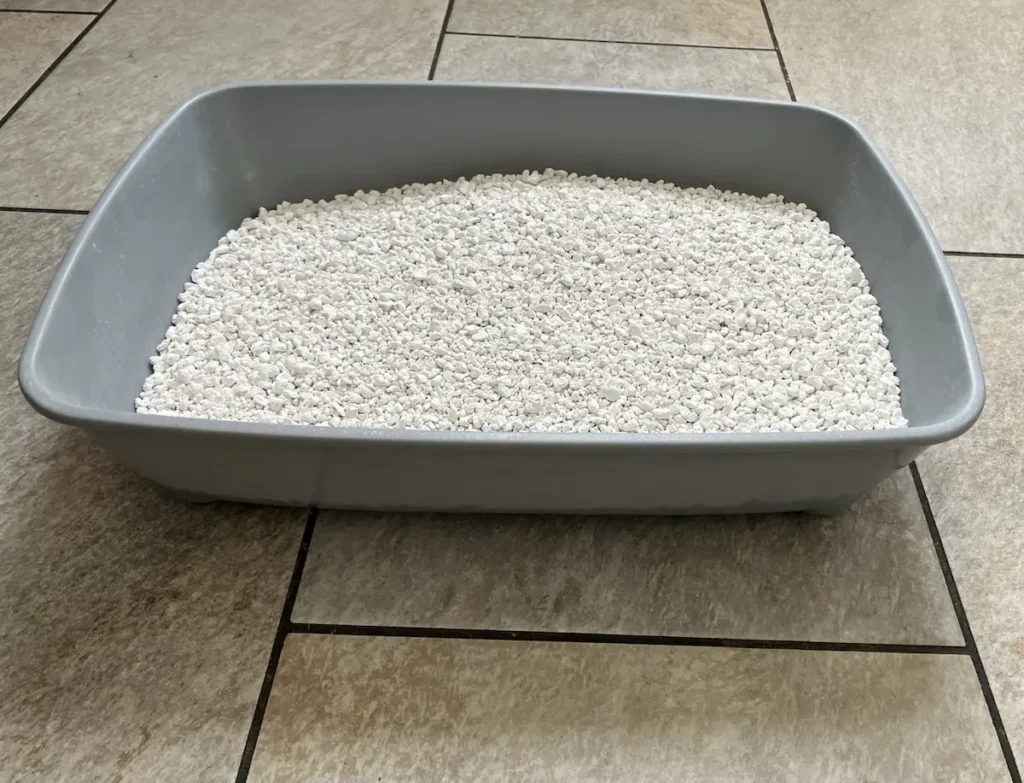
Step 2: Ask “what changed?” (cats notice small differences)
Many cats stop using a tray reliably after a change that seems minor to us. Before changing lots of things at once, it helps to look for small differences in litter, tray setup, and cleaning routine.
Check for:
- a new litter brand or texture
- scented litter, or a stronger-smelling one than before
- a new tray, tray lid, liner, or different mat
- the tray being moved to a new spot
- a stronger cleaning product being used on the tray or surrounding area
A good-enough setup for most older cats is:
- unscented litter
- daily scooping, or more often in a multi-cat home
- washing the tray with a mild, unscented cleaner rather than a strong-smelling product
Only change one thing at a time where possible. That makes it easier to see what helps.
Step 3: Make sure the location feels safe
Some cats avoid a tray if the area feels noisy, exposed, cramped, or hard to get in and out of calmly.
Check for:
- noisy appliances nearby, such as a washing machine or boiler cupboard
- high foot traffic or sudden door slams
- a tray tucked into a corner with only one way in or out
- another cat or dog that can block, watch, or ambush the area
Simple fixes:
- move the tray a short distance to a calmer spot
- add a second tray in a separate area
- avoid placing trays somewhere your cat might feel cornered
For some older cats, a small location change makes a big difference.
Step 4: Look at stress and routine changes
Older cats can become more sensitive to change, even if they have always seemed easy-going.
Common triggers include:
- visitors
- building work
- furniture being moved
- changes to feeding times or daily routine
- tension between pets, even if it is subtle
Safe, supportive steps:
- keep feeding and quiet time predictable
- make sure your cat has comfortable resting places and safe spots
- avoid punishment or scolding after accidents
Punishment usually adds stress and can make the pattern harder to break.
When to speak to your vet
Senior cat not using litter tray habits are especially worth discussing with your vet when the change is sudden, repeated, or happening alongside discomfort, straining, drinking changes, hiding, or changes in normal routine.
Home checks are useful, but in a senior cat, a new toileting change is still worth taking seriously. It is sensible to speak to your vet promptly if you notice:
- straining, crying out, or obvious discomfort while trying to wee
- blood in the urine, or pink staining
- repeated trips to the tray with little produced
- a sudden change in how much your cat drinks or wees
- accidents along with lethargy, hiding, or eating less
- a cat who was reliably clean and has suddenly changed
If you notice blood in the urine or pink-red staining, our guide to senior cat peeing blood explains what to watch for and when to speak to your vet.
More urgent same-day concern
Speak to your vet the same day if your cat is repeatedly trying to wee but cannot pass much, or anything at all, seems distressed, or becomes suddenly very unwell.
If you are unsure, it is safer to treat that as important and ask for advice.
If your cat is missing the tray rather than avoiding it
If your cat reaches the litter tray but pees immediately beside it, stands partly outside it, or seems awkward getting in and out, see our Senior Cat Missing the Litter Tray guide. That article focuses specifically on tray-entry, positioning and mobility-related misses.
Clean-up that helps prevent repeat accidents
Cleaning matters because lingering urine scent can draw a cat back to the same area.
A simple, safe approach:
- blot first rather than rubbing
- use an enzymatic cleaner made for pet urine
- avoid ammonia-based cleaners, which can smell urine-like to cats
If your cat has repeat spots, you can also:
- block access temporarily with a closed door or moved furniture
- protect the area with a washable waterproof layer while you work through the cause
For a broader look at litter tray habits, toileting indoors, tray access and age-related changes, see our Senior Cat Toileting Changes guide.
FAQs
Why is my senior cat not using the litter tray all of a sudden?
A sudden change can happen after a tray/litter change, a stressful event, reduced mobility, or because weeing has become urgent or uncomfortable. If it’s new or frequent, it’s sensible to speak to your vet.
How do I tell spraying from peeing outside the litter tray?
Spraying is usually small amounts on vertical surfaces; peeing is usually a larger puddle on the floor. If you’re unsure, note the pattern and focus on the safe checks above.
How many litter trays should I have for one senior cat?
Two trays in quiet spots is a helpful starting point, especially if your cat spends time on more than one floor or struggles with stairs.
My senior cat pees outside the litter tray but still poops in the tray — what does that mean?
It can happen when wee feels urgent or uncomfortable, or when tray access no longer suits your cat. It’s worth checking mobility and speaking to your vet if it’s new or worsening.
Should I change the litter if my older cat keeps peeing outside the tray?
Only change one thing at a time. If you do change litter, do it gradually and aim for unscented, so you can tell what helps.
What to tell your vet (it helps to arrive with a short summary)
If you do speak to your vet, a few details can speed things up:
- when it started and whether it was sudden or gradual
- where accidents happen (near tray, soft items, vertical surfaces)
- how often you’re seeing it
- any changes to litter, tray, routine, stress, or home layout
- any other changes (thirst, appetite, energy, weight, grooming)
If you’re noticing more than one change at once, our overview of Senior Cat Health: A Practical Guide for Older Cats may help you put the bigger picture together.
References
- International Cat Care (ISFM) — Soiling / inappropriate elimination overview
- Cornell Feline Health Center — House soiling overview