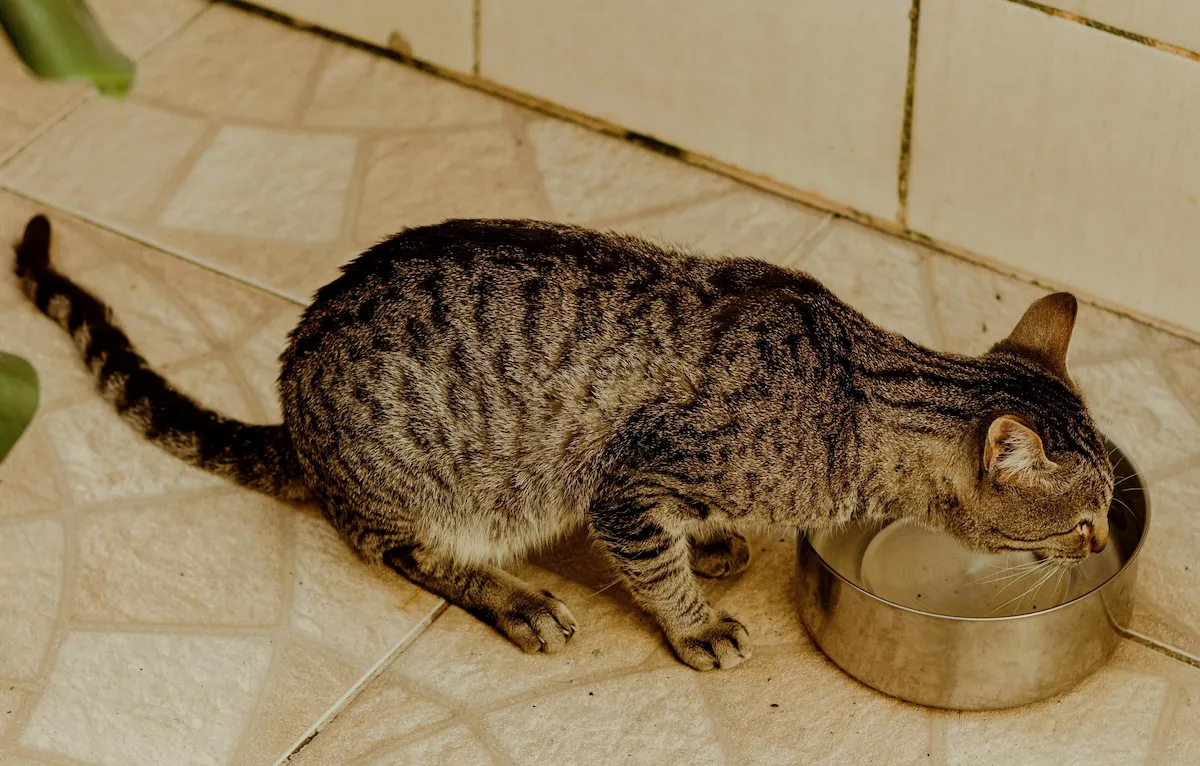
Senior cat kidney disease early signs can be difficult to spot because many older cats do not suddenly seem unwell. Instead, owners may notice small changes in drinking, litter tray habits, appetite, weight, grooming, or energy.
This guide explains the early signs owners might notice at home, why these signs should not be used to diagnose kidney disease, and when to speak to your vet.
Disclaimer: This article is for educational purposes only and is not a substitute for professional veterinary advice. If your cat is in pain, losing weight, vomiting frequently, straining to pee, or acting differently, speak to your vet.
Key takeaway: Senior cat kidney disease may be linked with changes such as drinking more, peeing more, losing weight, eating less, vomiting, a duller coat, or seeming quieter than usual. These signs can also have other causes, so they are best treated as reasons to book a vet check — not as a home diagnosis.
Senior cat kidney disease early signs: quick answer
Early signs linked with kidney disease in senior cats can be subtle. You might notice:
- drinking more than usual
- peeing more, or producing larger litter tray clumps
- gradual weight loss
- eating less or walking away from meals
- vomiting more than usual
- a duller or less well-groomed coat
- seeming quieter, weaker, or less interested in normal routines
These signs do not prove kidney disease. They can overlap with several other senior cat health issues, so new, repeated, or persistent changes are worth discussing with your vet.
Why kidney disease can be hard to spot early
Cats are good at hiding signs of illness. This can make early kidney changes difficult to notice, especially when your cat is still eating, moving around, and behaving mostly as normal.
Kidney disease is also more common in older cats, but the early signs are not always obvious. Cornell Feline Health Center explains that cats in the early stages of chronic kidney disease may show no obvious signs at first, which is one reason subtle changes in older cats are worth discussing with a vet.
This is why routine senior cat checks matter. A vet can assess your cat properly and may recommend blood or urine tests if kidney disease or another health issue is suspected. Cats Protection also notes that many vets try to identify kidney disease early in older cats through urine and blood tests at routine checks or vaccinations.
For a wider overview of age-related health changes, you may also find Senior Cat Health: A Practical Guide for Older Cats helpful.
Drinking more than usual
One of the changes owners often notice first is increased drinking.
This might look like:
- the water bowl emptying faster
- needing to refill bowls more often
- your cat drinking from taps, sinks, baths, or toilets
- your cat waiting near water sources
- drinking more alongside weight loss or litter tray changes
It can be tempting to think drinking more is simply a good sign of hydration, but a clear increase in thirst in an older cat is worth taking seriously. It does not automatically mean kidney disease, but it is a useful change to mention to your vet.
A good question to ask yourself is:
“Is this normal for my cat, or is this a clear change from their usual routine?”
That difference matters more than comparing your cat with someone else’s.
Peeing more or larger litter tray clumps
Increased drinking often goes together with increased urination. For many owners, the litter tray is where the change becomes most obvious.
You might notice:
- larger clumps in clumping litter
- wetter patches in non-clumping litter
- more frequent tray use
- stronger need to clean the tray
- your cat seeming to produce more urine than before
These changes are worth noting, especially if they happen alongside drinking more, losing weight, eating less, or seeming quieter.
Urine changes can have several possible causes, so try not to jump to one conclusion. The safest next step is to track what has changed and speak to your vet.
For a more detailed look at litter tray volume, colour, and pattern changes, read Senior cat urine changes: what colour/volume shifts can suggest.
Weight loss or a thinner body shape
Gradual weight loss can be easy to miss in senior cats, especially if your cat is fluffy or still eating something each day.
You may notice:
- your cat feels lighter when picked up
- the spine, hips, or shoulders feel more prominent
- the collar seems looser
- your cat looks narrower around the back end
- food is being left more often than before
Weight loss in a senior cat is always worth mentioning to your vet, even if your cat still seems bright. It does not point to one single condition, but it is an important sign that something may have changed.
A simple monthly weighing routine can help you spot gradual changes earlier. For a practical routine, read Senior cat weight tracking: simple monthly routine owners can keep up with.
Eating less, vomiting, or seeming unsettled around meals
Some senior cats with health problems begin to eat differently. This does not always look dramatic at first.
You might notice your cat:
- eats smaller amounts
- walks away from food
- seems interested but does not finish meals
- becomes fussier than usual
- eats more slowly
- vomits more often than normal
- seems unsettled before or after eating
These signs can happen for many reasons, including dental discomfort, digestive issues, stress, or other health concerns. They should not be used to diagnose your cat at home.
They are especially worth discussing with your vet if they are new, repeated, or happening alongside increased thirst, larger urine clumps, weight loss, or lower energy.
Duller coat or less grooming
A senior cat’s coat can give you clues about how they are feeling.
You might notice:
- the coat looks duller
- fur feels greasy or clumpy
- your cat is grooming less
- mats are forming more easily
- your cat looks less tidy than usual
A dull or unkempt coat does not confirm kidney disease. It can happen with many senior cat issues, including discomfort, reduced mobility, dental problems, or general illness.
However, if coat changes appear alongside other signs, they are worth adding to your notes before a vet appointment.
Seeming quieter, weaker, or less like themselves
Not every early sign is physical. Sometimes the biggest clue is that your cat seems “not quite right”.
You may notice:
- sleeping more than usual
- hiding more
- less interest in play
- less interest in normal routines
- spending more time alone
- seeming weaker or more withdrawn
- being less responsive than usual
Older cats do slow down, but a noticeable change from your cat’s normal pattern is still worth taking seriously.
A helpful way to think about it is:
Ageing can change routines gradually, but sudden or clear changes deserve attention.
Senior cat kidney disease early signs: what to track before a vet visit
You do not need to track everything perfectly. A few calm notes can help your vet understand what has changed.
| What to track | What to write down |
|---|---|
| Drinking | Is the bowl emptying faster? Is your cat seeking water in unusual places? |
| Urination | Are litter tray clumps larger, wetter, or more frequent? |
| Appetite | Is your cat eating less, leaving food, or walking away from meals? |
| Weight | Does your cat feel lighter, thinner, or bonier? |
| Vomiting | How often is it happening, and when did it start? |
| Grooming | Is the coat duller, greasy, clumpy, or less tidy? |
| Energy | Is your cat quieter, hiding more, or less interested in routine? |
| Timeline | When did you first notice the change? |
Photos can also help in some cases, such as pictures of unusually large litter tray clumps or visible body condition changes.
The goal is not to monitor obsessively. It is simply to give your vet a clearer picture.
When to speak to your vet
Book a vet check soon if your senior cat is:
- drinking more than usual
- peeing more than usual
- producing larger litter tray clumps
- losing weight
- eating less
- vomiting more often
- seeming quieter, withdrawn, or less like themselves
- showing several small changes together
These signs do not mean you need to panic, but they are worth checking. In senior cats, small changes can be useful early clues.
Seek urgent veterinary advice if your cat:
- is not eating
- seems very weak or collapsed
- is repeatedly vomiting
- seems painful or distressed
- is straining to pee
- is crying in the litter tray
- is unable to pass urine
Straining to pee is different from simply peeing more. If your cat is trying to pee but little or nothing is coming out, this needs prompt veterinary advice. If this is what you are seeing, read Senior cat straining to pee: urgent signs owners should not ignore for a clearer explanation of why this should be taken seriously.
What your vet may check
If you speak to your vet about possible kidney disease, they may ask about changes at home, including drinking, urination, appetite, weight, vomiting, and behaviour.
They may also check:
- your cat’s weight
- body condition
- hydration
- general physical condition
- blood pressure, if appropriate
- blood and urine tests, if your vet recommends them
Try not to interpret test results yourself. Kidney disease, thyroid disease, diabetes, urinary problems, dental disease, digestive issues, and other senior cat health concerns can sometimes create overlapping signs.
Your vet is the right person to look at the full picture.
Should you change your cat’s food if you suspect kidney disease?
No, not without veterinary advice.
It is understandable to want to help quickly, but suspected kidney disease should be assessed properly first. Diet changes depend on your cat’s health, test results, appetite, weight, hydration, and any other conditions they may have.
If you are worried, the safest step is to book a vet appointment and ask whether any food changes are appropriate for your cat.
Final reassurance
Drinking more, peeing more, losing weight, eating less, vomiting, coat changes or lower energy do not prove kidney disease. They simply show that something may have changed and is worth discussing with your vet.
You do not need to work out the cause yourself. Notice the pattern, keep a few simple notes, and arrange a check when changes are new, persistent or concerning.
If drinking and urination are the main changes you are seeing, our Senior Cat Toileting Changes guide can help you note the wider pattern before speaking to your vet.
FAQs
What are the early signs of kidney disease in senior cats?
Early signs may include drinking more, peeing more, larger litter tray clumps, weight loss, reduced appetite, vomiting, a duller coat, or seeming quieter than usual. These signs can also have other causes, so they should be discussed with your vet.
Is drinking more always a sign of kidney disease in an older cat?
No. Drinking more can happen for several reasons. However, a clear increase in thirst in a senior cat is worth mentioning to your vet, especially if it happens alongside weight loss, appetite changes, or larger urine clumps.
Can a senior cat have kidney disease with no obvious signs?
Yes. Early kidney disease may not cause obvious signs at first. This is one reason routine senior cat health checks can be helpful.
Should I change my cat’s food if I suspect kidney disease?
No, not without veterinary advice. Diet changes should be guided by your vet, especially if kidney disease is suspected or confirmed.
When should I speak to my vet about possible kidney disease?
Speak to your vet if your senior cat is drinking more, peeing more, losing weight, eating less, vomiting, or seeming less like themselves. Seek urgent advice if your cat is not eating, seems very weak, is repeatedly vomiting, or is straining to pee.