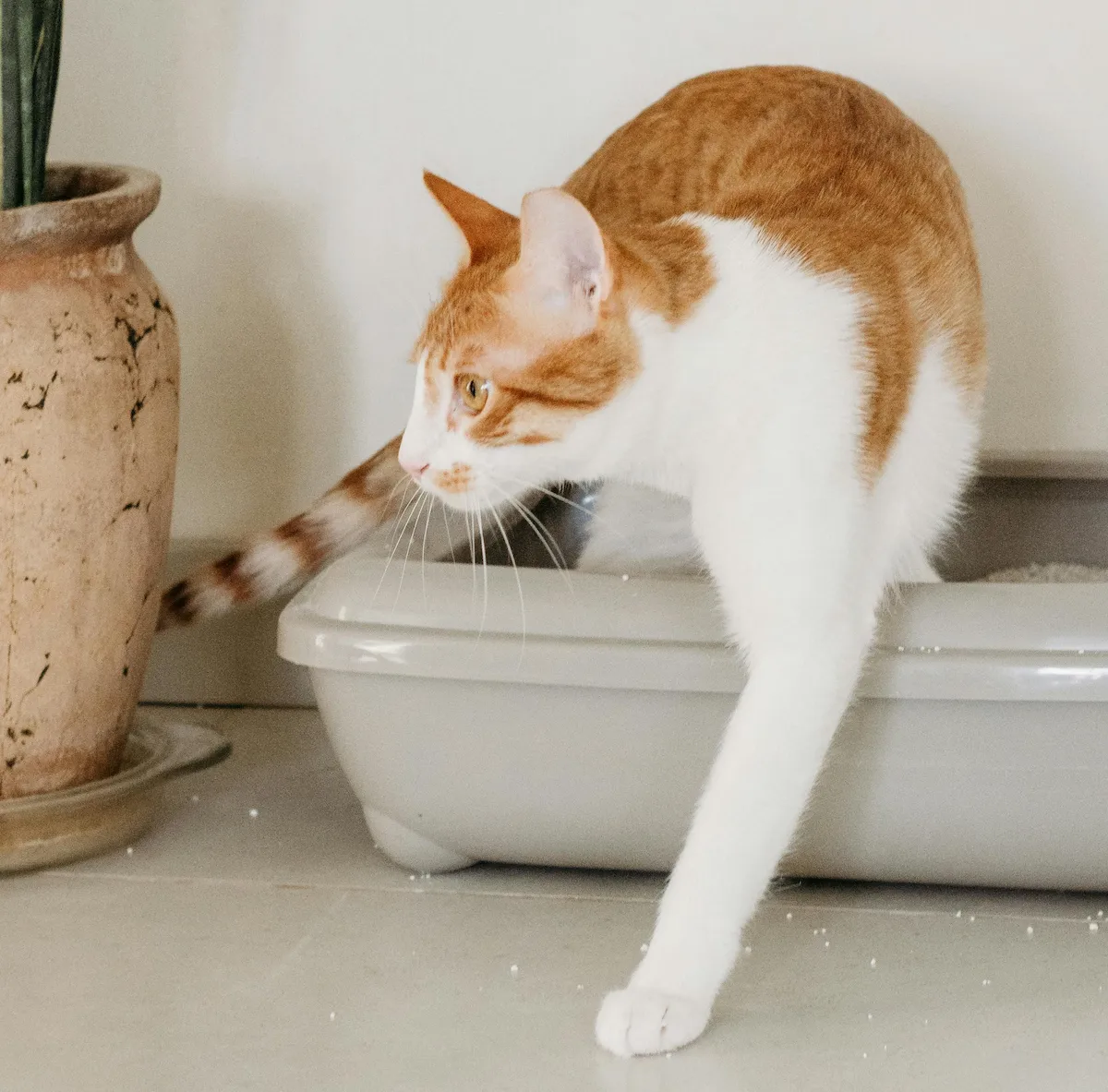
Senior cat urine changes may appear as bigger or smaller clumps, unusual colour, a stronger smell or more frequent litter tray visits. What matters most is whether the pattern is clearly different from what is normal for your cat.
You do not need to identify the cause at home. Note what has changed, whether it keeps happening and whether your cat appears comfortable and is passing urine normally.
Disclaimer: This article is for educational purposes only and is not a substitute for professional veterinary advice. Speak to your vet when your cat’s urine or litter tray habits change. Seek urgent veterinary advice if your cat repeatedly tries to urinate, passes little or no urine, strains, cries, has blood in the urine or appears painful or distressed.
Key takeaway: Track senior cat urine changes by comparing colour, clump size, frequency, smell and volume with your cat’s usual pattern. Speak to your vet when a change is new, repeated or accompanied by drinking, appetite, weight or behaviour changes. Repeated attempts to urinate with little or no urine need urgent veterinary advice.
Quick answer: senior cat urine changes
Bigger clumps can mean that more urine is being passed, while repeated small clumps may mean your cat is visiting the tray frequently but passing only small amounts. Unusual colour, blood, a stronger smell or a clear change in frequency is also worth noting.
Speak to your vet when these changes are new or repeated. Seek urgent veterinary advice if your cat keeps trying to urinate, strains, cries or passes little or no urine.
Senior cat urine changes: what owners usually notice first
Most owners do not spot urine changes by measuring anything. They notice small differences during normal litter tray cleaning.
You may notice:
- larger clumps than usual
- smaller clumps or frequent tiny wees
- urine that looks darker, paler, cloudy, pink, red, orange, or brownish
- a stronger smell than usual
- more litter tray visits
- accidents outside the litter tray
- drinking more or less than usual
Compare what you see with your cat’s usual litter tray pattern. Clump size naturally varies between cats, and food, water intake and litter type can affect what owners notice.
In a multi-cat home, it may be difficult to know which cat produced a particular clump. Watch tray visits where possible and focus on repeated changes rather than one isolated observation.
What normal cat urine usually looks like
Normal cat urine is usually somewhere between pale yellow and yellow. However, it can be difficult to judge colour accurately once urine has soaked into litter.
Colour can look different depending on:
- the type of litter you use
- whether the litter is clumping or non-clumping
- the lighting in the room
- how soon you check the tray
- whether the tray has recently been cleaned
For many owners, clump size and frequency are easier to track than exact colour.
One slightly different-looking clump may not provide much information. A change becomes more useful to report when it repeats or appears alongside changes in drinking, appetite, weight, behaviour or litter tray use.
Urine colour changes in senior cats: what they can suggest
Urine colour cannot identify the cause of a problem. It is most useful when considered alongside clump size, frequency, drinking, appetite, weight and behaviour.
| What you notice | What else to note | What to do next |
|---|---|---|
| Paler urine than usual | Whether clumps are also larger and whether drinking has changed | Note whether the change repeats and mention it to your vet if it is new or persistent |
| Darker yellow urine | Whether drinking, appetite or behaviour has changed | Check whether it happens again and speak to your vet if it persists or appears with other changes |
| Pink, red, or blood-tinged urine | Whether your cat is passing a normal amount and appears comfortable | Speak to your vet promptly |
| Orange or brownish urine | Whether the colour remains unusual in different lighting or litter | Take a clear photo if possible and ask your vet for advice |
| Cloudy-looking urine | Whether the change repeats or appears with smell or frequency changes | Speak to your vet if it is new or repeated |
| Stronger smell than usual | Litter type, tray cleaning, clump size and frequency | Note whether other urine or behaviour changes are also present |
Pink, red or blood-tinged urine is a reason to speak to your vet promptly. The appearance of the litter tray cannot reveal the cause.
A clear photo may help you describe an unusual colour, but do not delay veterinary advice to take one.
For more detail on this specific warning sign, see our Senior Cat Peeing Blood guide.
Urine volume changes: bigger or smaller clumps
For many owners, clump size is the clearest sign that urine volume has changed.
Repeatedly bigger clumps suggest that more urine is being passed. Speak to your vet when this appears alongside drinking more, weight loss, appetite changes or behaviour changes.
Repeatedly smaller clumps are more concerning when your cat is visiting the tray frequently but passing only small amounts. Repeated attempts with little or no urine need urgent veterinary advice.
In a multi-cat home, it may be difficult to identify which cat produced each clump. Watch tray visits where possible or temporarily provide an additional tray in a quiet place to help you observe the pattern.
Frequency changes: visiting the litter tray more often
A cat may visit the litter tray more often because they are passing more urine, or because they are repeatedly trying to pass a small amount. The distinction matters.
Note whether your cat is:
- passing normal or larger amounts
- producing repeated small clumps
- squatting and returning several times
- crying, straining or appearing uncomfortable
- licking around the back end more than usual
Seek urgent veterinary advice if your cat repeatedly visits the tray but passes little or no urine. This is especially urgent in male cats, but difficulty passing urine should be taken seriously in any cat.
For more detail on repeated attempts, discomfort and little or no urine, see our Senior Cat Straining to Pee guide.
Stronger smell or accidents outside the litter tray
A stronger urine smell can be caused by several things. Sometimes it relates to litter type, tray cleaning, warmer weather, or urine being more concentrated. Other times it appears alongside changes that need a vet’s input.
Try to notice whether the smell change is happening on its own or with other signs, such as:
- larger or smaller clumps
- darker or unusual-looking urine
- more frequent tray visits
- drinking more or less
- accidents outside the litter tray
- appetite or weight changes
A smell change is more useful to report when it is persistent or appears alongside changes in colour, clump size, frequency, drinking or behaviour.
Accidents outside the litter tray should not be treated as bad behaviour. In a senior cat, they may appear alongside urinary discomfort, mobility problems, stress, tray-access difficulties or other health changes.
If urinating outside the tray is the main change, see our Senior Cat Peeing Outside the Litter Tray guide.
What to track before speaking to your vet
You do not need perfect notes. Simple observations are often enough to make the conversation clearer.
Senior cat urine changes checklist
| What to note | Your observation |
|---|---|
| Urine colour | Pale, yellow, dark, cloudy, pink/red, orange/brown |
| Clump size | Larger, smaller, normal, hard to tell |
| Frequency | More visits, fewer visits, repeated attempts |
| Amount passed | Normal, more than usual, small amounts, little or none |
| Drinking | More, less, normal |
| Appetite | Normal, reduced, increased |
| Behaviour | Hiding, restless, vocalising, quieter than usual |
| Other signs | Vomiting, weight change, weakness, accidents |
| Start date | When you first noticed the change |
| Recent changes | Litter, food, medication, stress, routine |
Do not delay urgent veterinary advice in order to complete the checklist. It is simply a way to record what you have already noticed.
A photograph may help if the colour or clump size looks unusual. If your vet wants a urine sample, ask how they would prefer it to be collected rather than trying to guess.
When to speak to your vet about senior cat urine changes
Some changes need a routine veterinary discussion, while difficulty passing urine needs urgent advice.
Speak to your vet if:
- urine colour, volume, smell or frequency has clearly changed
- the change is new, repeated or persistent
- clumps are consistently much bigger or smaller than usual
- your cat is drinking noticeably more or less
- accidents outside the litter tray have started
- the urine change appears alongside appetite, weight, vomiting, hiding, grooming or behaviour changes
Seek urgent veterinary advice if:
- your cat repeatedly tries to urinate but passes little or nothing
- your cat strains, cries or appears distressed in the tray
- you see pink, red or blood-tinged urine
- your cat repeatedly goes in and out of the litter tray
- your cat appears painful, weak, collapsed or very unwell
You do not need to identify the cause before contacting your vet. Describe what has changed and whether your cat is passing urine normally.
Looking at the wider pattern
If urine changes are appearing alongside other toileting or general health changes, see our Senior Cat Toileting Changes and Senior Cat Health guides for broader context.
Final thoughts
Senior cat urine changes are most useful when compared with your cat’s normal pattern. Colour, clump size, frequency, volume and smell can all help you describe what has changed.
Note whether the pattern repeats and whether your cat is drinking, eating and behaving differently. Speak to your vet when a change is new, persistent or concerning.
Repeated attempts to urinate with little or no urine need urgent veterinary advice. Do not wait for more signs or try to diagnose the cause at home.
FAQs
What colour should senior cat urine be?
Senior cat urine is usually pale yellow to yellow, although colour can be difficult to judge after it has soaked into litter. A clear change from your cat’s usual colour is more useful than trying to match an exact shade.
Why are my senior cat’s urine clumps bigger than usual?
Bigger clumps usually mean that more urine is being passed. Speak to your vet if this happens repeatedly, particularly when it appears alongside drinking more, weight loss, appetite changes or different behaviour.
Is dark urine in an older cat always serious?
Not necessarily, but colour alone cannot reveal the cause. Note whether the change repeats and whether drinking, appetite, behaviour or the amount of urine has also changed.
What does pink or red urine in a senior cat mean?
Pink or red urine may mean that blood is present. Speak to your vet promptly. Seek urgent advice if your cat is also straining, repeatedly visiting the tray or passing little or no urine.
Can cat litter change how urine looks?
Yes. Litter colour, texture, absorbency and clumping ability can affect how urine colour and volume appear. Mention any recent litter change when speaking to your vet.
Should I take a urine sample to the vet?
Only when your vet asks you to. Your vet can explain whether a sample is needed and how they would prefer it to be collected.
When should I speak to my vet about senior cat urine changes?
Speak to your vet when urine changes are new, repeated or accompanied by drinking, appetite, weight, behaviour or litter tray changes. Seek urgent advice if your cat repeatedly tries to urinate but passes little or nothing, strains, cries or appears distressed.
External references
International Cat Care: Understanding urinary tract diseases and how to help cats at home
Cornell Feline Health Center: The Special Needs of the Senior Cat