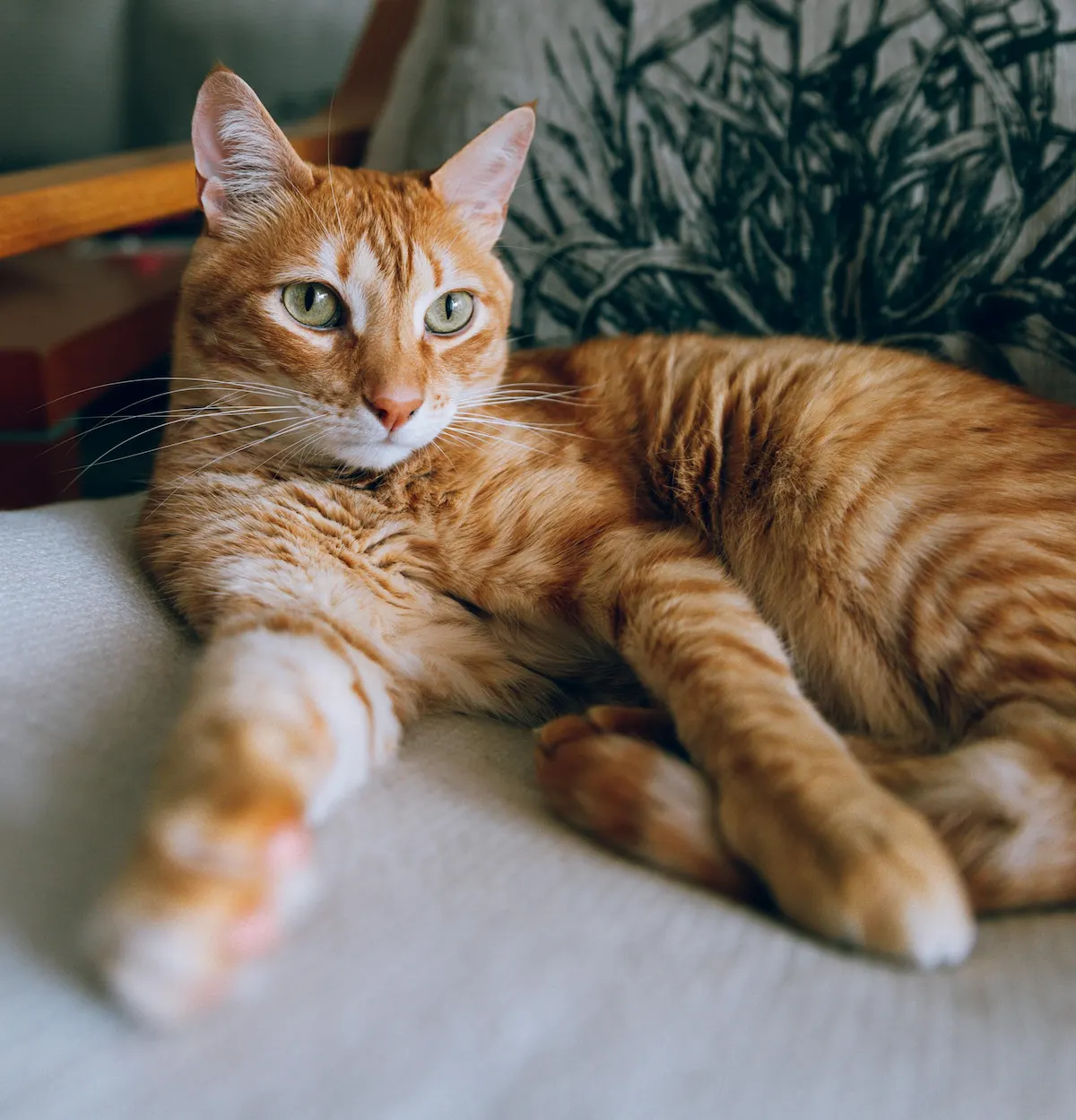
If your older cat is jumping less, moving more carefully, or choosing easier places to rest, it is natural to wonder whether this is just ageing or something more.
Arthritis is common in older cats, but the signs are often subtle. Many cats do not limp obviously. Instead, owners may notice small changes in movement, grooming, litter tray use, or daily routine. Cornell notes that older cats with arthritis may have trouble getting to litter trays, food, and water, especially if this involves jumping or stairs, and that many arthritic cats do not become overtly lame.
Disclaimer: This article is for general education and is not a substitute for veterinary advice. If your cat seems in pain, is struggling to move, or you are worried about a change in behaviour, speak to your vet.
Key takeaway: Small mobility changes in older cats are easy to miss. A senior cat with arthritis may jump less, move more stiffly after rest, avoid stairs, struggle with the litter tray, groom less, or become less playful. These signs do not confirm arthritis on their own, but they are worth noticing. Simple home changes may support comfort, but ongoing or worsening problems still need veterinary advice.
Senior cat arthritis: what it can look like at home
One reason arthritis can be missed is that cats often adapt quietly. Instead of showing one dramatic sign, they may simply start doing less.
You might notice that your cat:
- no longer jumps onto a favourite chair
- pauses before climbing stairs
- sleeps on lower surfaces instead of higher ones
- takes a little longer to get going after a nap
- seems less keen on play or interaction
International Cat Care says caregivers should watch for changes in normal habits and behaviours because cats can hide signs of pain, and its mobility guide lists reduced jumping, stiffness after rest, litter tray difficulty, sleeping in easier-to-access places, grooming changes, and temperament changes among the signs to notice.
This is also why it helps not to think of arthritis only as “limping”. Cornell specifically says many arthritic cats do not become overtly lame.
You may also want to read our guide to Signs of ageing in cats for the bigger picture, because some age-related changes can overlap.
Early signs of senior cat arthritis owners may notice
Jumping up less often
This is one of the most common changes owners notice first.
Your cat may:
- stop jumping onto beds, sofas, windowsills, or worktops
- choose lower resting places instead
- hesitate before jumping
- jump in stages rather than one smooth movement
That does not automatically mean arthritis, but it is a useful pattern to pay attention to. International Cat Care lists reluctance or difficulty jumping up or down from a height as a common sign of muscle or joint pain and mobility problems.
Moving more slowly or seeming stiff after rest
Some cats seem stiffest when they first get up, then loosen slightly after a few steps.
You might notice:
- slower rising after sleep
- a more careful walk
- stiffness after resting
- less fluid movement than before
International Cat Care includes stiffness in the legs, especially after sleeping or resting, among the signs owners may see at home.
Hesitating on stairs or around small obstacles
Stairs can become harder for older cats with sore joints.
A cat may:
- go up or down more slowly
- pause and think before using the stairs
- avoid a route they used to take easily
- be less willing to use a cat flap
International Cat Care lists difficulty going up or down stairs and hesitancy using the cat flap as common mobility signs.
Trouble getting into the litter tray
This is an important one because it can look like a behaviour problem when it may actually be an access problem.
You may notice:
- standing at the tray edge for longer
- climbing in more awkwardly
- toileting just outside the tray
- avoiding a tray that has higher sides or is harder to reach
Cornell says cats with painful arthritis may have difficulty gaining access to a litter tray, especially if stairs are involved, and that even climbing into the box may be painful for some older cats. Cornell also notes that a low-sided box or a cut-out may help with access.
This may overlap with other issues too, so it is worth reading our post on Senior cat peeing outside the litter tray if you are seeing a bigger toileting pattern.
Grooming less or looking a bit scruffier
Some older cats stop grooming certain areas as thoroughly, especially if twisting or bending is uncomfortable.
That may show up as:
- a duller coat
- slight matting
- a scruffier lower back or back end
- overgrown claws from lower activity
International Cat Care lists less frequent grooming, a dull or matted coat, and overgrown claws as signs that can go along with mobility problems. Cornell also notes that older cats often groom themselves less effectively than younger cats.
Sleeping in easier-to-reach places
A cat that used to sleep high up may start choosing lower, simpler spots.
This often looks like:
- floor-level resting places
- lower chairs instead of high beds
- unusual sleeping spots that are easier to access
- staying in one main area more often
International Cat Care includes sleeping in locations that are easier to access among the changes owners may notice.
Being less playful, less social, or a bit irritable
Pain or reduced mobility can change behaviour as well as movement.
You may notice:
- less play
- less interest in exploring
- wanting less handling
- seeming a bit grumpy when picked up or touched
- spending more time alone
International Cat Care lists reduced interest in play, less interaction, and reduced tolerance of being handled among the possible signs. Cornell also notes that pain or reduced mobility can contribute to behaviour changes in older cats.
Why these changes should not be dismissed as just old age
It is true that older cats often slow down. But “slowing down” should not be used as a reason to ignore change.
Cornell says owners of older cats often notice behaviour changes and may assume they are simply due to old age, but any alteration in physical condition or behaviour should alert you to contact your veterinarian.
That matters because:
- arthritis is common in older cats
- cats may hide pain well
- other health issues can sometimes look similar
So the goal is not to diagnose arthritis at home. The goal is to notice a pattern, make daily life easier, and share what you are seeing with your vet.
For the wider context, our Senior cat health guide may help you spot where mobility changes fit into the bigger picture.
Home changes that may support comfort
These home changes do not diagnose or treat senior cat arthritis, but they may make daily life easier and more comfortable for an older cat who seems stiff or less mobile.
If your cat is also finding the litter tray harder to use, our guide to the best litter box for senior cats explains lower-entry trays, easier access, and setup changes that may help
Make favourite places easier to reach
If your cat still wants to be near you or use favourite resting spots, try reducing the effort needed to get there.
Practical ideas:
- move a favourite bed to a lower surface
- use a sturdy step or two to reach a sofa
- create a gentler route instead of one big jump
- keep a comfortable resting place in the room your cat uses most
Improve grip on slippery floors
Hard floors can make careful movement even harder.
It often helps to place:
- rugs
- runners
- non-slip mats
Focus on the routes to:
- food and water
- litter trays
- beds
- favourite resting places
Check litter tray access
A litter tray can be “technically available” but still awkward to use.
Look at:
- whether the sides are too high
- whether the tray is up or down stairs
- whether the location feels awkward to reach
- whether your cat seems hesitant when climbing in
Cornell says some older cats may need a litter tray with low sides or a cut-out for easier access.
Keep food and water easy to reach
Cornell notes that arthritic cats may have difficulty gaining access to food and water dishes if they have to jump or climb stairs to reach them.
That means it is sensible to:
- keep bowls on the level your cat uses most
- avoid making your cat travel unnecessarily far
- think about access as well as appetite
Reduce unnecessary climbing
If your cat now spends most of the day on one floor, keep the main essentials there too.
That may include:
- a bed
- water
- food
- a litter tray
This simple change can reduce repeated effort throughout the day.
Protect rest and routine
Many older cats cope better when the home is predictable.
Helpful adjustments include:
- warm, quiet sleeping areas
- easy access to regular resting spots
- avoiding frequent layout changes
- making comfort improvements gradually rather than all at once
A simple home checklist
Here is a quick mobility check you can use at home:
- Is your cat jumping less than before?
- Do they seem stiff after rest?
- Are stairs or cat flaps becoming harder?
- Is litter tray access less smooth?
- Is grooming less thorough?
- Are they sleeping in easier-to-reach places?
- Are they less playful or more irritable?
A “yes” does not prove arthritis, but several small changes together are worth noting.
What to track before speaking to your vet
You do not need a perfect diary. A few clear notes are enough.
Try to track:
- when you first noticed the change
- what seems harder now
- whether it is happening daily or only sometimes
- whether it is getting worse
- whether litter tray use, grooming, appetite, or behaviour has changed too
Short videos can be very useful. International Cat Care says cats may move differently or be reluctant to move in the clinic, and that videos from home can be extremely helpful to show the veterinarian how the cat is moving normally.
Useful clips might show:
- walking after resting
- going up or down stairs
- getting into the litter tray
- attempting or avoiding a jump
When to speak to your vet
If you think senior cat arthritis may be behind the changes you are seeing, it is sensible to speak to your vet rather than assume it is just old age.
That includes:
- jumping less for more than a brief spell
- repeated stiffness after rest
- growing reluctance with stairs
- new difficulty with the litter tray
- movement changes that seem to be getting worse
- signs that your cat is less comfortable day to day
Speak to your vet sooner if:
- your cat seems in pain
- movement worsens suddenly
- they cannot settle comfortably
- they stop using the litter tray
- appetite, weight, or general behaviour also changes
International Cat Care says that if you are concerned a cat is showing signs of pain or mobility problems, it is important to have them checked by a veterinarian, and it notes that diagnosis is commonly based on the clinical examination together with the history of changes observed at home.
For a wider look at movement changes in older cats, our Senior Cat Mobility & Pain guide brings together related advice on stiffness, limping, jumping and home setup.
FAQs
How do I know if my senior cat has arthritis?
You may notice patterns such as jumping less, stiffness after rest, litter tray difficulty, grooming changes, or reduced play. But home signs alone do not confirm senior cat arthritis. A vet needs to assess the problem properly.
Can arthritis make a cat stop jumping?
Yes. Some cats with arthritis become reluctant to jump, hesitate before jumping, or choose lower resting places instead. International Cat Care lists difficulty jumping as a common sign of mobility problems.
What home changes can help an older cat with stiff joints?
The most useful changes are usually practical ones: easier access to favourite resting spots, better grip on slippery floors, low-entry litter trays, and keeping food, water, and rest areas easy to reach. Cornell and International Cat Care both describe access changes like these as helpful for older cats with mobility problems.
Is stiffness in an older cat always arthritis?
No. Stiffness and movement changes can have different causes. That is one reason it is best not to assume. Notice the pattern, make home more comfortable, and speak to your vet for proper assessment.
When should I speak to my vet about mobility changes?
If the change keeps happening, seems to be worsening, or starts affecting comfort, grooming, litter tray use, or behaviour, it is worth discussing with your vet. You do not need to wait until the problem looks dramatic. Cornell advises that any change in an older cat’s behaviour or physical condition should prompt contact with a veterinarian.
External references
- International Cat Care — Home modifications guide for cats with muscle or joint pain and mobility problems
- Cornell Feline Health Center — The special needs of the senior cat