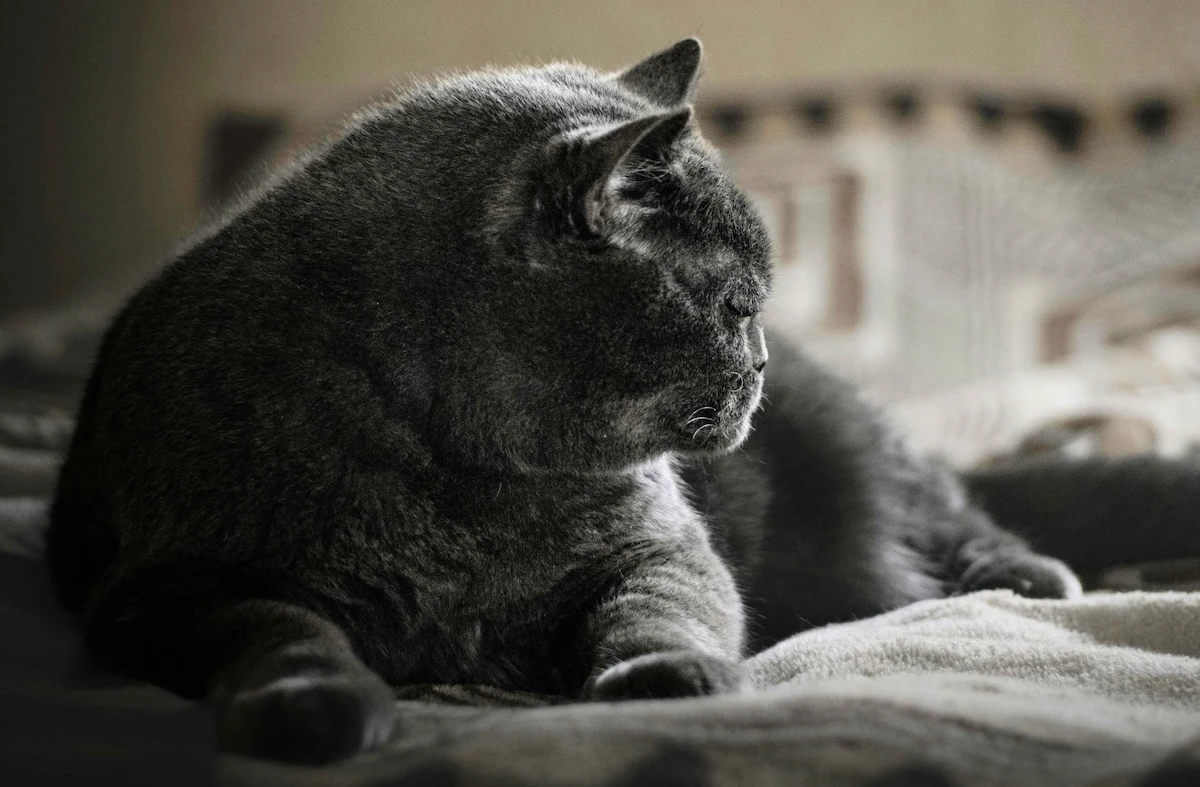
Hyperthyroidism in older cats may first show up as weight loss despite a good appetite, increased thirst, more urination, restlessness or coat changes. These signs can overlap with other senior-cat health problems, so the useful step at home is to notice the pattern and speak to your vet.
Disclaimer: This article is for educational purposes only and is not a substitute for professional veterinary advice. If your cat is in pain, losing weight, vomiting frequently, drinking much more than usual, or acting differently, speak to your vet.
Key takeaway: Hyperthyroidism in older cats may cause weight loss despite eating well or more than usual. Increased thirst and urination, restlessness, vomiting, diarrhoea and coat changes can also occur. These signs do not confirm hyperthyroidism, so new or persistent changes should be discussed with your vet.
Quick answer: signs of hyperthyroidism in older cats
Common signs owners may notice include:
- weight loss despite eating normally or more than usual
- increased appetite
- drinking and urinating more
- restlessness or increased vocalisation
- vomiting or diarrhoea
- a greasy, clumped or less tidy coat
These changes can have other causes and do not confirm hyperthyroidism. A vet assessment is needed to understand what is happening.
What is hyperthyroidism in older cats?
Hyperthyroidism means the thyroid gland is producing too much thyroid hormone. Thyroid hormones affect the body’s pace, including metabolism, energy use, appetite, weight, and other body systems.
In simple terms, an overactive thyroid can affect how quickly the body uses energy. That is why owners may notice changes in weight, appetite, thirst, activity, digestion, or coat condition.
Hyperthyroidism is commonly discussed in older cats, but the signs are not unique to this condition. Similar changes can happen for several reasons, especially in senior cats.
Why hyperthyroidism signs can be mistaken for normal ageing
Older cats often change gradually. They may sleep more, groom differently, lose muscle, change their routine, or become more vocal with age. Because these changes can happen slowly, it is easy to explain them away as “just getting older”.
Hyperthyroidism can be missed because some cats still seem bright, alert, and interested in food. In fact, some cats may appear hungrier than usual while still losing weight. That can make the change feel confusing.
For a broader overview of health changes as cats age, see our Senior Cat Health guide.
The important point is this: weight loss, thirst changes, vomiting, diarrhoea, or noticeable behaviour changes should not be dismissed simply because a cat is older.
Common signs of hyperthyroidism in older cats
Losing weight despite eating more
One of the most noticeable patterns owners may spot is an older cat losing weight while still eating normally, or even eating more than usual.
You might notice:
- A bonier spine, hips, shoulders, or face
- Less muscle over the back legs
- A lighter feel when you pick your cat up
- Your cat asking for food more often
- Weight loss despite a good appetite
Weight loss despite a good appetite can be associated with hyperthyroidism, but it can also have other causes. Persistent weight loss in an older cat is worth discussing with your vet.
Drinking more or using the litter tray more
Some owners first notice a change around the water bowl or litter tray.
You may see:
- Water bowls emptying faster
- Your cat visiting the bowl more often
- Drinking from unusual places, such as taps or plant trays
- Wetter litter than usual
- Larger urine clumps
- More frequent litter tray cleaning
This can be hard to track in a multi-cat household, but even a rough note can help. If your older cat seems to be drinking more or producing more urine, it is sensible to speak to your vet because this can overlap with several senior cat health issues.
For more about changes in urine amount, frequency and appearance, see our Senior Cat Urine Changes guide.
Restlessness, pacing or increased vocalisation
Hyperthyroidism can sometimes be associated with a cat seeming more active, restless, vocal, or unsettled.
You might notice your older cat:
- Pacing around the home
- Struggling to settle
- Meowing more, especially at night
- Acting more demanding around food
- Seeming unusually alert or unsettled
- Becoming more irritable than normal
Behaviour changes in older cats can have many causes, so try to describe the change rather than guessing the reason. For example: “She has started pacing at night and asking for food more often over the last three weeks.”
That kind of detail is often more useful than trying to label the behaviour yourself.
Vomiting, diarrhoea or digestive changes
Some cats with hyperthyroidism may vomit more often or have looser stools.
Owners may notice:
- More frequent vomiting
- Loose stools
- Diarrhoea
- Changes in appetite at the same time as digestive changes
- Weight loss alongside digestive upset
Occasional digestive upsets can happen for many reasons, but repeated vomiting, ongoing diarrhoea, or digestive changes in an older cat should be discussed with your vet.
Avoid making sudden diet changes or trying online remedies without veterinary advice, especially if your cat is losing weight or seems unwell.
Coat changes or reduced grooming
An older cat’s coat can change for several reasons. With hyperthyroidism, some cats may develop a coat that looks less tidy, greasy, clumped, matted, or dry.
You might notice:
- A greasy-looking coat
- Fur that separates into clumps
- More matting than usual
- A dull or untidy appearance
- Less grooming
- A generally “scruffy” look compared with normal
Coat changes are not specific to hyperthyroidism. Pain, dental problems, arthritis, obesity, stress, and other senior cat health issues can also affect grooming. The useful thing is to notice whether coat changes are happening alongside weight loss, appetite changes, thirst changes, or behaviour changes.
Signs can overlap with other senior cat health issues
Weight loss, increased thirst, appetite changes, vomiting and behaviour changes can have several possible causes in an older cat. They should not be used to diagnose hyperthyroidism at home.
If drinking, urination or weight changes are especially noticeable, our Senior Cat Kidney Disease and Diabetes in Older Cats guides may help you understand the wider pattern before speaking to your vet.
Your role is simply to notice what has changed and describe the pattern clearly. Your vet can then assess the possible causes.
What to track before speaking to your vet
A simple note on your phone is enough. You do not need a complicated tracker.
Owner checklist: changes worth noting
Appetite
- Is your cat eating more than usual?
- Asking for food more often?
- Eating quickly or seeming unusually hungry?
- Eating less than normal?
Weight and body shape
- Does your cat look thinner?
- Can you feel the spine, hips, or shoulders more easily?
- Has the face or back end started to look bonier?
- Do you have recent weight measurements?
Drinking
- Are water bowls emptying faster?
- Is your cat drinking from unusual places?
- Is this new or gradually increasing?
Litter tray
- Is the litter wetter?
- Are urine clumps larger?
- Are you cleaning the tray more often?
- Is your cat visiting the tray more than usual?
Digestion
- Has vomiting become more frequent?
- Are stools looser than usual?
- Is diarrhoea happening repeatedly?
- Are digestive changes happening alongside weight loss?
Behaviour
- Is your cat more restless?
- Meowing more?
- Pacing at night?
- More demanding around food?
- More irritable, clingy, or unsettled?
Coat and grooming
- Does the coat look greasy, matted, dry, or clumped?
- Is your cat grooming less?
- Is the coat change new?
Timeline
- When did you first notice the change?
- Is it getting worse?
- Are several signs happening together?
Photos can help too, especially if weight or coat changes have happened gradually.
When to speak to your vet
You do not need to be sure it is hyperthyroidism before asking for advice. If something has changed, especially in an older cat, your vet can help work out what is going on.
Speak to your vet if:
- Your older cat is losing weight
- Your cat is eating more but getting thinner
- Drinking or litter tray habits have noticeably changed
- Vomiting or diarrhoea is frequent or persistent
- Behaviour changes are new, worsening, or unusual for your cat
- Several mild signs are appearing together
- Your cat seems weak, withdrawn, distressed, or not themselves
It is also worth speaking to your vet if you feel unsure. Older cats can hide discomfort well, and early conversations are often easier than waiting until changes are more obvious.
What not to do at home
It is understandable to want answers quickly, especially if your older cat is losing weight or acting differently. But hyperthyroidism cannot be confirmed from signs alone.
Try not to:
- Diagnose your cat at home
- Assume weight loss is normal ageing
- Wait only because your cat is still eating well
- Start supplements or online remedies
- Make sudden diet changes without veterinary advice
- Compare your cat too closely with another cat’s diagnosis
A calm, practical approach is best: note the changes, speak to your vet, and take your observations with you.
FAQs
What are the first signs of hyperthyroidism in older cats?
Early signs can be subtle. Owners may notice weight loss despite a good appetite, increased thirst, wetter litter, restlessness, more vocalisation, vomiting, diarrhoea, or coat changes. These signs can overlap with other conditions, so they are worth discussing with your vet rather than using them to diagnose your cat at home.
Can a cat with hyperthyroidism still eat well?
Yes. Some cats with hyperthyroidism continue eating well or even seem hungrier than usual. That is why weight loss despite a good or increased appetite is a sign worth taking seriously in an older cat.
Does hyperthyroidism make cats drink more?
Increased thirst and urination can be seen with hyperthyroidism, but they can also happen with other senior cat health issues. If your cat’s water bowl is emptying faster or the litter tray is wetter than usual, it is sensible to mention this to your vet.
Can hyperthyroidism change a cat’s behaviour?
Some cats may seem more restless, vocal, demanding, unsettled, or irritable. Behaviour changes in older cats can have many causes, so the safest approach is to track what has changed and speak to your vet if it is new, persistent, or unusual for your cat.
Is weight loss normal in older cats?
Weight loss should not be dismissed as simply “old age”. Older cats can lose weight for several reasons, including health issues that need veterinary assessment. If your cat is getting thinner, especially while still eating, speak to your vet.
Can I tell if my cat has hyperthyroidism without a vet?
No. Signs at home can raise suspicion, but they cannot confirm hyperthyroidism. A vet can examine your cat and decide whether tests are needed.
Final thoughts
Hyperthyroidism in older cats can be difficult to recognise because several signs overlap with other health problems. Weight loss despite eating well, increased thirst, more urination, restlessness and coat changes are useful patterns to notice.
You do not need to work out the cause yourself. Note what has changed, when it started and whether several changes are happening together, then share those observations with your vet.
External references
Cornell Feline Health Center — Hyperthyroidism in Cats
PDSA — Hyperthyroidism in cats