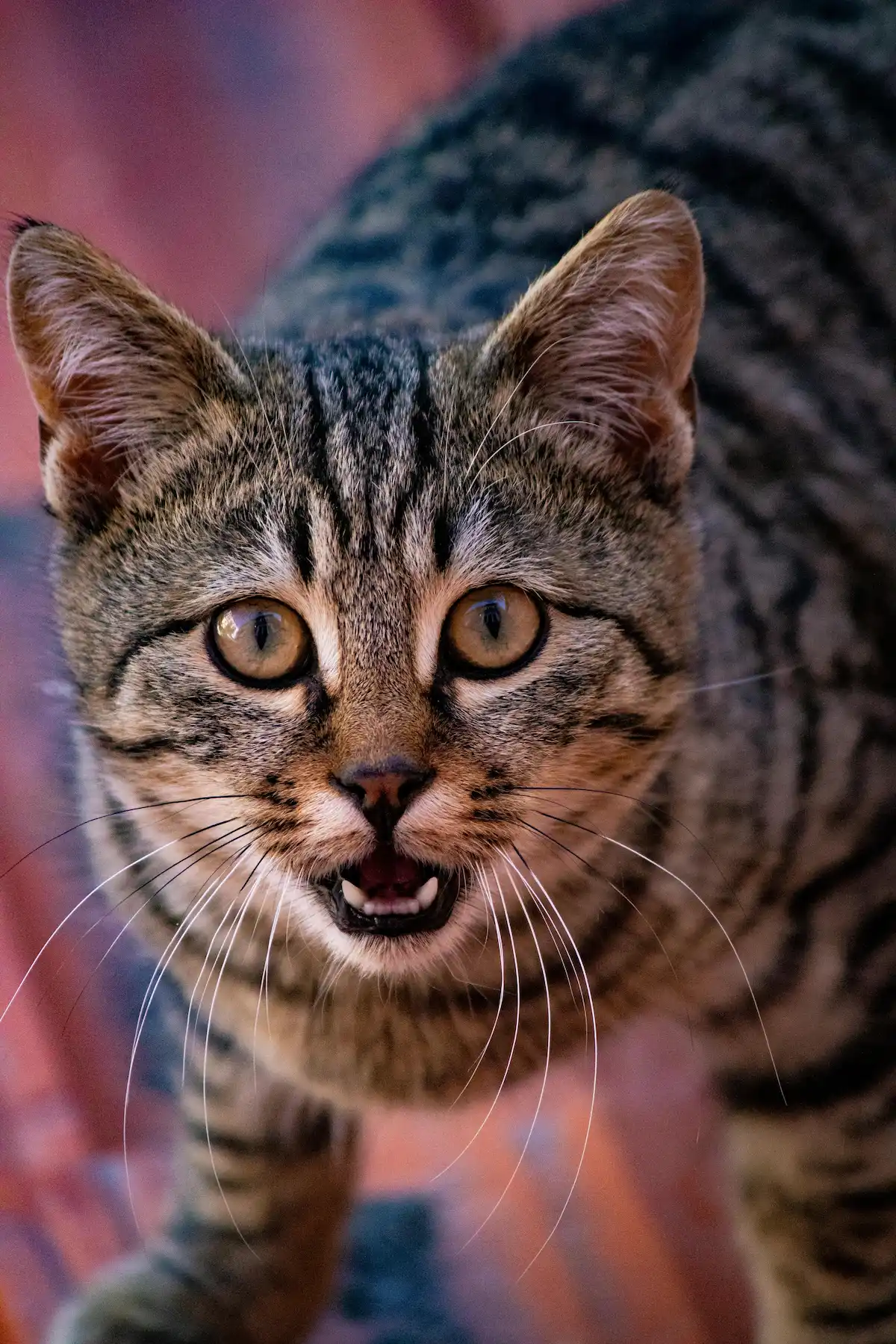
Senior cat loud meowing can be worrying, especially if your older cat used to be quiet or the meowing has started happening at night. Some cats do become more vocal with age, but a new, louder, or more persistent pattern is still worth noticing.
The aim is not to guess the cause at home. It is to look for patterns, notice any other changes, and know when the behaviour is worth mentioning to your vet.
Disclaimer: This article is for educational purposes only and is not a substitute for professional veterinary advice. If your cat is in pain, losing weight, vomiting frequently, or acting differently, speak to your vet.
Key takeaway: Senior cat loud meowing can happen for many reasons, including routine changes, hunger, sensory changes, confusion, discomfort, or stress. The safest approach is to notice the pattern, look for other changes, and speak to your vet if the meowing is new, persistent, increasing, or unusual for your cat.
Quick answer: do cats meow more as they get older?
Some cats do meow more as they get older, especially if their routine, senses, comfort, sleep pattern, or confidence has changed. But loud, constant, new, or night-time meowing should not be dismissed as normal ageing.
If your older cat is yowling, meowing much more than usual, seeming confused, restless, hungry, thirsty, uncomfortable, or acting unlike themselves, speak to your vet.
Senior cat loud meowing: why it is worth noticing
A loud meow from an older cat does not automatically mean something serious. Some cats have always been chatty. Others become more vocal as their confidence, senses, comfort, or daily routine changes.
What matters most is the difference from your cat’s normal behaviour.
A senior cat who has always meowed loudly before meals is different from a cat who suddenly starts crying at night, pacing around the house, or meowing in a way that sounds distressed.
Older cats can show changes in subtle ways. A shift in vocalising may sit alongside changes in appetite, thirst, toileting, sleep, grooming, movement, or social behaviour. For a wider overview of age-related health changes, you may find our Senior Cat Health guide helpful.
Common loud meowing patterns in older cats
Before trying to explain the meowing, it helps to look at the pattern. This gives you better information and helps avoid jumping to conclusions.
Is the loud meowing new?
A new change is more important than a long-standing habit.
For example, a cat who has always shouted for breakfast may simply have a strong routine. But if your quiet senior cat suddenly starts meowing loudly several times a day, that is more worth noting.
Ask yourself:
- When did it start?
- Is it happening more often?
- Does the meow sound different from usual?
- Does your cat seem settled afterwards, or still distressed?
Does it happen at night?
Night-time timing is useful to note because it can reveal a different pattern from daytime vocalising. If loud meowing or yowling happens mainly after dark, note when it starts, how long it lasts, and whether your cat is also pacing, confused, uncomfortable or harder to settle.
If repeated calling after dark is the main concern, see our Older Cat Yowling at Night guide for the more specific night-time pattern.
Does it happen around food or water?
Some older cats meow loudly around feeding times because they are used to a routine. Others may seem more demanding, unsettled, or harder to satisfy than before.
Notice whether your cat is:
- asking for food earlier than usual
- eating more but losing weight
- drinking more
- seeming restless or demanding
- waking you for food overnight
These changes do not confirm a specific condition, but they are useful details to mention to your vet. If you are noticing appetite, weight, thirst, or restlessness changes together, this may also connect naturally with Hyperthyroidism in Older Cats: Common Signs Owners May Notice.
Does it happen near the litter tray?
Loud meowing near the litter tray deserves careful attention.
A one-off meow may not mean much, but speak to your vet promptly if your cat is repeatedly visiting the litter tray, straining, producing little or no urine, crying, or showing signs of distress.
Any loud meowing linked with litter tray distress is worth taking seriously, especially if your cat seems unable to pass urine or keeps returning to the tray.
Does your cat meow when left alone?
Some older cats become more dependent on familiar people and routines. A cat who meows when left alone may be seeking reassurance, feeling unsettled, or reacting to changes in confidence, hearing, sight, or the household routine.
This does not mean your cat is being difficult. It may simply mean they are finding something harder than they used to.
For broader context, see Senior Cat Behaviour Changes: A Calm Guide to What’s Normal vs Concerning.
Common reasons senior cats may meow loudly
There is rarely one simple explanation without a proper assessment. Still, these are some common, owner-observable reasons older cats may become louder.
Your cat may be seeking reassurance or company
Older cats can become more attached to routine and familiar people. They may meow when they cannot find you, when a door is closed, or when the house feels quiet.
This can be more noticeable if your cat is less confident moving around, less able to jump to favourite places, or more easily unsettled by change.
Helpful things to notice include:
- whether your cat settles when you speak calmly
- whether the meowing happens when rooms are dark or quiet
- whether your cat seems more clingy than usual
- whether they appear lost or unsure where to go
Hunger, thirst, or routine changes may be involved
Some loud meowing is linked with normal routine. A cat may meow before breakfast, when a food bowl is empty, or when their usual schedule changes.
However, changes in appetite or thirst are worth tracking in senior cats. If your cat seems hungrier than usual, thirstier than usual, or is changing weight, those details are worth mentioning to your vet.
Try not to solve this by repeatedly changing foods or feeding patterns without advice. Sudden changes can make it harder to understand what is really happening.
Hearing or sight changes can affect vocalising
As cats age, changes in hearing or sight may affect how settled they feel. A cat who cannot hear as well may seem louder, more easily startled, or less responsive when called. A cat whose vision is changing may seem more cautious, especially in dim light.
You do not need to diagnose this yourself. Just notice what has changed.
For example:
- Does your cat startle more easily?
- Do they miss familiar jumps?
- Do they seem unsure in darker rooms?
- Do they meow more when they cannot see you?
These observations can help your vet understand the bigger picture.
Discomfort or mobility frustration may play a part
Some cats vocalise more when they are uncomfortable, frustrated, or finding everyday movement harder.
This may show up as loud meowing near stairs, furniture, litter trays, food areas, or favourite resting spots. Your cat may still be eating and interacting, but they might hesitate before jumping, avoid certain places, or seem unsettled when trying to get comfortable.
Watch for linked signs such as:
- reluctance to jump
- sleeping in easier-to-reach places
- grooming less
- irritability when touched
- hiding more
- seeming restless but not settling
These signs do not prove pain, but they are worth noting.
Confusion or cognitive changes may be worth discussing
Confusion can sometimes sit alongside increased vocalising in older cats. You may notice your cat seeming unsure in familiar rooms, staring, wandering, or calling out more than usual.
Loud meowing alone does not tell you whether cognitive change is involved. If confusion, disorientation or disrupted sleep after dark is the main pattern, see our Cat Dementia at Night guide for a closer look.
Stress, change, or disrupted routines can make meowing worse
Senior cats often rely on predictability. A change that feels small to us may feel bigger to an older cat.
Possible triggers include:
- visitors
- building work
- moving furniture
- a new pet
- a new baby
- different feeding times
- a changed sleeping area
- another pet passing away
- a family member being away
If loud meowing started after a household change, write that down. It may be part of the pattern.
A simple senior cat loud meowing tracker
Before speaking to your vet, it can help to write down what you notice for a few days. You do not need to diagnose the reason. Clear observations are enough.
| What to note | Why it helps |
|---|---|
| Time of day | Helps spot night-time, mealtime, or routine-linked patterns |
| Where your cat is | May show links with food, water, litter tray, doors, stairs, or resting spots |
| What happens before it starts | Helps identify possible triggers |
| What settles your cat | Reassurance, food, company, light, or access may give useful clues |
| Appetite changes | Eating more, less, or differently is worth noting |
| Drinking or litter tray changes | Useful information for your vet |
| Weight or grooming changes | Can show wider wellbeing changes |
| Restlessness or confusion | Helpful if your cat seems unsettled, lost, or harder to comfort |
| Signs of distress | Helps decide how quickly to seek advice |
When to speak to your vet
You do not need to wait until the meowing becomes extreme. If the behaviour is unusual for your cat, it is reasonable to ask for advice.
Worth mentioning soon
Speak to your vet if the loud meowing is:
- new for your cat
- happening more often
- waking the household regularly
- happening at night and not settling
- paired with appetite, thirst, weight, toileting, grooming, mobility, or behaviour changes
- linked with confusion, pacing, hiding, or seeming unsettled
- difficult to comfort
- noticeably different in tone
This does not mean something is definitely wrong. It simply means the pattern is useful enough to discuss.
More urgent signs
Seek prompt veterinary advice if loud meowing happens with:
- obvious pain or distress
- repeated vomiting
- collapse or weakness
- breathing difficulty
- blood in urine
- repeated litter tray visits with little or no urine
- sudden major behaviour change
- your cat seeming very unwell or unable to settle
A calm response is not the same as doing nothing. If something feels clearly wrong, it is better to ask your vet.
What not to do if your senior cat is meowing loudly
It can be frustrating when an older cat meows loudly, especially overnight. Still, punishment or shouting can make the situation more stressful.
Try not to:
- punish your cat for meowing
- assume it is “just old age”
- assume it is dementia
- ignore linked changes
- make sudden diet changes without advice
- give supplements, medication, or calming products as a substitute for veterinary advice
- wait too long if the behaviour is new, intense, or distressing
Your cat is not trying to be difficult. Loud meowing is communication, even when the reason is not obvious.
Final thoughts
Senior cat loud meowing is worth noticing, but it does not automatically mean something serious. The most useful step is to compare it with your cat’s normal behaviour.
Look at when it happens, what else has changed, and whether your cat seems distressed or harder to settle. If the meowing is new, persistent, increasing, happening at night, or paired with other changes, it is worth speaking to your vet.
You do not need to know the cause before asking for help. Clear notes about what you are seeing can make the conversation much easier.
FAQs
Is loud meowing normal in senior cats?
Some senior cats do become more vocal with age, especially if they are seeking reassurance, reacting to routine changes, or finding parts of daily life harder. However, a new or increasing pattern should not be dismissed as normal ageing.
Can hearing loss make an older cat meow louder?
Sensory changes may affect how some older cats behave or vocalise. A cat who hears less clearly may seem louder or more easily startled. Your vet can help assess whether hearing, sight, comfort, or another issue may be involved.
Could loud meowing mean my cat is in pain?
It can be one possible sign of discomfort, especially if your cat also hides, avoids jumping, reacts badly to touch, grooms less, seems restless, or struggles to settle. Loud meowing alone does not prove pain, but it is worth noting alongside other changes.
Should I ignore my senior cat’s loud meowing?
No. Stay calm, avoid punishment, and look for patterns. If the loud meowing is unusual for your cat, happening more often, or paired with other changes, speak to your vet.
When should I speak to my vet about loud meowing?
Speak to your vet if the meowing is new, increasing, happening at night, difficult to settle, or paired with changes in appetite, thirst, weight, toileting, grooming, mobility, mood, or behaviour.
External references
ASPCA — Meowing and Yowling — explains that excessive meowing can have medical or behavioural causes and that cats who meow a lot should be checked by a veterinarian.
Cornell Feline Health Center — The Special Needs of the Senior Cat — notes that elderly cats may show changes such as wandering, excessive meowing, disorientation, and social behaviour changes.