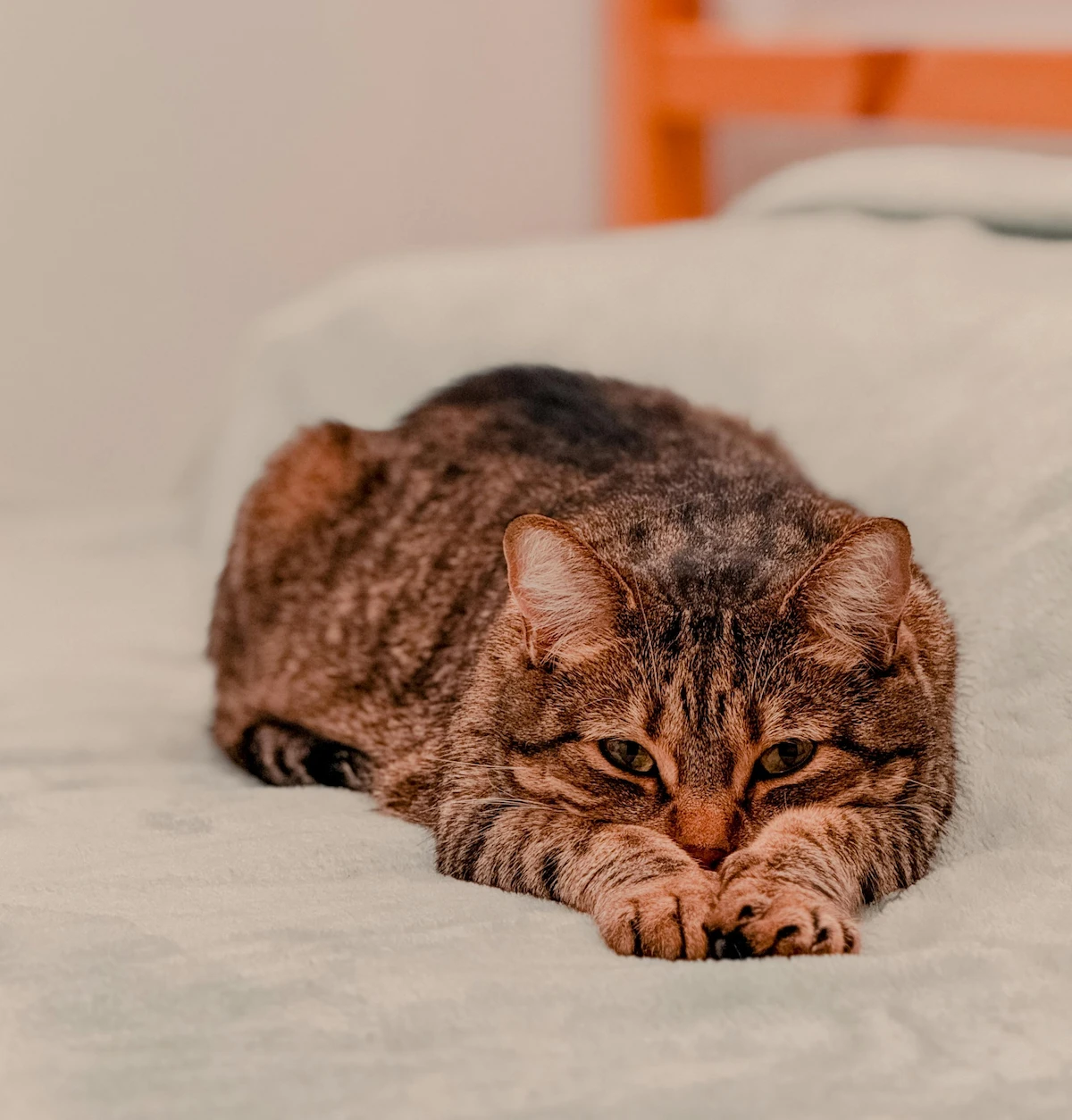
Older cat restless at night? It can be worrying, especially if they previously settled well overnight. You may notice pacing, wandering, repeatedly getting up, changing sleeping spots or seeming unable to relax.
One unsettled night does not always mean there is a problem. However, a new, persistent or worsening pattern is worth noticing, particularly when it appears alongside changes in comfort, mobility, appetite, toileting or behaviour.
Disclaimer: This article is for educational purposes only and is not a substitute for professional veterinary advice. If your cat seems painful or distressed, is losing weight, eating less, appears confused, or is acting unlike themselves, speak to your vet.
Key takeaway: If your older cat has become restless at night, notice what the behaviour looks like and what else has changed. Pacing, wandering, repeatedly waking or struggling to settle can have several possible explanations and are worth mentioning to your vet when the pattern is new, persistent or worsening.
Quick answer: older cat restless at night
An older cat may become restless at night because they are uncomfortable, sleeping more during the day, less confident after dark, unsettled by a routine change or experiencing another age-related health or behaviour change.
Notice whether your cat is pacing, wandering, vocalising, repeatedly changing sleeping spots or struggling to get comfortable. Speak to your vet if the pattern is new, keeps happening or appears alongside appetite, weight, drinking, toileting, mobility or behaviour changes.
What night-time restlessness can look like in an older cat
Night-time restlessness is not always dramatic. In some cats, it looks like walking from room to room, climbing on and off the bed, or settling down for a moment before getting up again. In others, it may look more like wandering, staring, seeming unsure where to lie down, or moving about at times when they used to sleep soundly. Cornell notes that older cats can show wandering and apparent disorientation, while Cats Protection highlights behaviour and sleep-pattern changes as things owners should notice in elderly cats.
Sometimes restlessness comes on its own. Sometimes it appears alongside other changes, such as more vocalising, sleeping more in the daytime, using the litter tray differently, or seeming less comfortable when lying down or getting up. That overlap matters, because the wider pattern is often more useful than any one sign on its own.
What it can mean in an older cat
Discomfort or pain
One possible reason is simple discomfort. An older cat who is struggling to get comfortable may keep shifting position, move between sleeping spots, or avoid settling deeply. Cats Protection’s arthritis guidance includes restless behaviour at night among the behaviour changes that can appear in cats with arthritis.
That does not mean every restless cat has arthritis. It does mean that comfort and mobility are worth thinking about, especially if your cat also seems slower on stairs, less willing to jump, stiffer after resting, or fussier about where they lie down. Cornell also notes that arthritis is common in older cats and that mobility changes can affect day-to-day comfort and access around the home.
If stiffness, jumping changes or difficulty settling are also part of the pattern, our Senior Cat Mobility & Pain guide brings together common movement and comfort changes.
Changes in sleep-wake patterns with age
Some older cats do seem to drift into a different sleep routine. They may nap more during the day and then appear more wakeful overnight. Cats Protection says some elderly cats may sleep more in the daytime and be restless at night.
That does not make the change meaningless. A shifted sleep pattern may still be worth mentioning if it is new, getting clearer, or happening alongside other behaviour or health changes. A calm way to think about it is this: the pattern may be age-related, but it still deserves to be noticed properly.
If your cat is also sleeping noticeably more during the day, our Older cat sleeping more guide explains what may be normal and which wider changes deserve attention.
Sensory change, confusion, or disorientation
Some older cats become less confident after dark if their sight, hearing or awareness of familiar surroundings has changed. Restlessness may then look like wandering, repeatedly changing position, or seeming unsure where to settle.
If confusion, staring, getting lost in familiar places or a changed sleep-wake pattern is the main concern, see our Cat Dementia at Night guide for a closer look.
Stress, insecurity, or routine disruption
Older cats are often less adaptable than they once were. Cornell notes that older cats can show behavioural changes, and Cats Protection says psychological and behavioural changes can occur in elderly cats as they age.
That means building work, visitors, moved furniture, a changed feeding routine, or a less comfortable sleeping area can matter more than they used to. This does not mean the cause is always “behavioural”. It simply means home changes are part of the picture worth noticing. If the timing of the restlessness lines up with a routine change or household disruption, that is useful context to keep in mind.
Other health changes that can affect behaviour at night
Night-time restlessness can appear alongside broader changes in appetite, weight, drinking, toileting, movement or behaviour.
The useful question is not “which illness causes this?” but “what exactly has changed, and what else am I noticing?” That gives you a clearer pattern to discuss with your vet without trying to diagnose the cause at home.
What to note before speaking to your vet
If your older cat is restless at night, try to note the pattern as clearly as you can. You do not need to track everything perfectly, but a few details can make it easier to explain what has changed when you speak to your vet.
Useful things to note include:
- when the change started
- whether it came on suddenly or gradually
- whether it happens every night or only sometimes
- what the restlessness looks like in practice
- what time it tends to happen
- whether your cat is also vocalising
- whether eating, drinking, weight, toileting, sleep, or movement have changed
- whether anything in the home or routine has changed recently
You do not need a perfect diary, but even a few nights of notes can help you spot patterns you might otherwise miss.
When night-time restlessness is worth mentioning
A clear behaviour change is worth mentioning when it is new, persistent, worsening or appearing alongside other changes.
That could include restlessness that keeps happening, a cat who seems distressed or unlike themselves, or restlessness that appears with weight loss, eating changes, toileting changes, reduced mobility, confusion, or other unusual behaviour. The aim is not to panic over one unsettled night, but also not to brush off an ongoing change that may be telling you something useful.
Small home observations that may help
Try to notice what is happening immediately before the restlessness starts. Does your cat get up repeatedly after lying down, wander after waking, hesitate near stairs or the litter tray, or become unsettled after a change in the household routine?
These observations can help you describe the pattern clearly without trying to diagnose the cause yourself.
If repeated meowing or calling is the main night-time change, see our Older Cat Yowling at Night guide.
FAQs
Why is my older cat restless at night?
Night-time restlessness can sometimes relate to discomfort, a changed sleep pattern, reduced confidence after dark, routine disruption or another health or behaviour change. Notice what the restlessness looks like and what else has changed rather than trying to identify one cause at home.
Is it normal for an old cat to pace at night?
Some older cats become more wakeful overnight, but new or repeated pacing should not automatically be dismissed as ageing. Notice whether your cat also seems uncomfortable, confused, vocal, hungry, thirsty or unable to settle.
Can ageing change a cat’s sleep pattern?
Some older cats sleep more during the day and become more wakeful at night. A new sleep pattern is more useful when considered alongside appetite, mobility, toileting, confidence and behaviour changes.
Does arthritis make cats restless at night?
Discomfort or stiffness can sometimes make it harder for an older cat to settle. This does not mean every restless cat has arthritis, but mobility and comfort changes are useful to mention to your vet.
What should I note before speaking to my vet?
Note when the restlessness started, what your cat does, how often it happens and whether eating, drinking, weight, movement, toileting, daytime sleep or behaviour have also changed.
The bottom line
If your older cat is restless at night, you do not need to work out the cause on your own. Notice what the behaviour looks like, when it happens and whether anything else has changed.
One unsettled night may be minor. A new, repeated or worsening pattern is worth discussing with your vet, particularly when it appears alongside discomfort, confusion, appetite, weight, toileting or mobility changes.