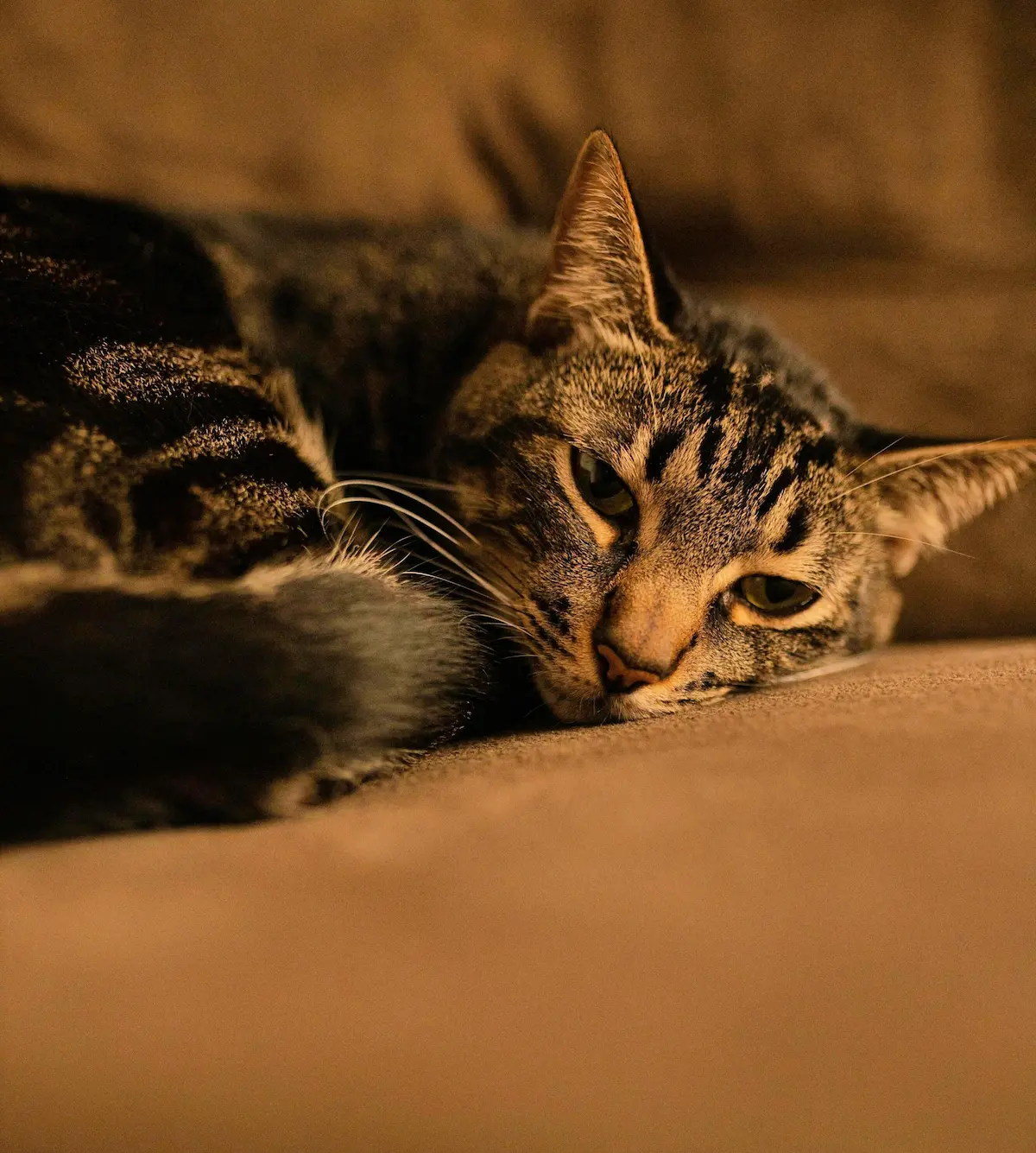
Senior cat behaviour changes can be unsettling, especially when your cat has always been predictable. Maybe they are sleeping more, hiding more, meowing at night, becoming clingier, or reacting differently to touch, noise, or routine.
Some changes can happen gradually as cats get older. International Cat Care explains that older cats may sleep for longer, be less active, spend less time outside, and become fussier with food.
But a behaviour change should not automatically be dismissed as “just old age”. Cornell Feline Health Center notes that older cats may sleep more and be less playful, but also warns that health or behaviour changes should not simply be chalked up to ageing.
Disclaimer: This article is for educational purposes only and is not a substitute for professional veterinary advice. If your cat is in pain, losing weight, vomiting frequently, or acting differently, speak to your vet.
Key takeaway: Some senior cat behaviour changes can be part of ageing, especially when they happen gradually. But if your cat’s behaviour changes suddenly, clearly, repeatedly, or alongside appetite, weight, toileting, grooming, or mobility changes, it is sensible to speak to your vet.
Quick answer: senior cat behaviour changes
Senior cat behaviour changes can include sleeping more, hiding more, meowing more, becoming clingier, seeming grumpier, grooming less, eating differently, or acting less confident in familiar routines.
Some changes can happen gradually with age, but sudden, repeated, worsening, or unusual behaviour should not be dismissed as “just old age”. If the change appears alongside appetite, weight, drinking, toileting, grooming, mobility, confusion, or pain signs, speak to your vet.
Are senior cat behaviour changes normal?
Some behaviour changes can be normal in older cats. A senior cat may rest more, play less, become more selective about interaction, or prefer familiar routines. These changes often happen slowly, rather than overnight.
That said, “normal for age” does not mean “ignore it”. A change is more useful when you treat it as information. It may simply show that your cat needs a quieter routine, easier access to favourite places, or more gentle handling. It may also be a sign that something else is affecting their comfort or confidence.
For wider age-related changes to watch for, you may also find our Senior Cat Health guide helpful.
Common senior cat behaviour changes owners notice
| Change | What to watch |
|---|---|
| Sleeping more | Can be part of ageing if gradual. Speak to your vet if it is sudden, extreme, or your cat seems flat. |
| Playing less | Can be part of ageing if gradual. Mention it if your cat avoids movement, jumping, or stairs. |
| Hiding more | Sometimes seen in older cats. Mention it if it is new, persistent, or out of character. |
| Becoming clingier | Sometimes seen with age. Mention it if it appears with distress, vocalising, or routine changes. |
| Meowing more | Worth noting if it is new, frequent, mainly at night, or unusual for your cat. |
| Seeming grumpier | Mention it if touch, movement, or normal handling seems harder. |
| Grooming less | Common in older cats, but mention mats, dandruff, odour, or coat changes. |
| Eating differently | Mention clear increases, drops, or inconsistent appetite. |
| Toileting changes | Do not ignore accidents, missed trays, or clear routine changes. |
| Seeming confused | Speak to your vet if your cat seems restless, disorientated, or unsure in familiar spaces. |
This table is not a diagnosis tool. It is a calm way to decide what to watch, what to write down, and what may be worth raising with your vet.
Sleeping more or playing less
Many older cats sleep more than they did when they were younger. They may still enjoy company, warmth, and routine, but their active periods may become shorter.
This can be normal when it happens gradually. It becomes more worth noting if your cat suddenly seems much less interested in normal activities, avoids favourite resting places, or stops doing things they used to manage easily.
A useful question is not just “Is my cat sleeping more?” but “What else has changed?”
For example:
- Are they still eating normally?
- Are they still using the litter tray as usual?
- Are they still grooming?
- Are they still moving comfortably?
- Do they still respond to familiar people and routines?
If the answer to several of these has changed, it is sensible to speak to your vet.
Hiding, clinginess, or social changes
Some older cats become more private. Others become more attached to familiar people. Either pattern can be seen with age, but the context matters.
A senior cat may hide more if they feel less confident, are more sensitive to noise, dislike household changes, or want a quieter resting place. A cat who becomes clingier may be looking for reassurance, routine, warmth, or familiar company.
The important point is whether this is normal for your cat.
If hiding has become part of the picture, our Older cat hiding guide may help you look at common reasons and when it is worth mentioning.
Social changes are worth mentioning to your vet when they are new, repeated, or appear alongside eating less, weight change, litter tray changes, unusual vocalising, or signs your cat is not comfortable.
More meowing, night restlessness, or seeming confused
More meowing can feel especially worrying because it is hard to know what your cat is trying to communicate. Some senior cats become louder, more unsettled, or more active at unusual times.
If the main change is louder or more frequent meowing, our guide to senior cat loud meowing explains common reasons and when it is worth mentioning to your vet.
This does not always mean something serious is happening, but it is worth paying attention to the pattern.
Note whether the vocalising:
- happens mostly at night
- happens near food, water, doors, stairs, or the litter tray
- seems linked with confusion or restlessness
- is new for your cat
- comes with changes in appetite, drinking, weight, toileting, or sleep
If your cat seems confused, disorientated, restless at night, or unsure in familiar places, our Can Cats Have Dementia? guide may help you understand feline cognitive dysfunction in older cats.
If the change is mostly happening after dark, you may also find Older cat restless at night: what it can mean and what to note useful.
Avoid trying to label the behaviour yourself. A calmer approach is to record what you notice and speak to your vet if the change is clear, frequent, or affecting your cat’s daily life.
Changes around food, grooming, or the litter tray
Behaviour changes often show up in everyday routines before anything else feels obvious.
For example, a senior cat may:
- approach food but eat less
- become fussier about meals
- stop grooming hard-to-reach areas
- develop mats or dandruff
- avoid a litter tray with high sides
- have accidents near the tray
- become unsettled around feeding or toileting times
These changes can look behavioural from the outside, but they are still worth noting carefully.
If eating habits have changed too, you may find Senior cat appetite changes: what’s common as cats age helpful.
If coat care has become harder, Senior cat grooming problems: mats, dandruff, oily coat is a useful next read.
When senior cat behaviour changes are more concerning
Speak to your vet if your senior cat’s behaviour change is:
- sudden
- clearly out of character
- getting worse
- happening repeatedly
- linked with appetite, drinking, weight, grooming, toileting, or mobility changes
- causing distress, hiding, restlessness, confusion, or unusual vocalising
- making normal daily life harder for your cat
It is also sensible to speak to your vet if you simply feel something is not right. You know your cat’s normal habits better than anyone.
Seek urgent veterinary help if your cat seems in severe pain, is struggling to breathe, collapses, cannot urinate, or seems severely unwell.
Senior cat behaviour change checklist
Use this checklist before speaking to your vet:
- What behaviour has changed?
- When did it start?
- Was it sudden or gradual?
- Is it happening daily, weekly, or only sometimes?
- Has appetite changed?
- Has drinking changed?
- Has litter tray use changed?
- Has grooming changed?
- Has weight changed?
- Has movement, jumping, or stair use changed?
- Is your cat hiding, vocalising, restless, clingy, or withdrawn?
- Have there been household changes, visitors, building work, new pets, or routine changes?
- Do you have photos or short videos that show the behaviour clearly?
You do not need perfect notes. Even a few simple observations can make the conversation with your vet clearer.
If you would like a simple way to organise those observations, our Senior Cat Observation Toolkit includes a 7-Day Senior Cat Change Log and a Night-Time Behaviour Log for recording changes in routine, sleep, vocalising, movement and behaviour.
Final thoughts
Senior cat behaviour changes can be part of ageing, but they are still worth paying attention to. A cat who sleeps more, plays less, hides more, meows more, or reacts differently is giving you useful information.
The calmest approach is to observe the pattern, look for linked changes, make simple notes, and speak to your vet when something is sudden, repeated, or out of character.
FAQs
Are senior cat behaviour changes normal?
Some senior cat behaviour changes can be normal, especially when they happen gradually. Older cats may sleep more, play less, or become more attached to routine. Sudden, clear, or ongoing changes are more worth noting.
Why is my senior cat suddenly more clingy?
Some older cats become more dependent on familiar people as their confidence, routine, senses, or comfort levels change. If the clinginess is sudden, intense, or appears with other changes, it is sensible to speak to your vet.
Why is my older cat hiding more?
Hiding can happen for many reasons, including stress, reduced confidence, discomfort, or changes at home. If hiding is new, persistent, or your cat also seems unwell, withdrawn, or off their food, mention it to your vet.
Is more meowing normal in older cats?
Some older cats vocalise more, but a clear change is worth noting. More meowing is especially worth discussing with your vet if it is new, frequent, mainly at night, or appears with confusion, restlessness, appetite changes, or weight loss.
When should I worry about senior cat behaviour changes?
Be more cautious when the change is sudden, obvious, getting worse, or happening alongside other signs such as eating less, drinking differently, losing weight, toileting differently, grooming less, hiding, or seeming unlike themselves.
External references
International Cat Care explains that older cats may sleep for longer, be less active, spend less time outside, and become fussier with food.
Cornell Feline Health Center explains that older cats may sleep more and be less playful, but behaviour or health changes should not simply be dismissed as old age.