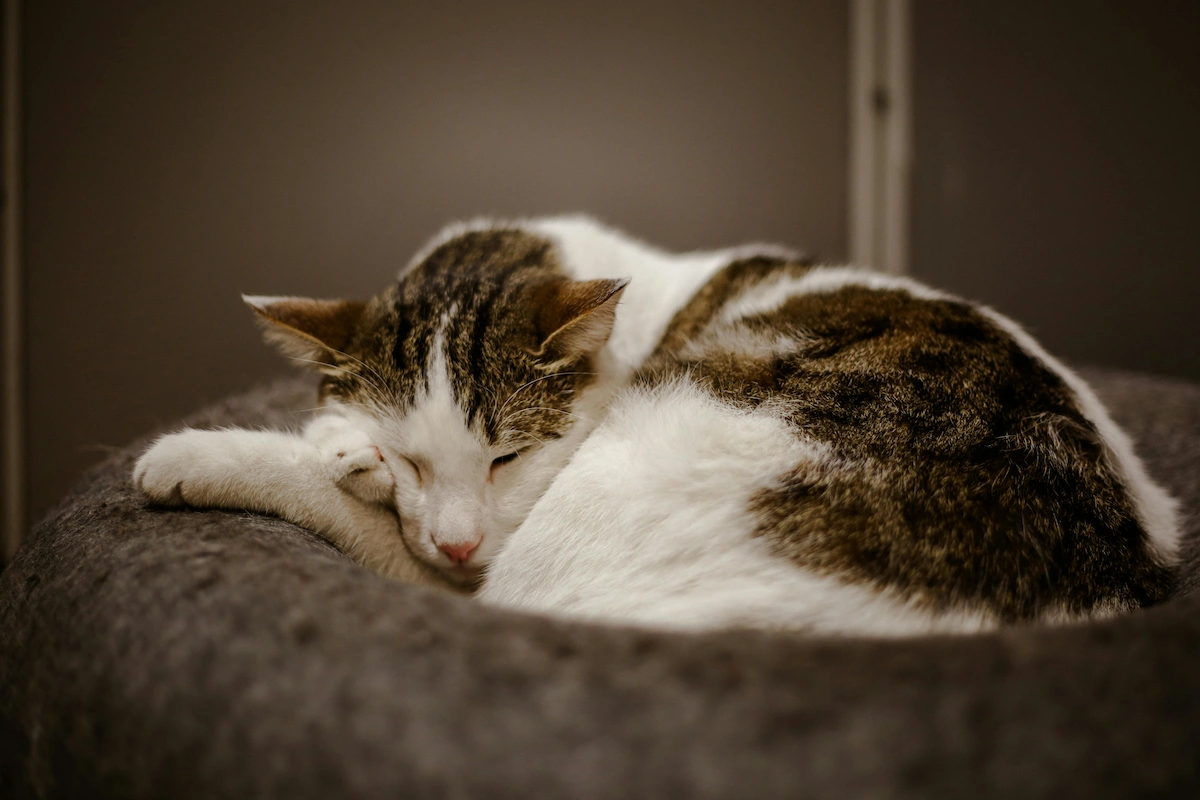
Senior cat sudden weakness can feel frightening, especially if your cat seemed normal earlier in the day. One moment they may be resting, walking, or eating as usual — and the next they seem wobbly, weak, unable to stand properly, or not quite themselves.
Older cats can slow down gradually with age, but sudden weakness is different. It is not something to brush off as “just old age”. The safest approach is to keep your cat calm, note what has changed, and speak to your vet promptly for advice.
Disclaimer: This article is for educational purposes only and is not a substitute for veterinary advice. If your cat is unable to walk normally, breathing differently, collapsing, in pain, vomiting, losing weight, or acting unlike themselves, speak to your vet promptly.
Key takeaway: Sudden weakness in a senior cat should be taken seriously. Keep your cat quiet and safe, avoid forcing movement, note what changed, and speak to your vet promptly — especially if your cat cannot stand or walk normally.
Quick answer: senior cat sudden weakness
Senior cat sudden weakness can look like wobbling, struggling to stand, walking awkwardly, seeming very flat, collapsing, dragging a leg, hiding suddenly, or being unable to reach food, water or the litter tray.
Sudden weakness is different from gradual slowing with age. Keep your cat calm and safe, avoid forcing movement, and speak to your vet promptly, especially if your cat cannot stand or walk normally, is breathing differently, seems painful, has collapsed, may have eaten something unsafe, or is acting unlike themselves.
The aim is not to panic, but not to dismiss a sudden change either.
Senior cat sudden weakness: the first thing to know
Sudden weakness is different from the slower changes many owners notice as cats age.
A senior cat may gradually become less agile, sleep more, jump less confidently, or need easier access to favourite resting spots. Those changes can still be worth mentioning to your vet, but they usually develop over time.
The important point is that it appears quickly. Your cat may suddenly struggle to stand, walk, balance, or move as they usually would.
You do not need to work out the cause at home. In fact, trying to diagnose the reason from online symptom lists can make things more confusing. What matters most is noticing the pattern clearly and getting veterinary guidance.
Blue Cross advises contacting a vet straight away if a cat is in pain, has breathing difficulty, or is unable to walk normally, as urgent veterinary care may be needed. Cornell Feline Health Center also describes sudden balance and walking difficulty as changes that can appear abruptly in cats.
What sudden weakness can look like in an older cat
Sudden weakness does not always look the same. Some cats look obviously collapsed, while others seem subtly unsteady or unusually flat.
You may notice your senior cat:
- struggling to stand up
- wobbling, swaying, or losing balance
- seeming weak in the back legs
- collapsing or lying unusually flat
- walking a few steps and then stopping
- dragging, stumbling, or moving awkwardly
- seeming dazed, confused, or not quite themselves
- hiding after a sudden change
- not reaching food, water, or the litter tray
- seeming unusually quiet, withdrawn, or reluctant to move
These signs do not point to one single cause. They simply mean your cat is showing a change that deserves attention.
In older cats, it is especially important not to assume sudden weakness is normal ageing. Senior cats may hide discomfort, and a clear change in movement, alertness, or behaviour is worth taking seriously.
What to do right now
If your senior cat suddenly seems weak, the first aim is to keep them safe while you arrange veterinary advice.
You can:
- move calmly and quietly around your cat
- keep them in a safe, quiet room if possible
- reduce access to stairs, high furniture, and slippery floors
- place food, water, and a litter tray nearby if it is safe to do so
- avoid forcing your cat to walk
- avoid repeatedly lifting or moving them unnecessarily
- keep children and other pets away if your cat seems distressed
- note when the weakness started
- speak to your vet promptly for advice
These steps are not treatment. They are simply a way to reduce avoidable stress and help prevent falls or further strain while you get guidance.
If your cat needs to travel, use a secure carrier and handle them gently. A weak or painful cat may panic, hide, or react defensively even if they are normally calm.
When to speak to your vet urgently
Speak to your vet urgently if your senior cat:
- cannot stand or walk normally
- seems collapsed, very weak, or unusually still
- became weak suddenly rather than gradually
- is breathing differently
- seems painful, distressed, or unusually vocal
- appears confused, dazed, or disorientated
- looks unusually weak, dull, or not fully responsive
- is vomiting, not eating, or seems very flat
- may have fallen or been injured
- may have eaten something unsafe
- may have accessed medication, chemicals, or a toxic plant
- has weakness, dragging, or poor control in one or more legs
It is better to ask for advice early than to wait and worry. Your vet can help you decide whether your cat needs to be seen quickly, whether emergency care is needed, and what details are useful to monitor.
If your usual vet is closed, use their out-of-hours instructions or emergency service.
What to note before you speak to your vet
When you are worried, it can be hard to remember details. A short checklist can help you explain what you are seeing clearly.
| What to note | Why it helps |
|---|---|
| When the weakness started | Helps show whether the change was sudden or gradual |
| Whether your cat can stand | Helps describe how severe the weakness appears |
| How your cat is walking | Helps explain wobbling, stumbling, dragging, or collapsing |
| Which legs seem affected | Gives your vet clearer detail |
| Appetite and drinking | Shows whether normal routines have changed |
| Breathing and alertness | Helps describe whether your cat seems otherwise stable |
| Litter tray use | Shows whether movement or toileting has changed |
| Any possible accident or unsafe access | Gives your vet useful context |
A short video may help your vet understand what you are seeing, but only take one if it is safe and does not delay getting advice.
You do not need a perfect description. Simple details such as “she could stand this morning but is now wobbling” or “his back legs seem weak and he cannot get to the litter tray” are useful.
What not to do at home
When a senior cat suddenly seems weak, it is natural to want to help immediately. But some well-meant actions can be risky.
Avoid:
- giving human painkillers
- giving leftover pet medication
- trying supplements or home remedies
- forcing your cat to walk
- repeatedly lifting or moving your cat to check whether they seem better
- waiting several days if the weakness is sudden or severe
- assuming the change is just old age
- relying on online symptom lists to decide what is wrong
Human medicines can be dangerous for cats, and even medication prescribed to another pet may be unsafe for your cat. If you think your cat is painful or unwell, speak to your vet rather than trying to manage it at home.
Could sudden weakness just be old age?
Old age can make cats slower, less agile, and less confident in their movement. Many older cats become less willing to jump, climb, or rush around the house.
But sudden weakness is not the same as gradual ageing.
A gradual change might look like:
- jumping less often over several months
- sleeping more than before
- taking longer to get comfortable
- using lower furniture instead of high places
- moving more carefully on stairs
If the main change is that your cat has suddenly stopped jumping rather than seeming generally weak, our Senior Cat Suddenly Not Jumping guide may help you compare the wider pattern.
Sudden weakness may look like:
- struggling to stand today
- becoming wobbly without warning
- collapsing or seeming very flat
- suddenly not reaching food, water, or the litter tray
- moving normally earlier and then seeming weak later
This difference is important. Senior cats can have age-related changes, but a sudden change in movement, strength, or alertness should still be discussed with your vet.
For broader age-related health context, you may also find Senior Cat Health: A Practical Guide for Older Cats helpful.
How sudden weakness is different from limping
Sudden weakness and limping can overlap, but they are not always the same thing.
Limping often means a cat is favouring one leg. They may still be alert, able to stand, and able to move around, but they avoid putting normal weight on one paw or leg.
Sudden weakness may affect balance, standing, the back legs, or the whole body. Your cat may seem unable to support themselves properly or may appear generally unwell rather than simply sore on one side.
Both patterns are worth noting in a senior cat.
If you are noticing several subtle changes such as reduced movement, hiding, grooming changes, appetite changes or sensitivity to touch, our Senior Cat Pain Signs guide may help you organise what to mention to your vet.
If your cat is mainly favouring one leg rather than seeming generally weak, this may be a better place to read Senior cat limping: what to note and when to speak to a vet.
If weakness comes with behaviour changes
Sudden weakness can be more concerning when it appears alongside other changes in behaviour or routine.
Watch for changes such as:
- hiding more than usual
- seeming confused or unsettled
- reduced interest in food
- drinking much more or much less
- avoiding the litter tray
- sleeping in unusual places
- vocalising differently
- seeming less responsive to you
- withdrawing from normal contact
These changes do not diagnose the problem, but they help build a clearer picture for your vet.
If the weakness is part of a wider change in routine, confidence, hiding, or interaction, you may also find Senior cat behaviour changes: a calm guide to what’s normal vs concerning useful.
Should you wait and see?
If your senior cat has sudden weakness, especially if they cannot stand or walk normally, it is safer to speak to your vet rather than waiting to see what happens.
That does not mean every case has the same cause or outcome. It simply means sudden weakness is a clear enough change to ask for professional guidance.
A brief wobble that passes quickly is still worth noting, especially in an older cat. But if weakness is clear, repeated, worsening, or paired with other changes, do not wait several days before asking for advice.
Final thoughts
Senior cat sudden weakness is worrying, but you do not need to solve it at home.
The most helpful things you can do are simple: keep your cat safe, avoid forcing movement, notice clear details, and speak to your vet promptly. That gives your cat the best chance of getting the right help without unnecessary delay.
A calm response is not the same as doing nothing. Noticing the change and asking for advice is exactly the right first step.
If weakness appears alongside other movement changes, our Senior Cat Mobility & Pain guide may help you understand what else to notice and track.
FAQs
Is sudden weakness in a senior cat an emergency?
It can be urgent, especially if your cat cannot stand, cannot walk normally, seems collapsed, is breathing differently, appears painful, or is not acting like themselves. Speak to your vet promptly for advice rather than trying to work out the cause at home.
Why is my older cat suddenly weak and wobbly?
There are many possible reasons an older cat may suddenly seem weak or wobbly, and some need prompt veterinary attention. The cause cannot be confirmed by appearance alone, so sudden wobbliness should be discussed with your vet.
Should I wait to see if my senior cat improves?
If the weakness is sudden, severe, or affects standing or walking, it is safer to speak to your vet rather than waiting. If the change is mild but unusual, note what you are seeing and ask your vet for guidance.
What should I tell the vet if my cat suddenly seems weak?
Tell your vet when the weakness started, whether your cat can stand, how they are walking, which legs seem affected, and whether appetite, drinking, toileting, breathing, or alertness have changed. Also mention any possible fall, injury, toxin, plant, chemical, or medication access.
Can old age alone cause sudden weakness in cats?
Old age can cause gradual slowing, stiffness, and lower resilience, but sudden weakness should not be dismissed as normal ageing. A clear or sudden change in movement, strength, or behaviour is worth veterinary advice.