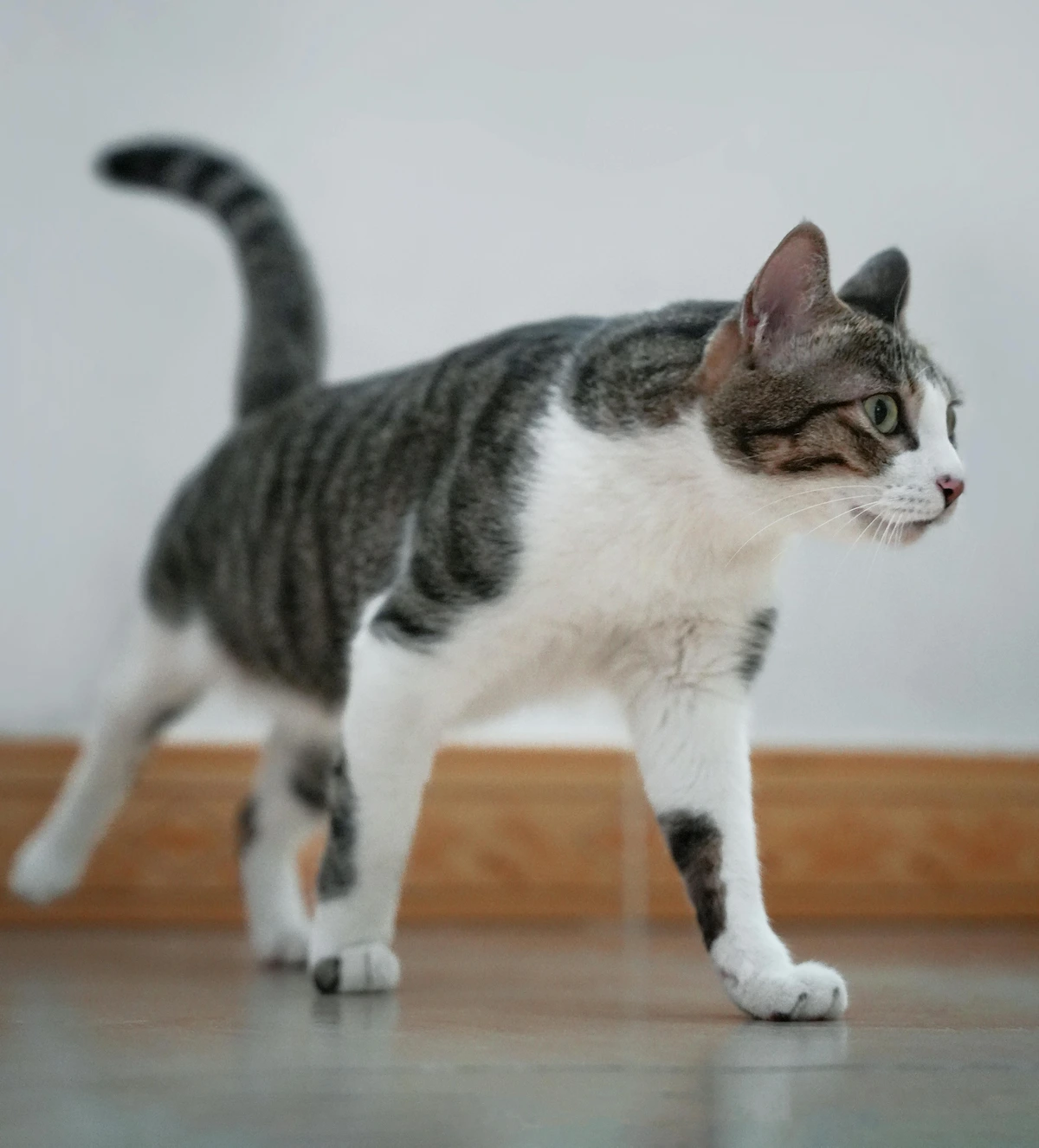
Senior cat limping can be worrying, especially if your cat usually hides discomfort or carries on as if nothing is wrong. A limp may be obvious, but in older cats it can also show up as slower walking, hesitation before jumping, using stairs less, or favouring lower resting places.
The most helpful thing you can do is not to guess the cause. Instead, notice the pattern, keep clear notes, and speak to your vet if the limp is new, worsening, recurring, or affecting your cat’s normal routine.
Disclaimer: This article is for educational purposes only and is not a substitute for professional veterinary advice. If your cat is in pain, losing weight, vomiting frequently, or acting differently, speak to your vet.
Key takeaway: Senior cat limping is worth taking seriously, especially if it is new, keeps coming back, or affects normal activities. You do not need to diagnose the cause at home. Focus on what you can observe and speak to your vet if you are concerned.
Quick answer: senior cat limping
Senior cat limping can look like uneven walking, favouring one leg, holding a paw up, moving more slowly, avoiding stairs, jumping less, or choosing lower resting places.
A limp can have many possible causes, including paw or claw discomfort, a slip, injury, stiffness, joint discomfort, arthritis, or wider health changes. Do not force your cat to walk or try to diagnose the cause at home. Speak to your vet if the limp is new, worsening, recurring, sudden, painful-looking, or affecting your cat’s normal routine.
Senior cat limping can be easy to miss at first
Some cats limp in a clear way, holding one paw up or taking uneven steps. Others are more subtle. Your senior cat may still walk, eat, and use the litter tray, but seem less willing to jump onto the sofa, climb stairs, or move around as freely as before.
Older cats can also adapt quietly. Instead of showing obvious lameness, they may avoid certain movements, sleep in easier-to-reach places, or stop using favourite high spots.
That is why senior cat limping should not be brushed off as “just old age”. Age may be part of the picture, but limping usually means something has changed in how your cat feels or moves.
For broader context on age-related health changes, you may find our Senior Cat Health guide helpful.
First, look at the pattern of the limp
Before you speak to your vet, try to notice the pattern. These details can help your vet understand what has changed.
Did it start suddenly or gradually?
A sudden limp may be easier to spot. Your cat may have been walking normally one moment and then started favouring a leg after jumping down, slipping, or coming in from outside.
A gradual limp can be harder to notice. You may realise your cat has been moving more carefully over several days or weeks. They may still walk, but avoid jumping, climb more slowly, or choose lower resting places.
Both patterns are worth noting.
Is the limp constant or does it come and go?
Some cats limp all the time. Others seem worse after resting, after activity, or at certain times of day.
Try to notice:
- whether the limp is there every time your cat walks
- whether it appears after sleeping
- whether it is worse after jumping or using stairs
- whether some days are better than others
- whether it seems to be improving, worsening, or staying the same
This does not tell you the cause, but it gives your vet useful information.
Is your cat putting weight on the leg?
This is an important detail.
A cat who is putting some weight on the leg may look uneven or stiff. A cat who is not putting weight on the leg may hold the paw up, hop, or avoid using that limb altogether.
Do not force your cat to walk to test this. Just note what you naturally see when they move around.
Why older cats may limp or move differently
There are several reasons an older cat may limp or move differently. Some are linked to the paw or claw. Some may involve joints, muscles, soft tissue, injury, or discomfort elsewhere in the body.
Possible things your vet may consider include:
- paw pad soreness or a small injury
- a claw that is overgrown, damaged, catching, or uncomfortable
- a slip, awkward landing, or jump-related strain
- swelling, a wound, or infection
- stiffness or reduced mobility
- joint discomfort or age-related mobility change
- pain that changes how your cat chooses to walk
This section is not a diagnosis list. Limping can look similar even when the cause is different, so your vet is the right person to assess what is happening.
If you are noticing several subtle changes alongside the limp, our Senior Cat Pain Signs guide may help you compare movement, grooming, mood and daily routine changes.
If you can see a claw issue, or your cat’s claws seem thicker or more curved than they used to, you may also find Senior cat nail care: why claws thicken with age and safe trimming tips useful.
Limping, stiffness, and senior cat arthritis
Arthritis is one possible reason an older cat may move differently, but it is not the only possible cause of limping. Cats with arthritis may also show subtler changes such as reduced jumping, slower use of stairs or stiffness after rest rather than an obvious limp.
Only your vet can assess whether arthritis, injury, claw discomfort or another issue is involved. For more focused information about joint stiffness and mobility changes, see our Arthritis in Senior Cats guide.
When to speak to your vet about senior cat limping
It is sensible to speak to your vet if your senior cat’s limp is new, persistent, worsening, or part of a wider behaviour change.
PDSA’s guidance on limping and stiffness in cats advises contacting a vet if a mild limp does not improve within 24 hours, or seeking urgent help if a cat suddenly starts limping, cannot put weight on a leg, or seems in severe pain.
Speak to your vet promptly if:
- the limp is new
- the limp does not improve within 24 hours or keeps coming back
- your cat seems stiff, slower, or reluctant to jump
- your cat is grooming less than usual
- your cat is eating less, hiding, or acting differently
- your cat seems uncomfortable when touched
- you are unsure whether your cat is in pain
Seek urgent veterinary advice if:
- your cat cannot put weight on the leg
- the limp came on suddenly
- your cat seems very painful
- there is bleeding, swelling, a wound, or obvious injury
- the leg, paw, or joint looks abnormal
- your cat is collapsed, very quiet, breathing oddly, or unable to move normally
You know your cat’s normal behaviour best. If something feels clearly wrong, it is better to ask your vet than to wait and worry.
What not to do if your senior cat is limping
When a senior cat is limping, it is natural to want to help straight away. But some well-meaning actions can make things riskier.
Avoid:
- giving human painkillers
- giving leftover pet medication unless your vet has specifically told you to
- forcing your cat to walk, jump, or use stairs
- pulling, stretching, or manipulating the leg
- assuming limping is normal because your cat is old
- waiting too long if the limp is sudden, severe, worsening, or affecting normal behaviour
Pain relief and treatment decisions should always come from your vet. Cats are sensitive to many medicines, and guessing at home can be dangerous.
How to make things easier while you arrange advice
While you arrange veterinary advice, keep things calm and practical. The aim is not to treat the limp at home, but to reduce unnecessary strain and make daily needs easier to reach.
You can:
- keep food and water easy to access
- avoid encouraging high jumps
- keep your cat in a calm, familiar area
- provide easy access to a comfortable resting place
- make sure the litter tray is easy to reach
- avoid moving your cat more than necessary
- take notes or a short video if your cat moves naturally
If your cat seems to be struggling to step into or out of the tray, you may also find Best litter box for senior cats: easier access, less mess helpful.
Cornell also advises that older cats should have easy access to food, water, and litter trays so they do not need to climb stairs if they choose not to.
Simple senior cat limping checklist
Use this checklist to keep your notes clear before speaking to your vet.
Senior cat limping notes for your vet
- Date and time first noticed:
- Front leg, back leg, or unsure:
- Sudden or gradual:
- Constant or comes and goes:
- Putting weight on the leg:
- Eating normally:
- Drinking normally:
- Using the litter tray normally:
- Jumping or stairs changed:
- Grooming changed:
- Mood or behaviour changed:
- Visible swelling, wound, bleeding, or claw issue:
- Worse after rest or activity:
- Improving, worsening, or staying the same:
- Short video taken for vet, if possible:
This kind of record can make the conversation with your vet clearer, especially if the limp comes and goes.
If limping is part of a wider change in movement, stiffness or confidence, see our Senior Cat Mobility & Pain guide for broader context.
FAQs
Is limping normal in a senior cat?
Limping should not be dismissed as normal ageing. Older cats may become stiffer or less agile, but a new, worsening, or recurring limp is still worth discussing with your vet.
Should I wait if my senior cat has a mild limp?
A very mild limp may be something you notice briefly, but if it does not improve, keeps returning, or your cat seems uncomfortable, speak to your vet. PDSA advises contacting a vet if a mild limp does not improve within 24 hours.
Can arthritis make a senior cat limp?
Arthritis can be one possible reason an older cat moves differently. However, cats with arthritis may not always show an obvious limp. Some show changes in jumping, stairs, grooming, litter tray access, or general movement instead.
Can long claws make an older cat limp?
Overgrown, thickened, damaged, or catching claws can affect how comfortable a cat feels when walking. If a claw looks sore, curled, broken, bleeding, or stuck, speak to your vet or a qualified professional.
What should I tell my vet if my senior cat is limping?
Tell your vet when the limp started, whether it was sudden or gradual, which leg seems affected, whether your cat is putting weight on the leg, and whether eating, toileting, grooming, jumping, mood, or activity have changed.
Final thoughts
Senior cat limping is worth noticing, but you do not need to panic or guess the cause. Your role is to watch the pattern, keep clear notes, and speak to your vet when the limp is new, persistent, worsening, or affecting your cat’s normal life.
Older cats often show discomfort through small changes. Taking those changes seriously can help your cat get the right support sooner.
External references
- PDSA — Limping and stiffness in cats.
- Cornell Feline Health Center — The special needs of the senior cat.