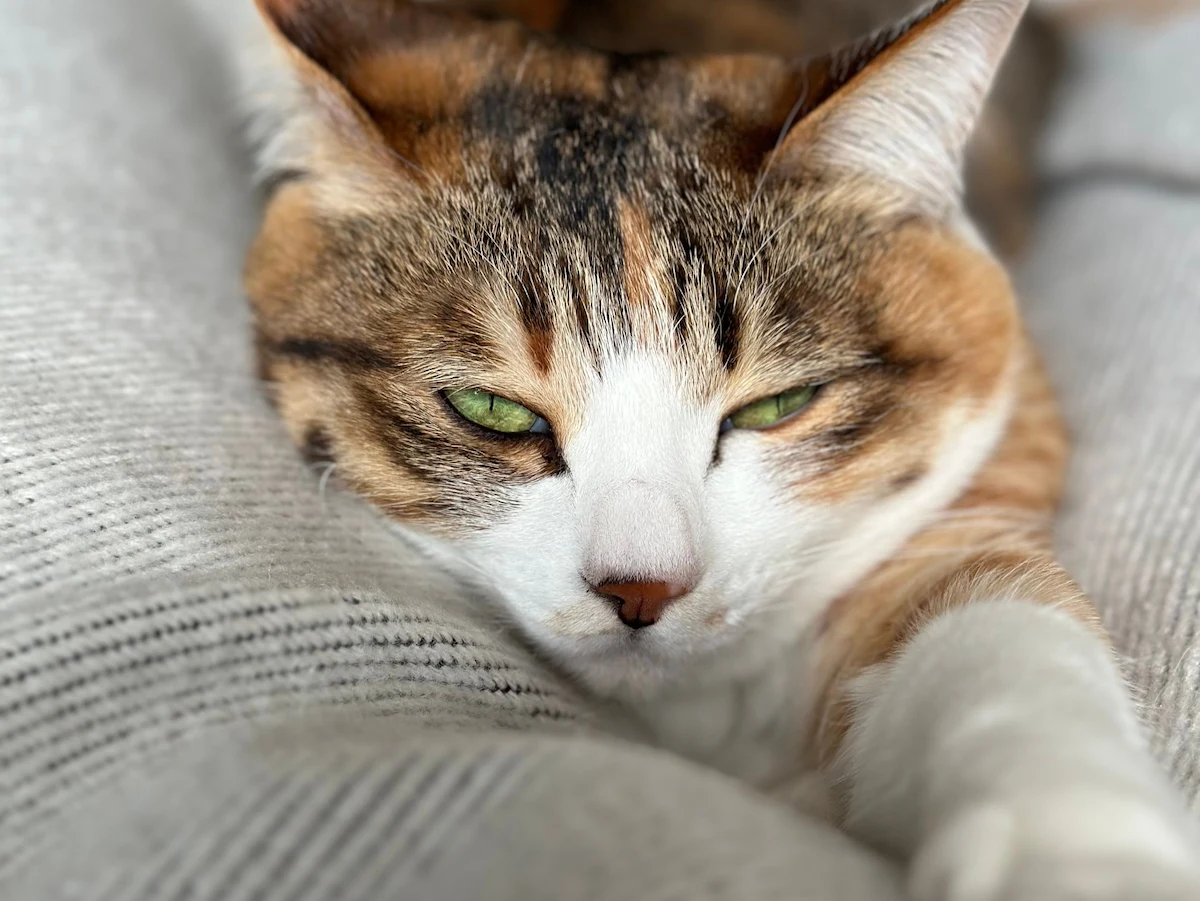
Senior cat mobility changes can be easy to miss at first. An older cat may still eat, sleep and move around the home, but quietly avoid jumping, climbing, playing or using favourite resting spots.
These changes do not always mean something serious is happening. But stiffness, limping, slower movement, sudden weakness or changes in confidence can all be worth noticing, especially if they are new, persistent or getting worse.
This guide explains what mobility and pain-related changes can look like in senior cats, how to think about them calmly, and which more specific guides on this site may help next.
Disclaimer: This article is for educational purposes only and is not a substitute for professional veterinary advice. If your cat is in pain, losing weight, vomiting frequently, or acting differently, speak to your vet.
Key takeaway: Senior cat mobility changes can be subtle. If your cat is jumping less, moving more slowly, limping, avoiding stairs or seeming less comfortable, it is worth tracking the pattern and mentioning it to your vet.
What senior cat mobility changes can look like
Mobility changes in older cats are not always dramatic. Many cats adapt quietly by doing less, choosing easier routes, or avoiding places that used to be part of their normal routine.
You may notice your cat:
- hesitating before jumping
- choosing lower resting places
- walking more slowly
- seeming stiff after sleep
- avoiding stairs or high surfaces
- playing less than usual
- struggling to get into the litter tray
- grooming less because turning or stretching seems harder
- sleeping in different places
These changes do not confirm one cause. They are simply useful clues.
For example, a cat who has stopped jumping may need a different type of support from a cat who is clearly limping. If jumping is the main change you have noticed, see Senior Cat Suddenly Not Jumping. If your cat is favouring one leg or walking unevenly, Senior cat limping may be more useful.
Mobility can also affect other parts of daily life. A cat who finds it harder to turn, stretch or reach certain areas may begin to show coat changes. If grooming has become harder, Senior cat grooming problems may help. If your cat is missing the litter tray, Senior Cat Missing the Litter Tray explains common reasons and what to check.
Senior cat mobility changes at a glance
| What you may notice | What it may affect | Helpful next guide |
|---|---|---|
| Jumping less often | Access to beds, sofas or favourite spots | Senior Cat Suddenly Not Jumping |
| Walking stiffly after rest | Comfort and confidence moving around | Arthritis in Senior Cats |
| Limping | Movement pattern and weight-bearing | Senior cat limping |
| Avoiding stairs | Access around the home | Non-slip flooring for senior cats |
| Sleeping in lower places | Resting comfort and easier access | Senior cat resting spots |
| Missing the litter tray | Positioning, access or comfort | Senior Cat Missing the Litter Tray |
Why pain signs can be subtle in older cats
Cats do not always show discomfort in obvious ways. A senior cat may not cry, limp clearly or stop moving completely. Instead, the signs may be quieter and easier to mistake for normal ageing.
You may notice small changes such as:
- being less willing to be handled
- sleeping more than usual
- avoiding favourite high places
- moving away when touched
- becoming less playful
- using a different route through the home
- seeming more withdrawn or irritable
These signs do not prove your cat is in pain, but they can be part of the wider picture. If several small changes appear together, or if one change continues, it is sensible to make a note and speak to your vet.
For a fuller guide to subtle discomfort signs, read Senior Cat Pain Signs. If behaviour changes are part of what you are noticing, Senior Cat Behaviour Changes may also help.
Arthritis and stiffness in senior cats
Arthritis is one possible reason older cats may become slower, stiffer or less willing to jump. It is common for owners to notice changes gradually, especially after naps or when a cat is using stairs, climbing onto furniture or getting in and out of the litter tray.
Signs that may be worth tracking include:
- stiffness after resting
- reduced jumping
- less climbing
- sleeping in lower places
- hesitation before moving
- less interest in play
- changes in grooming
This does not mean you should assume arthritis is the cause. Other issues can also affect movement, confidence and comfort. Your vet is the right person to assess what may be happening.
For a broader explanation of arthritis signs, comfort changes and when to speak to your vet, see Arthritis in Senior Cats.
Limping, weakness or sudden changes
Gradual stiffness is different from a sudden or obvious change in movement.
Speak to your vet if you notice:
- clear limping
- sudden weakness
- a rapid drop in movement
- difficulty getting up
- reluctance to use one leg
- movement changes alongside not eating or drinking
- a change that feels unusual for your cat
A sudden change does not automatically mean the worst, but it should not be ignored. The more clearly you can describe what changed and when it started, the easier it is for your vet to understand the situation.
If limping is the main change, read Senior cat limping. If your cat seems suddenly weak, Senior cat sudden weakness explains what owners should notice and when to speak to a vet.
Home comfort changes that may help older cats
Simple home changes can make daily life easier for a senior cat, especially if movement is becoming slower or less confident.
The aim is not to force your cat to use new equipment or change everything at once. It is to make important areas easier to reach.
Helpful changes may include:
- placing beds and resting spots lower down
- keeping food and water easy to access
- using non-slip surfaces on smooth floors
- adding ramps or steps where appropriate
- choosing litter trays with easier entry
- keeping key resources on one level if stairs are harder
- making routines predictable
- leaving familiar resting places available
Small changes can reduce effort and help your cat feel more secure.
For practical home support, see Cat Ramps for Older Cats to Get on Bed, Non-slip flooring for senior cats and Senior cat resting spots. If litter tray access is becoming harder, Best litter box for senior cats may also help.
For wider daily care routines, see the Senior Cat Care Guide.
Senior cat mobility guides on this site
This page is the main mobility and pain hub. Use the sections below to choose the most relevant next guide.
Start with pain and stiffness
If your cat seems stiff, slower or less comfortable, these guides can help you understand what to observe.
Senior Cat Pain Signs explains subtle behaviours that owners may miss.
Arthritis in Senior Cats gives a broader overview of arthritis signs, comfort changes and when to speak to your vet.
If your cat is limping, weak or not jumping
If the change is more specific, these guides may be more useful.
Senior cat limping explains what to note if your cat is walking unevenly or favouring one leg.
Senior Cat Suddenly Not Jumping covers possible reasons an older cat may avoid beds, sofas, counters or favourite high spots.
Senior cat sudden weakness explains what owners should notice when weakness appears suddenly.
If home setup is becoming harder
If your cat is struggling with beds, stairs, floors or litter tray access, these practical guides may help.
Cat Ramps for Older Cats to Get on Bed covers when ramps may help and what to consider.
Non-slip flooring for senior cats explains how floor surfaces can affect confidence and movement.
Senior cat resting spots focuses on comfortable places that reduce pressure on joints.
Best litter box for senior cats explains litter tray features that may be easier for older cats.
Our Senior Cat Comfort & Lifestyle guide gives wider home setup ideas for older cats.
When to speak to your vet
Some mobility changes develop gradually, but it is still worth speaking to your vet if the change is new, persistent, worsening or unusual for your cat.
Mention changes such as:
- sudden limping
- sudden weakness
- rapid decline in movement
- reluctance to jump or climb that continues
- signs that your cat seems uncomfortable
- difficulty using the litter tray
- eating or drinking changes alongside mobility changes
- behaviour changes that appear with movement changes
You do not need to diagnose the cause yourself. Your role is to notice the pattern, describe what has changed, and explain how long it has been happening.
For broader context on age-related changes, see our Senior Cat Health guide.
Quick recap
- Senior cat mobility changes can be gradual and easy to miss.
- Pain signs may appear as changed habits, not obvious crying or limping.
- Jumping less, stiffness, limping or sudden weakness are worth tracking.
- Simple home changes can support comfort, but they do not replace veterinary advice.
- If changes are new, sudden, persistent or worsening, speak to your vet.
FAQs
Why is my senior cat suddenly not jumping?
A senior cat may stop jumping because something has changed in comfort, confidence, strength or mobility. It does not confirm one cause. If the change is sudden, persistent or paired with other signs, speak to your vet. You may also find Senior Cat Suddenly Not Jumping helpful.
Is stiffness normal in older cats?
Some slowing down can happen with age, but stiffness should not be dismissed as “just old age”. If your cat seems reluctant to move, jump, climb or groom, it is worth tracking the pattern and mentioning it to your vet.
How can I make my home easier for a senior cat to move around?
Helpful changes can include lower resting places, easier access to food and water, non-slip surfaces, ramps or steps, and litter trays that are easier to enter. Keep changes gentle and avoid forcing your cat to use new items. Non-slip flooring for senior cats, Cat Ramps for Older Cats to Get on Bed and Senior cat resting spots may help you plan simple adjustments.
When should I speak to my vet about senior cat mobility changes?
Speak to your vet if mobility changes are sudden, worsening, linked with appetite or toileting changes, or seem unusual for your cat. Early conversations can help build a clearer picture before problems become harder to manage.
External references
International Cat Care: Arthritis in cats
Cornell Feline Health Center: The Special Needs of the Senior Cat