Non-slip flooring for senior cats can make everyday movement easier for some older cats, especially on wood, laminate, or tiled floors. If your older cat seems less steady at home, you are not imagining it. Smooth flooring can be harder for some senior cats to cross confidently, and simple changes such as mats, runners, or easier routes can help. International Cat Care says laminate, tiled, and wood flooring can be slippery for older cats, and notes that mats and runners can make walking easier.
If you are also noticing changes in appetite, grooming, litter tray habits, or general confidence, this guide to Senior cat health may help you put the bigger picture together.
Disclaimer: This article is for educational purposes only and is not a substitute for professional veterinary advice. If your cat is in pain, losing weight, or moving differently than usual, speak to your vet.
Key takeaway: Smooth floors can be harder for some older cats to walk on confidently, especially around favourite routes, landing spots, and the litter tray. Simple changes such as stable runners or non-slip mats in the right places often help more than trying to change the whole house.
If your senior cat is slipping more often, hesitating, or moving differently than usual, it is sensible to speak to your vet.
Quick answer: non-slip flooring for senior cats
Non-slip flooring for senior cats usually means adding stable runners, low-profile mats, or grippy surfaces in the places your older cat already uses most. The most helpful spots are often walking routes, jump-down areas, the path to food and water, and the space around the litter tray.
You do not need to change the whole house. Start with the areas where your cat slips, hesitates, turns carefully, or seems less confident. If slipping is new, happening more often, or comes with stiffness, reduced jumping, appetite changes, grooming changes, or litter tray changes, speak to your vet.
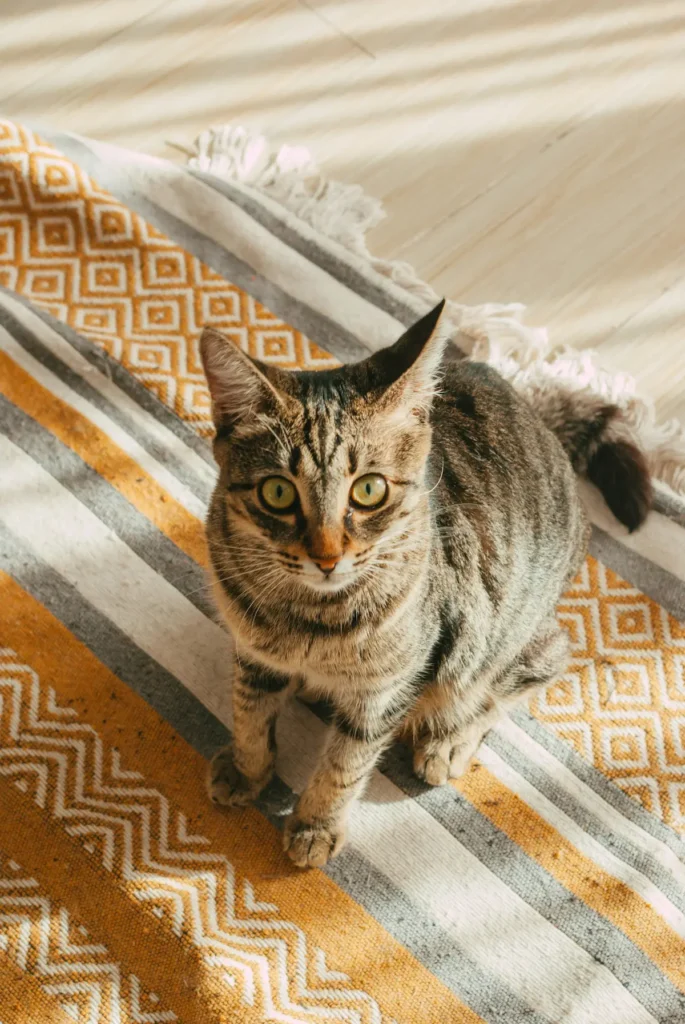
Why slippery floors can be harder for senior cats
Older cats do not always move through the house in the same confident way they once did. Sometimes the change is subtle. You may notice a pause before crossing the kitchen, a careful turn in the hallway, or a slightly awkward jump down from the sofa.
That does not automatically mean something serious is wrong. It does mean traction is worth paying attention to. Cats Protection says small home changes can help older cats, including putting rugs on laminate or wooden floors to make them less slippery.
For many cats, the problem is not every room. It is the moments where grip matters most:
- setting off from a resting place
- turning on a smooth surface
- stepping in or out of the litter tray
- jumping down from a bed, chair, or windowsill
- walking to food and water several times a day
The non-slip flooring changes that help most
The biggest mistake is trying to change the whole house at once. Most owners get better results by improving the places their cat already uses every day.
Add runners or mats along normal walking routes
Start with the paths your cat uses most:
- bed to doorway
- sofa to food area
- resting spot to litter tray
- hallway routes between main rooms
A simple runner often helps more than several scattered mats because it creates one predictable path with better grip. International Cat Care specifically recommends mats and runners around the home for older cats on slippery floors.
Cover landing spots, not just long stretches
This is the part many owners miss.
A senior cat may cope reasonably well crossing a room, but feel less secure on the first step after landing. Good places for extra traction include:
- beside the bed
- next to the sofa or chair
- under a favourite windowsill route
- in front of the litter tray
- at the bottom of small steps
Choose mats that stay flat and still
The best changes are usually the simplest:
- low-profile runners
- stable mats with grip underneath
- surfaces that do not bunch up or curl at the edges
What usually works less well:
- thick rugs that move when stepped on
- fluffy mats that feel soft but unstable
- lots of small mats placed randomly
- surfaces that slide more than the floor beneath them
The goal is not to pad the whole house. The goal is to make movement feel more predictable.
Where traction matters most in the home
Near food and water
Cats return to these spots every day. If the area is slippery, your cat may start approaching more slowly or standing awkwardly while eating and drinking.
A small, stable mat under or just in front of the bowls can make the area feel more secure. Cats Protection also notes that older cats often benefit from food and water being easier to reach.
On the way to the litter tray
This is one of the most important places to check.
If the approach feels slippery or awkward, some older cats may hesitate before getting in. That does not mean the floor is always the whole reason for litter tray problems, but it can be part of the picture.
A grippy path to the tray and a secure landing area in front of it are often more useful than changing the whole room. Cats Protection says older cats may need litter trays close at hand and easy to access.
If your cat seems hesitant near the tray or starts going elsewhere, this guide on Senior cat peeing outside the litter tray may help you think through what to check.
Around favourite sleeping spots
Many older cats still want to sleep in the same places they have always loved. The issue is that the route there may not feel as easy anymore.
Check:
- the jump-down area beside the bed
- the route to a favourite chair
- any smooth flooring between sleeping spots and the doorway
Sometimes a runner plus a lower resting option nearby is the most practical combination.
By steps, ramps, and furniture used as a middle step
If your cat already uses a stool, footrest, ramp, or pet stairs, traction matters there too. Cornell recommends firm footing, such as covering steps or a ramp with carpet, to help prevent slipping.
What usually helps less than owners hope
Some ideas sound helpful but make less difference in real homes.
Changing too much at once
If you put mats everywhere, move furniture, and create new routes all in one day, your cat may seem more uncertain rather than less. Older cats often cope better with small, clear changes and familiar routines. Cats Protection highlights the value of making life easier without huge changes, while its behaviour guide stresses predictable environments for older cats.
Focusing on products instead of routes
It is easy to think you need a special flooring solution. In most homes, you do not. A few stable runners or mats in the right places usually matter more than buying lots of different items.
Using thick or unstable rugs
A soft rug is not automatically a helpful rug. If it slides, lifts, bunches, or wobbles under your cat’s feet, it may be more annoying than reassuring.
Expecting flooring alone to solve everything
Better grip can help comfort and confidence, but it is not a cure-all. If your cat is clearly moving differently, avoiding jumps, or looking less comfortable overall, flooring is only part of the picture. Cats Protection advises reporting changes in behaviour or wellbeing to your vet because they may point to an underlying health condition.
Other home changes that can work well alongside better flooring
Non-slip flooring tends to work best when paired with a few other sensible home adjustments.
Keep essentials easy to reach
If stairs or long routes are becoming harder, keeping essentials on one level can help. Cats Protection recommends keeping important items easy to access, and its behaviour guide says a full set of resources on each level may help older cats.
That may mean:
- food and water closer to a favourite resting area
- a litter tray on the floor your cat uses most
- an extra bed in an easy-to-reach quiet spot
Create shorter, easier routes
Sometimes the answer is not more grip everywhere. It is a shorter journey.
For example:
- move a bed closer to the radiator or sunny spot
- place a resting spot halfway along a longer route
- avoid making your cat cross large slippery spaces for basic needs
Add help for favourite high places
If your cat still enjoys being up high, combine traction with easier access:
- a low step
- a series of box steps
- a ramp with grip
- a lower alternative perch
If your cat is also finding beds or sofas harder to reach, these tips on Cat stairs for older cats may help.
Cats Protection suggests ramps or stepping-stool style access for older cats, and Cornell supports firm-footed steps or ramps.
When slipping is worth mentioning to your vet
A little uncertainty on smooth flooring can sometimes be improved with home changes. But repeated slipping should not just be dismissed as old age.
It is worth speaking to your vet if:
- slipping is new
- it is becoming more frequent
- your cat seems less willing to jump up or down
- there is more hesitation or slower movement
- litter tray habits have changed
- appetite, grooming, or general confidence has changed too
If slipping is happening alongside stiffness, slower movement, or reluctance to jump, it may help to read more about Senior cat arthritis.
Cats Protection advises that changes in movement, behaviour, appetite, thirst, sleeping, or toileting are worth reporting to a vet, and its behaviour guide says older cats with recent changes should be examined by a vet.
How to improve traction without changing the whole house
If you want a sensible place to start, keep it simple:
- Look at the routes your cat uses every day.
- Add traction to those paths first.
- Cover the main landing spots next.
- Keep food, water, beds, and the litter tray easy to reach.
- Watch whether your cat looks more confident over the next few days.
Simple non-slip flooring for senior cats does not need to mean replacing every surface in your home. Small, well-placed changes are usually the best starting point.
Senior cat traction checklist: 7 places to make less slippery
Use this quick checklist as you walk through your home:
- route from bed to doorway
- path to food and water
- approach to the litter tray
- jump-down area beside the sofa or chair
- favourite windowsill or perch access point
- hallway corners or turning points
- steps, ramps, or thresholds
If your cat already seems to avoid one of these areas, start there.
For more home setup ideas for older cats, browse our Comfort & Lifestyle guides.
If floor confidence is part of a wider mobility change, our Senior Cat Mobility & Pain guide may help you connect flooring, stiffness, jumping and comfort.
FAQs
Do senior cats need non-slip flooring?
Not always throughout the whole house. But many older cats benefit from better traction in the areas they use most often, especially main walking routes, landing spots, and the path to the litter tray. International Cat Care and Cats Protection both recommend simple grip-improving changes on slippery floors for older cats.
What is best for a senior cat slipping on laminate or wood floors?
Usually, stable runners or non-slip mats placed along normal routes work better than trying to change everything at once. International Cat Care specifically recommends mats and runners on laminate, tiled, or wood floors for older cats.
Can slippery floors affect litter tray use in older cats?
They can be part of the problem if the approach feels awkward or unstable. Cats Protection says older cats may need litter trays close at hand and easy to access, especially if they are less steady on their feet.
When should I speak to my vet about my senior cat slipping?
Speak to your vet if the slipping is new, happening more often, or comes with other changes such as reduced jumping, slower movement, appetite changes, grooming changes, or litter tray changes. Cats Protection advises reporting these kinds of changes because they may signal an underlying health issue.
Final thought
You do not need to make huge changes to help an older cat feel steadier at home. Often, the most helpful adjustments are small, practical, and placed where they matter most. A well-positioned runner, a more secure landing spot, or an easier route to essentials can make everyday movement feel more manageable.
If your senior cat is clearly slipping more, moving less confidently, or changing their routine, it is sensible to speak to your vet.
For a broader look at safer routes, cat stairs, resting spots and other simple home changes, see our Senior Cat Comfort & Lifestyle guide