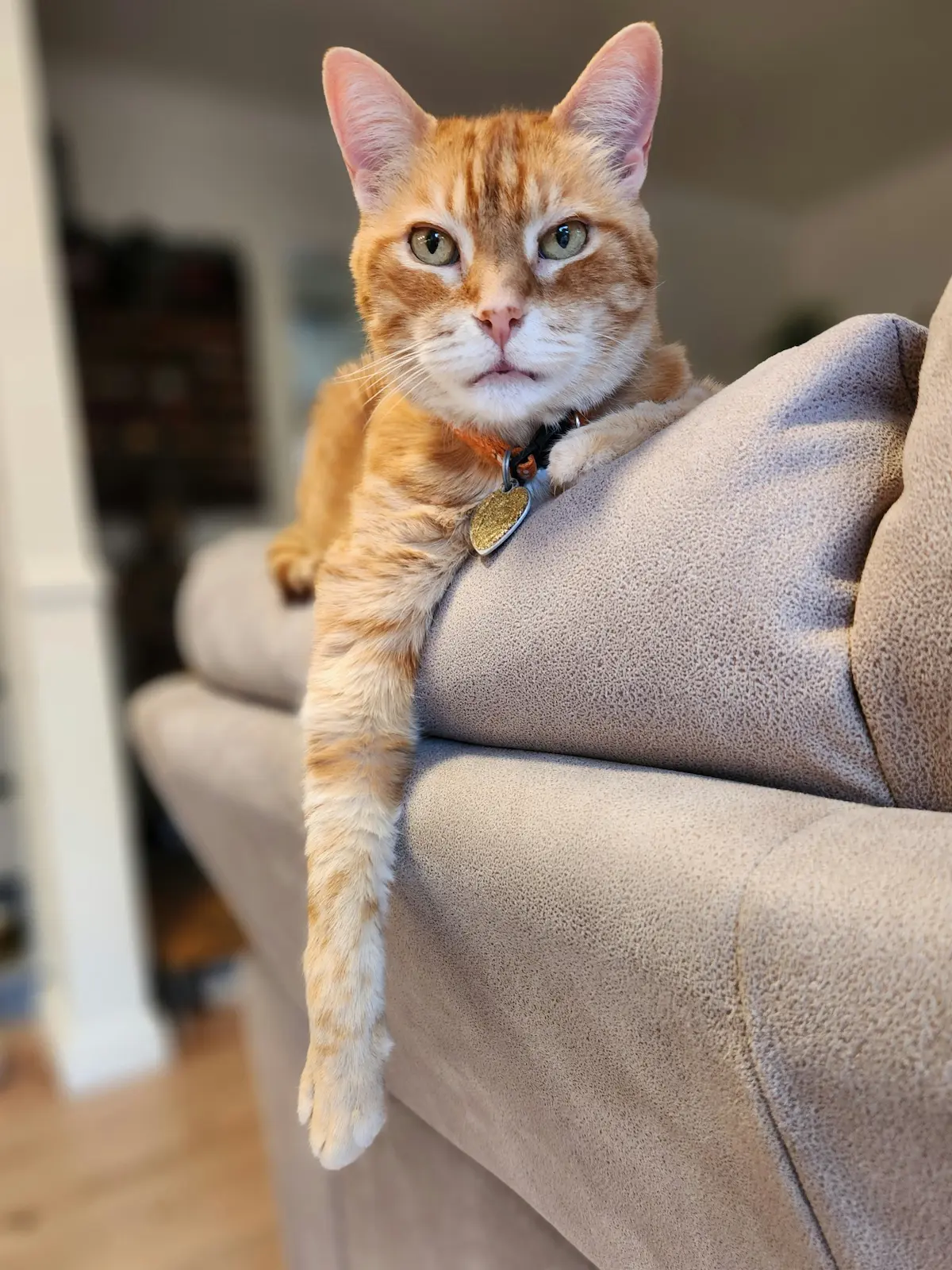
If you have noticed senior cat drooling, it is understandable to wonder whether this is something harmless or something that needs more attention. A small amount of drooling can happen in some cats when they are very relaxed or purring, but new, frequent, or heavier drooling in an older cat is worth noticing, especially if eating, breath, comfort, or behaviour has changed.
Disclaimer: This article is for educational purposes only and is not a substitute for professional veterinary advice. If your cat is in pain, losing weight, vomiting frequently, or acting differently, speak to your vet.
Key takeaway: A senior cat may drool a little when deeply relaxed, but drooling that is new, happening more often, or showing up alongside other changes is not something to brush off. Mouth discomfort is one common reason to pay attention, especially if you also notice bad breath, slower eating, dropping food, pawing at the mouth, or weight loss.
Quick answer: senior cat drooling
An older cat may drool for several reasons, including mouth discomfort, dental changes, nausea, stress, purring or relaxation, or another health change. A small amount of drool during relaxed purring may be normal for some cats, but new, repeated, heavy, smelly, bloody, or one-sided drooling is worth taking seriously.
If your senior cat is drooling more than usual, eating differently, dropping food, pawing at the mouth, losing weight, hiding, vomiting, or acting unlike themselves, speak to your vet.
Is it normal for a senior cat to drool?
Sometimes, yes. Some cats dribble a little when they are extremely content, sleepy, kneading, or purring.
But that is only part of the picture. In an older cat, drooling is less reassuring when it has started recently, is happening more often, or is clearly heavier than usual. Age itself is not a very useful explanation. Getting older can make dental and health problems more likely, and International Cat Care includes drooling as one possible sign of dental disease in older cats. “Just old age” should not be the end of the conversation if the pattern is new.
What senior cat drooling can look like at home
Drooling is not always dramatic. Sometimes it is subtle at first. You might notice:
- a damp patch where your cat was resting
- a wetter chin or chest fur
- dribbling while being stroked or while asleep
- saliva around the mouth before, during, or after meals
- more lip licking or swallowing than usual
Those observations matter because they help you tell the difference between a long-standing little quirk and a newer change. For a broader view of age-related health changes, you can also read Senior Cat Health: A Practical Guide for Older Cats.
When a small amount of drooling may be harmless
A small amount may be less concerning when:
- it only happens during deep relaxation or purring
- your cat has always done it
- it is mild and unchanged
- there are no eating, breath, weight, grooming, or behaviour changes alongside it
Even so, a noticeable increase is different from a familiar long-term habit. That is the key distinction.
When drooling is less likely to be normal
Drooling is more worth mentioning when it is new, increasing, or showing up alongside other changes. Cornell Feline Health Center explains that painful dental disease can show up through drooling and eating changes, which is one reason these signs are worth paying attention to.
- it has started suddenly
- it is happening more often
- there is much more saliva than before
- it happens around food
- your cat seems uncomfortable, quieter, or less interested in grooming
- it appears with bad breath, weight loss, or lower appetite
Common reasons a senior cat may drool
Relaxation or contentment
This is the reassuring possibility owners often hope for, and sometimes it is true. Some cats really do dribble a little when they are calm and happy. But that explanation fits best when the pattern is mild, familiar, and not changing.
Mouth or dental discomfort
This is one of the most important possibilities in older cats. Drooling can happen when the mouth is sore, chewing feels uncomfortable, or dental disease is present.
If you are also noticing chewing changes or mouth discomfort, Senior cat teeth: dental disease signs owners should not ignore may help you spot the wider pattern.
Nausea or feeling unwell
Drooling is not always a mouth problem. Sometimes it can sit alongside nausea or a more general “not quite right” feeling.
Irritation in or around the mouth
Drooling may also happen if something has irritated the mouth or throat, or if there is something unpleasant stuck or bothering your cat. This is one reason sudden drooling is worth attention, especially if your cat seems distressed.
Why age itself is not really the explanation
Older cats are more likely to develop dental and other health problems, but age is a risk factor, not a full explanation. If drooling is new, the useful question is not “is this old age?” but “what else has changed with it?”
Signs that matter alongside senior cat drooling
Looking at the full picture is often more helpful than focusing on the saliva alone.
Eating less or eating differently
Watch for:
- walking up to food and then backing away
- slower chewing
- dropping food
- chewing on one side
- choosing softer food over harder food
If drooling is showing up alongside appetite changes, Senior cat not eating: what owners can check first and when to speak to your vet may also be useful.
Bad breath or other mouth changes
A stronger smell from the mouth, pawing at the face, or visible swelling around the mouth or jaw all make drooling more worth mentioning.
If the smell from your cat’s mouth has changed as well, Senior cat bad breath: what it can mean and when to mention it is a useful next read.
Weight loss, lower energy, or less grooming
When drooling appears alongside weight loss or a drop in normal routine, it is more important to see it as part of a broader change.
Sudden heavy drooling or distress
Heavy drooling that appears suddenly, especially with distress, trouble swallowing, collapse, or suspected toxin exposure, deserves urgent veterinary advice.
What not to do at home
You do not need to examine your cat’s mouth yourself. Avoid forcing the mouth open or using human mouth products or home remedies. If the drooling is new, increasing or linked with other changes, observation and a conversation with your vet are more useful than trying to treat it at home.
Checklist: what to notice before mentioning senior cat drooling to your vet
- When did it start?
- Is it occasional or frequent?
- Is it worse around meals?
- Has your cat’s breath changed?
- Are they pawing at the mouth?
- Are they eating more slowly or dropping food?
- Has weight, energy, or grooming changed?
- Is the drooling mild, or much heavier than usual?
When to speak to your vet about senior cat drooling
Mention it at the next routine visit
This is reasonable when:
- the drooling is mild
- it only happens occasionally
- it seems long-standing and unchanged
- there are no other obvious changes
Make an earlier appointment
This is the better choice when:
- the drooling is new
- it is happening more often
- eating has changed
- there is bad breath
- your cat seems less comfortable
- they are pawing at the mouth
- there is weight loss or lower energy
Seek urgent advice
Seek urgent veterinary advice if:
- drooling becomes sudden and heavy
- your cat seems distressed
- there is trouble breathing or swallowing
- there is facial swelling or obvious mouth injury
- you think your cat may have licked or chewed something toxic or irritating
For broader context on mouth, teeth, gum and eating changes in older cats, see our Senior Cat Dental Health guide.
FAQs
Do cats drool when they are happy?
Sometimes, yes. Some cats drool when they are very relaxed, being stroked, or purring. But that tends to be mild and familiar rather than a new pattern.
Why is my old cat drooling all of a sudden?
Sudden drooling is less likely to be something to ignore. Mouth discomfort, nausea, irritation, or a broader health issue can sit behind it, so the full context matters. If it is new or clearly increased, it is sensible to mention it to your vet.
Is drooling a sign of dental problems in cats?
It can be. Drooling can appear with dental or mouth problems, especially if you also notice bad breath, chewing changes, food dropping, or pawing at the mouth.
Should I worry if my senior cat drools in their sleep?
A tiny amount in a deeply relaxed cat may be harmless, especially if it has always happened. But if sleep drooling is new, more noticeable, or part of a wider change, it is worth paying attention to.
Final thought
If your senior cat has started drooling, noticing it does not mean you are overreacting. Sometimes it is only a small relaxed-cat quirk. But in older cats, small changes around the mouth, appetite, or daily comfort are often worth taking seriously. If the drooling is new, more frequent, or turning up alongside other changes, speaking to your vet is a sensible next step.