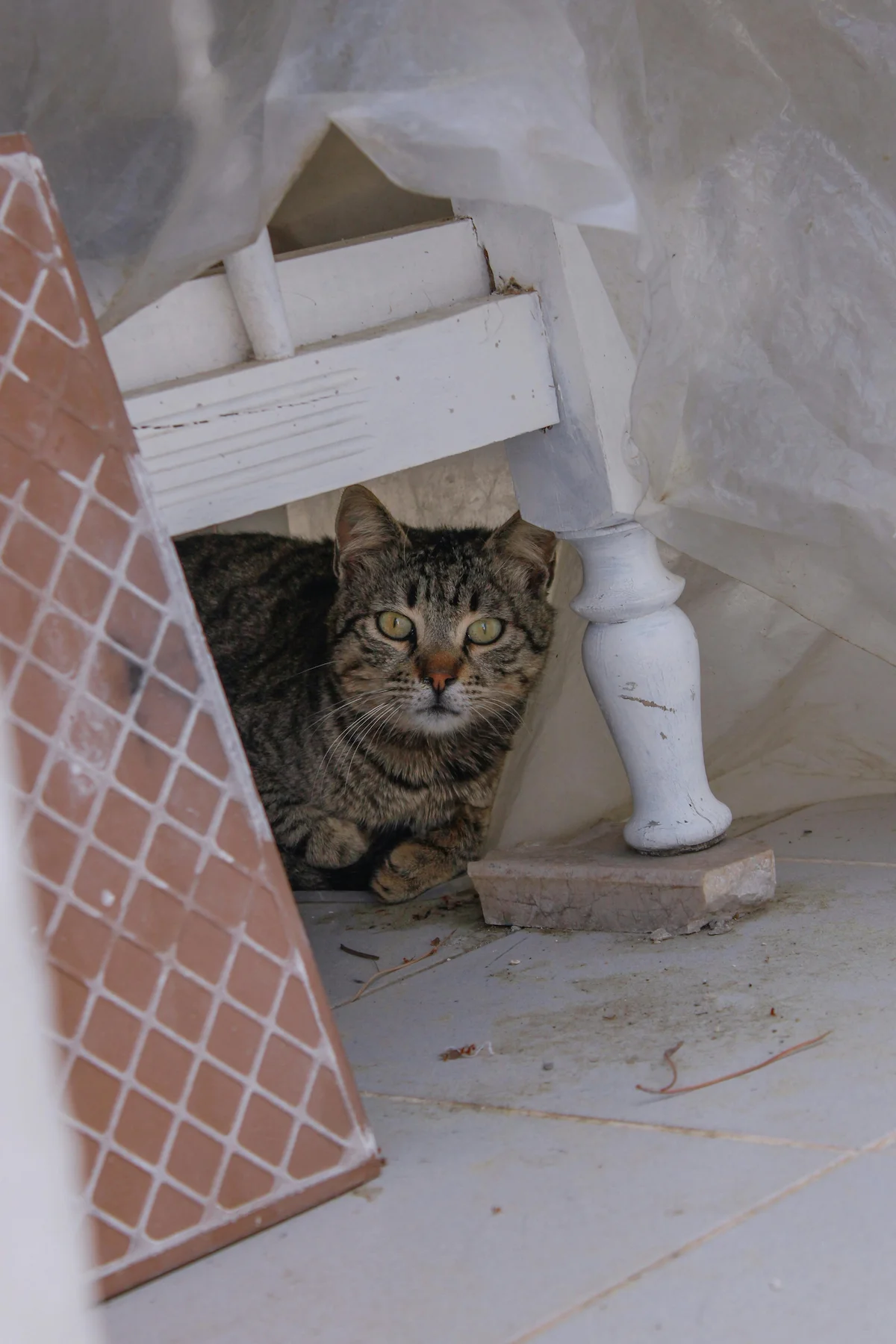
Older cat hiding can be hard to read. Some cats have always liked quiet corners, under-bed spaces, or sheltered spots where they can rest undisturbed. But when an older cat starts hiding more than usual, or seems harder to tempt out for normal routines, that shift is worth paying attention to.
Disclaimer: This article is for educational purposes only and is not a substitute for professional veterinary advice. If your older cat seems in pain, stops eating, is losing weight, or is acting differently, speak to your vet.
Key takeaway: Some hiding is normal. More hiding than usual in an older cat is worth noticing, especially when it is new, persistent, or comes with changes in appetite, drinking, movement, grooming, toileting, or behaviour.
Quick answer: why is my older cat hiding?
Older cat hiding can be normal if your cat has always enjoyed quiet, sheltered places. But if your older cat is hiding more than usual, staying hidden for longer, avoiding normal routines, or seeming harder to tempt out, it is worth paying attention.
Hiding can happen with stress, discomfort, feeling unwell, reduced confidence, sensory changes, or simply wanting more quiet rest. If the hiding is new, persistent, worsening, or comes with changes in appetite, drinking, toileting, movement, grooming, weight or behaviour, speak to your vet.
Is it normal for an older cat to hide sometimes?
Yes. Hiding is part of normal cat behaviour. Many cats choose sheltered places because those spaces feel quiet, safe, and predictable.
What matters more is the overall pattern.
An older cat who has always liked one favourite hiding spot is different from an older cat who now:
- disappears for longer
- avoids family areas more often
- stays hidden when food is served
- seems less interested in interaction
- comes out only when the house is very quiet
That is when “my cat likes quiet places” starts to become “something may have changed”.
Common reasons an older cat may start hiding more
Hiding is a behaviour change, not a diagnosis. More than one factor can sit behind it, and in older cats the reason is not always obvious at first.
Stress, disruption, or feeling less secure
Even small changes at home can matter to some older cats, especially if they are already less confident than they used to be.
Common examples include:
- visitors staying over
- decorating or building work
- furniture being moved
- a new pet
- a change in household routine
- more noise than usual
An older cat does not need a dramatic event to feel unsettled. Sometimes a quieter, more withdrawn pattern begins because home suddenly feels less predictable.
Pain or physical discomfort
Pain is one of the main reasons not to brush this behaviour off. Cats are good at hiding discomfort, and behaviour changes are often one of the first clues owners notice.
That does not mean every hiding cat is in pain. It does mean that a new hiding pattern in an older cat is worth taking seriously rather than assuming it is just old age.
Feeling generally unwell
Cats who feel off-colour often become quieter, less social, and more inclined to keep to themselves. Hiding can sometimes be part of that wider picture.
This is where context matters. A cat who is hiding and otherwise seems normal may need watching. A cat who is hiding and also eating less, drinking differently, moving stiffly, or seeming unlike themselves is more clearly worth mentioning.
Reduced confidence with age
Some older cats become less physically or emotionally confident. They may prefer routes around the house that feel safer, quieter rooms, or low, tucked-away sleeping places where they do not have to jump or move through busy areas.
This can happen even without an obvious illness. Ageing can change how secure a cat feels in their surroundings, especially if they are easier to startle or less steady on their feet.
Changes in hearing, sight, or awareness
Older cats can become less sure of their surroundings, less tolerant of disturbance, or more likely to choose protected spots where they feel in control.
Again, the useful question is not “is this definitely the reason?” but “does this fit with a wider change in how my cat is behaving?”
Wanting more quiet and uninterrupted rest
Not every reason is a red flag. Older cats often spend more time resting, and some become more selective about where they settle. A tucked-away corner may simply feel warmer, softer, or less busy.
That is why it helps not to treat all hiding as a problem. The stronger signal is a change from your cat’s usual routine, not the existence of hiding on its own.
What else to notice if your older cat is hiding
A simple way to think about it is this: if your cat is hiding more, what else has changed at the same time? In older cats, it also helps to notice changes in movement, appetite, thirst, sleep, and toileting, because these can sit alongside a change in behaviour.
Quick checklist: what else has changed?
- eating less, eating more slowly, or seeming fussier
- drinking more or less than usual
- sleeping more, or staying in one place for longer
- moving stiffly or jumping less
- hesitating on stairs or furniture
- grooming less, or looking less tidy
- toileting outside the litter tray, straining, or going less often
- becoming more vocal, unsettled, or irritable
- seeming less social or less like themselves
You do not need to spot all of these for the change to matter. Even one or two extra changes can make the picture more useful.
If hiding is part of a wider change in confidence, routine, sleep, vocalising, clinginess or confusion, our Senior Cat Behaviour Changes guide may help you look at the bigger pattern.
For broader context on age-related health changes, see our Senior Cat Health guide.
If the change also includes food-related behaviour, see Senior cat appetite changes: what’s common as cats age.
When older cat hiding is worth mentioning to your vet
The clearest threshold is whether the hiding feels new, ongoing, or part of a wider pattern.
It is worth mentioning if:
- your cat has started hiding more than usual
- the change is new and has kept happening
- your cat is harder to tempt out for meals or usual routines
- hiding comes with changes in appetite, drinking, sleep, movement, grooming, or toileting
- your cat seems withdrawn, uncomfortable, distressed, or unlike themselves
This does not mean you need to panic. It means the shift is worth noticing and, where appropriate, worth mentioning.
What you can do at home while you are monitoring the change
The goal here is not to work out the cause on your own. It is to avoid adding pressure and notice the pattern clearly.
Give space rather than forcing interaction
If a cat is hiding, dragging them out or repeatedly disturbing them usually does not help.
That does not mean ignoring the change. It means keeping your response calm.
If the change also includes night-time restlessness or calling, see Older cat yowling at night: common reasons and what helps.
Notice patterns instead of guessing
Try to notice:
- when the hiding happens
- how long it lasts
- whether your cat still comes out for food, fuss, or routine
- what else changed around the same time
- whether the pattern is getting better, worse, or staying the same
That kind of observation is often more useful than trying to decide the reason yourself.
The bottom line
Older cat hiding is not always a sign that something is wrong. Many cats like quiet, sheltered places, and older cats often value rest and predictability even more.
But more hiding than usual is worth noticing.
The biggest clue is not the hiding by itself. It is the change in routine around it, especially when it is new, persistent, or comes with other changes in appetite, drinking, movement, sleep, grooming, toileting, or behaviour.
If that is what you are seeing, it is sensible to mention it rather than waiting too long and hoping it settles on its own.
If you are still unsure, these quick questions cover the points owners often worry about most.
FAQs
Is it normal for an older cat to hide more?
Sometimes, yes. Older cats may prefer quiet resting places and more uninterrupted sleep. But a clear increase in hiding, especially when it is new or paired with other changes, is worth paying attention to.
Why is my older cat hiding all of a sudden?
A sudden change can sometimes be linked with stress, feeling unwell, pain, or reduced confidence. The most useful next step is to notice what else has changed, rather than trying to guess the cause too quickly.
Do older cats hide when they are in pain?
They can. Cats often hide discomfort, and behaviour changes may be one of the first clues an owner sees. That is one reason new hiding behaviour is worth noticing in a senior cat.
Should I pull my cat out of their hiding place?
Usually no. It is usually better to let your cat come out in their own time while you keep essentials nearby and monitor the wider picture.