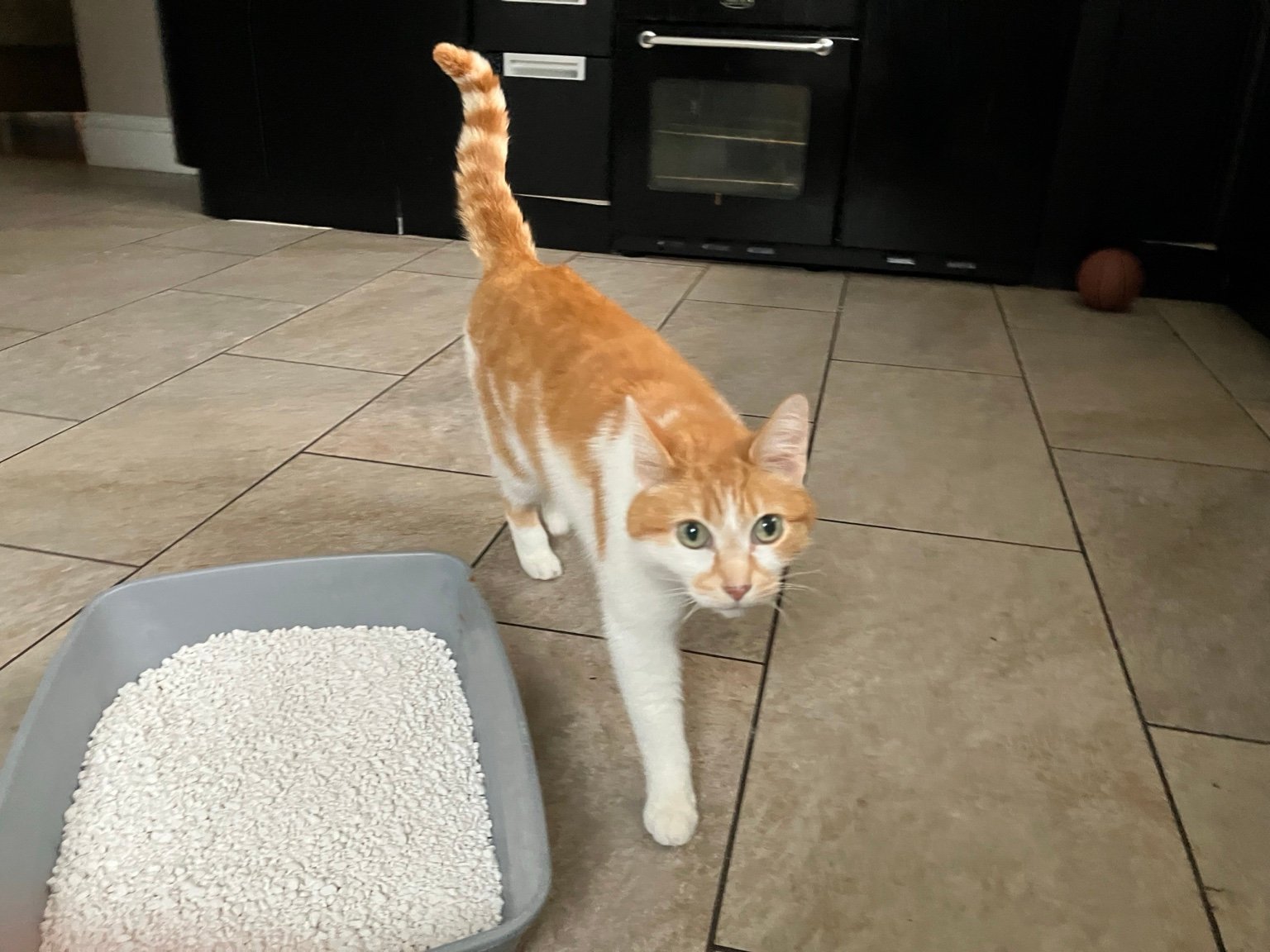
Senior cat diarrhoea can be worrying to see, especially if your cat is older, already a bit frail, or seems off in other ways. Sometimes it is brief and settles quickly. Sometimes it is a sign that your cat needs a closer look from your vet. Diarrhoea in cats can be short-lived in some cases, but it can also reflect a more serious underlying problem.
Disclaimer: This article is for educational purposes only and is not a substitute for professional veterinary advice. If your cat is in pain, losing weight, vomiting frequently, or acting differently, speak to your vet.
Key takeaway: Senior cat diarrhoea can have several causes. Sometimes it is linked to a food change, stress, or a short-lived stomach upset. Sometimes it is a sign that your cat needs veterinary attention.
What matters most is the overall pattern. Duration, appetite, energy, hydration, vomiting, blood in the stool, and repeated episodes can all help show whether this looks mild or more concerning.
If your older cat seems off in any other way, it is sensible to speak to your vet sooner rather than later.
If you are noticing more than one change at once, this guide to Senior cat health may help you see the bigger picture.
What diarrhoea in a senior cat can mean
Diarrhoea means your cat’s stools are looser, wetter, or more frequent than usual. Sometimes it is just one episode. Sometimes it becomes a pattern.
In older cats, that distinction matters. Ongoing diarrhoea can be harder on a senior cat because fluid loss may matter more, and dehydration can affect normal body functions. Older cats can become dehydrated more easily when fluid loss increases or they are not drinking enough.
Signs that a cat may not be coping well can include lethargy, weakness, poor appetite, a dry mouth, or looking generally unwell.
That is why it helps to look at the full picture:
- how long it has been going on
- how often it is happening
- whether your cat is eating normally
- whether they seem bright or quieter than usual
- whether vomiting, weight loss, or other changes are happening too
Common causes of senior cat diarrhoea
There is no single cause of diarrhoea in older cats. Sometimes it follows a food change or a short-lived stomach upset. In other cases, it may be linked to stress, digestive irritation, infection, parasites, or an underlying health change. Cornell specifically notes abrupt diet change and stressful events as examples of short-lived triggers, while recurrent or extended diarrhoea may point to more serious underlying disease.
Food changes or something that did not agree with them
A sudden diet change is one of the simpler possibilities. A new food, richer treats, scavenging, or human food can all upset a cat’s stomach.
Older cats can also become a bit less tolerant of changes that would once have caused no obvious problem.
Stress or disruption to routine
Stress can affect the gut too. In real homes, this might include:
- visitors
- travel
- boarding
- conflict with another pet
- disruption to feeding or toileting routines
Stress is possible, but in a senior cat it is better not to assume stress is the answer if the diarrhoea repeats, lasts, or comes with other changes.
Stomach upset, infection, or parasites
Sometimes diarrhoea is linked to inflammation, infection, or parasites affecting the digestive tract. The exact cause is not always obvious from the stool alone, which is one reason persistent diarrhoea is worth discussing with your vet.
Ongoing health changes in older cats
In senior cats, repeat or persistent diarrhoea can sometimes be connected with an underlying health issue rather than a simple stomach upset.
That does not mean jumping to the worst conclusion. It simply means that in an older cat, diarrhoea deserves a bit more attention if it:
- keeps happening
- lasts more than a short time
- appears alongside weight loss
- comes with lower appetite
- happens with vomiting
- comes with a clear change in behaviour
What else to notice at home
You do not need to diagnose the cause. What helps most is noticing the wider pattern.
Appetite
Is your cat eating normally, eating less, or refusing food?
If appetite has dropped as well, it is sensible to discuss it with your vet sooner. If your cat is eating less or refusing food, this guide on Senior cat not eating may help.
Energy and behaviour
Notice whether your cat seems:
- bright and settled
- quieter than usual
- withdrawn
- weak
- uncomfortable
- less interested in normal routines
Vomiting
Diarrhoea on its own and diarrhoea plus vomiting are not the same picture. Repeated vomiting alongside diarrhoea lowers the threshold for speaking to your vet. If your cat is being sick as well, this guide on Senior cat vomiting may help.
Drinking and hydration
Diarrhoea can increase fluid loss, which matters particularly in an older cat.
Notice whether your cat is drinking differently from usual and whether they seem weak, unusually quiet or generally unwell. You do not need to judge dehydration yourself before asking for veterinary advice.
If fluid loss is a particular concern, our Senior Cat Dehydration guide explains the signs owners may notice and how vets assess hydration.
What to track if your senior cat’s diarrhoea continues
You do not need to identify the cause yourself. A few clear notes can help your vet understand the pattern and what else has changed.
Try to note:
- when the diarrhoea first started
- how many loose stools your cat passes each day
- whether the pattern is improving, staying the same or getting worse
- whether the stool is soft, watery, mucus-like, unusually dark or contains blood
- whether there is urgency, straining or toileting outside the litter tray
- whether appetite is normal, reduced or absent
- whether your cat is drinking more or less than usual
- whether vomiting is happening too
- whether your cat seems quieter, weaker, restless, hidden away or uncomfortable
- whether there has been any weight or body-shape change
- any recent changes involving food, treats, medication, stress, boarding, visitors or household routines
You do not need perfect records or medical terminology. A simple note such as “three watery stools since yesterday evening and eating less this morning” can give your vet a clearer picture.
If it is easy to do without delaying veterinary advice, a clear photograph may also help. Your vet may ask for a stool sample, but follow your clinic’s instructions about whether one is needed and how they would like it collected.
When to speak to your vet
A simple rule is this: the longer diarrhoea goes on, and the more other changes appear alongside it, the less sensible it is to wait.
Speak to your vet sooner if:
- diarrhoea lasts more than a day or two
- it keeps coming back
- your cat is eating less
- your cat is vomiting as well
- your cat seems lethargic or weak
- there is blood in the stool
- your cat is losing weight
- your cat already has health issues or seems frail
Speak to your vet urgently if:
- your cat seems collapsed or very weak
- they cannot keep food or water down
- they appear painful or very distressed
- they seem dehydrated
- vomiting and diarrhoea are both happening repeatedly
FAQs
Is diarrhoea in a senior cat always serious?
No. Some cases are mild and short-lived. But in older cats, it is wise to watch more carefully because diarrhoea can be harder on them and may sometimes be linked to a wider health issue.
What causes diarrhoea in older cats?
Common possibilities include food changes, stress, stomach upset, parasites, infection, digestive irritation, or an underlying health change. The cause is not always obvious from the stool alone.
When should I speak to my vet about my senior cat’s diarrhoea?
Speak to your vet sooner if it lasts more than a day or two, keeps coming back, or happens alongside vomiting, poor appetite, lethargy, blood in the stool, or weight loss.
Can stress cause diarrhoea in a senior cat?
Yes, sometimes. But in older cats, it is best not to assume stress is the reason if the diarrhoea continues or your cat seems unwell in other ways.
What if my senior cat has had diarrhoea for several days?
If your senior cat has had diarrhoea for several days, it is sensible to speak to your vet. Ongoing diarrhoea can be harder on older cats, especially if they are eating less, vomiting, losing weight, drinking less, seeming weak, or acting differently.