A senior cat losing weight can be worrying — especially if they still seem bright, or they’re eating “about the same” day to day. The good news is you don’t need to guess what it means.
This guide covers:
- simple ways to confirm weight loss (without obsessing)
- common, non-alarming reasons it can happen in older cats
- what to track so you can speak to your vet with confidence
- clear signs it’s best to call sooner rather than later
Disclaimer: This article is for general education and isn’t a substitute for veterinary advice. If your cat is losing weight, or you’re worried about their comfort, contact your vet.
Key takeaway
- If you suspect senior cat weight loss, confirm the trend first (photos and regular weighing).
- Track a few simple signs (appetite, drinking, litter tray changes, and behaviour).
- Speak to your vet sooner rather than later if the weight loss trend continues.
- It’s especially important to get advice promptly if your cat is also eating less or acting differently.
Senior cat weight loss: is it “normal” with age?
Small changes in body shape can happen with age, but unplanned weight loss isn’t something to ignore.
One reason it’s easy to miss is that older cats can lose weight gradually, and some will still eat well. That’s why it helps to look for a trend over time, not just a single day where they seem a bit slimmer.
First, confirm it’s real weight loss (not just “they look different”)
Before you worry, take 10 minutes to check the basics. You’re looking for “is this actually changing over weeks?”, not perfection.
A simple body check you can do at home
Use gentle hands and a calm moment (no need to restrain your cat).
- Ribs: you should be able to feel them with light pressure, but they shouldn’t feel sharp.
- Waist: from above, most cats have a slight waist behind the ribs.
- Spine and hips: if these feel more prominent than before, that’s worth noting.
If you’re unsure, you can treat this as a prompt to start tracking, rather than trying to decide immediately.
If the change seems to be weight gain rather than weight loss, our guide to senior cat weight gain explains common owner observations and when it is worth mentioning.
Use photos (a surprisingly helpful check)
Take one photo from above and one from the side:
- same place, similar lighting
- once a month is enough for most people
This can show gradual change more clearly than memory.
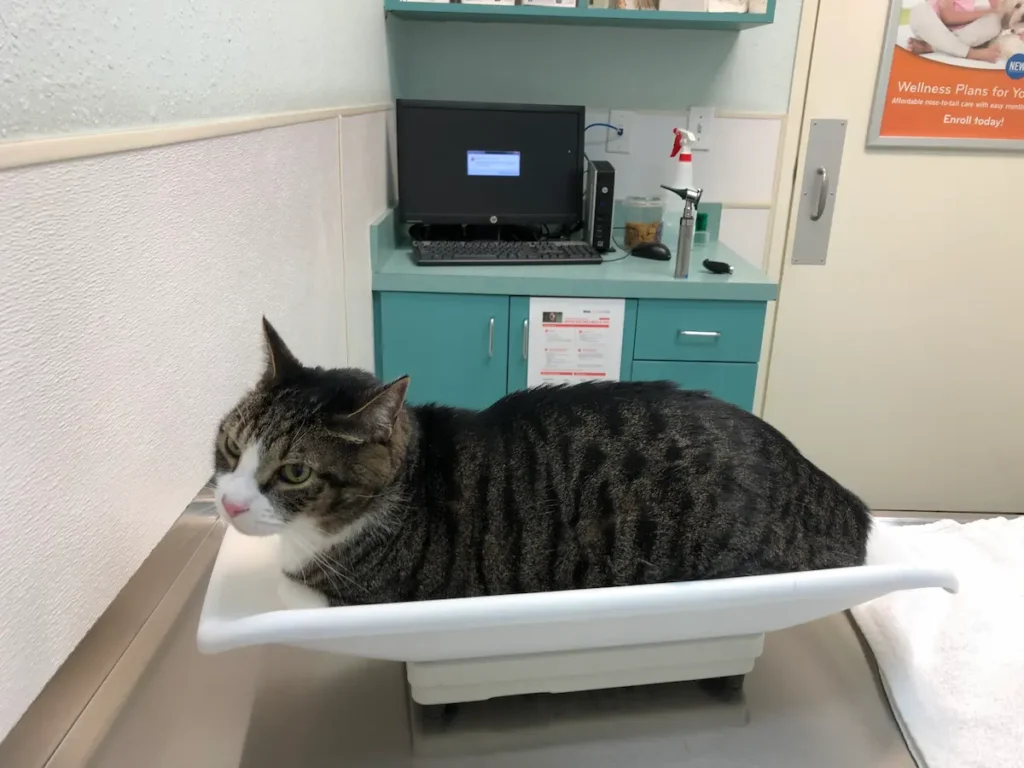
Weigh your cat safely (and consistently)
If your cat tolerates it, weighing can remove guesswork.
Options that work at home:
- A baby scale (if you already have one)
- Bathroom scale method: weigh yourself, then weigh yourself holding your cat, and subtract the difference
Tips for consistency:
- aim for the same time of day
- keep it relaxed (one attempt is enough)
- write it down (date + weight)
If you’re seeing a steady downward trend, it’s reasonable to speak to your vet — even if your cat seems otherwise “fine”.
Common reasons a senior cat may lose weight (without trying to diagnose)
This section is about patterns that can contribute to weight loss. It’s not about naming conditions at home.
1) They’re eating less than you think
This is common, especially in multi-cat homes or with grazers.
Things that can reduce intake quietly:
- another pet is finishing the bowl
- food is left out and becomes stale (smell matters a lot to cats)
- stress or change in routine (visitors, noise, building work, new pets)
- bowl setup issues (bowl too deep, awkward height, slippery floor, feeding area too exposed)
A small daily shortfall can add up over weeks.
2) They’re eating normally, but not maintaining weight
Some older cats need more calories to maintain body weight than they did when they were younger. You may not notice a big appetite change — just a slow drift down on the scales.
This is one reason owners often say, “But they’re still eating.”
3) Pain or discomfort is getting in the way
Discomfort can affect appetite and eating behaviour in subtle ways.
Things you might notice:
- chewing slowly, or dropping food
- approaching the bowl, then walking away
- preferring softer textures than before
- sitting to eat when they used to stand
- avoiding going to the feeding area (especially if it involves stairs or slippery floors)
If your cat is also moving less, jumping less, or hesitating, it’s worth mentioning at the same time.
If your cat is also hesitating with stairs, jumping, or slippery floors, a few simple home adjustments can help support comfort while you arrange veterinary advice.
4) A food change hasn’t suited them
Even small changes can matter:
- switching brands, flavours, or textures
- a “new recipe” or different batch
- moving from meals to free-feeding (or the other way round)
Some cats will keep eating enough to look normal day-to-day, but still not meet their needs over time.
What to track before you speak to your vet (so the appointment is more useful)
You don’t need to track everything — just enough to spot patterns and give your vet a clear picture.
If you can, note these for 7–14 days:
Weight and intake
- weight (date + number)
- appetite: normal / slightly less / much less
- how many meals offered vs. eaten (rough is fine)
Drinking and litter tray changes
- drinking: normal / increased / hard to tell
- wee: normal / more / less
- poo: normal / smaller / diarrhoea / constipation
Behaviour and comfort
- quieter, hiding more, or “not themselves”
- changes in grooming
- restless at night
- signs eating is uncomfortable (dropping food, chewing oddly, pawing at mouth)
This isn’t about “proving” anything — it just helps your vet decide what to check first.
When to speak to your vet
If you’re unsure, it’s reasonable to call and ask. Weight loss is one of those changes where getting advice earlier is usually easier than waiting until your cat is clearly unwell.
International Cat Care lists weight loss in older cats as a reason to speak to your vet.
Speak to your vet promptly (same day or next available) if your cat:
- is losing weight and you can’t explain why
- is losing weight and eating less than usual
- seems unusually quiet, hides more, or “isn’t themselves”
- vomits repeatedly, has ongoing diarrhoea, or struggles with constipation
- seems uncomfortable when eating (drops food, chews oddly, backs away)
- is drinking noticeably more than usual or peeing much more than usual
- looks weak, unsteady, or you’re worried about their breathing
If it’s mild and your cat seems well
It can still be sensible to book a non-urgent appointment, especially if:
- the trend continues over 2–4 weeks
- you can feel more ribs/spine than before
- your cat’s coat, grooming, or energy level has changed
Safe, non-medical support you can do at home (while you arrange advice)
These are comfort and practical steps that can help while you monitor — they aren’t treatment.
- Make food and water easy to reach: quiet spot, away from litter trays, on a non-slip mat
- Reduce competition: separate feeding spots in multi-cat homes
- Offer small meals more often: helpful for grazers and fussy eaters
- Keep routine steady: limit major changes while you’re tracking
- Keep notes simple: a short list beats trying to remember later
What your vet may do (so you know what to expect)
Appointments for weight loss often start with the basics:
- your notes and weight trend
- a full physical exam (including teeth and mouth)
- discussion of eating habits, drinking, litter tray changes, and behaviour
Depending on what they find, your vet may suggest tests (for example, blood and urine tests) to understand what’s going on. The aim is to identify the cause and support your cat appropriately.
Related reading on Feline Golden Years
For a broader overview of health changes that can appear in older cats, see our Senior Cat Health guide.
If you’re also noticing a change in appetite, this companion guide may help:
If weight loss appears alongside eating changes, bad breath, drooling or mouth sensitivity, our Senior Cat Dental Health guide may help you understand what else to track.
If weight loss appears alongside appetite, drinking or food preference changes, our Senior Diet for Cats guide may help you look at the wider feeding picture.
Senior cat weight loss is often easier to understand when you look at appetite, drinking, toileting, mouth changes and behaviour together rather than focusing on one sign alone.
FAQs
My senior cat is losing weight but still eating — should I worry?
It’s a common pattern in older cats, and it’s worth mentioning to your vet — especially if the trend continues for more than a couple of weeks, or you notice changes in drinking, litter tray habits, or behaviour.
Do older cats get skinny as they age?
Ageing can change muscle mass and body shape, but ongoing unplanned weight loss isn’t something to write off as “just old age”. If you’re seeing a steady downward trend, it’s reasonable to get it checked.
How fast is “too fast”?
If weight loss seems sudden, or it comes with other symptoms (vomiting, diarrhoea, weakness, pain when eating, big changes in drinking/weeing), it’s best to call your vet promptly.