Older cats don’t usually need a “perfect” feeding plan. What helps most is a calm, repeatable routine you can stick to — and a simple way to spot when something has genuinely changed.
Feeding an older cat is usually easier when you focus on consistency, comfort, and simple weekly trends rather than “perfect” rules.
This guide is about feeding an older cat day to day (how to do it), not choosing a specific diet or brand (what to buy). If you want help picking the right type of food for your cat’s age and needs, see Senior cat food: how to choose the right diet for older cats.
Disclaimer: This article is for general education and isn’t a substitute for veterinary advice. If you’re worried about your cat’s appetite, weight, or comfort, speak to your vet.
Key takeaway
- A simple routine beats a “perfect” plan — especially with senior cats.
- Track the basics: appetite, weight trend, litter tray habits, and comfort.
- Make changes slowly (one change at a time), and keep quick notes for a week.
- Speak to your vet sooner if appetite drops, weight changes, or your cat seems uncomfortable.
Feeding an older cat: the simple feeding framework (4 parts)
If feeding feels confusing right now, start with this. It covers most real-life situations without turning your kitchen into a “cat nutrition project”.
1) Consistency first
Feed in the same place, at similar times, with a calm setup.
2) Enough food for THIS cat
Aim for a steady, healthy trend over weeks — not daily perfection.
3) Hydration support (easy wins)
Make water and moisture easy, without forcing your cat to “drink more”.
4) Small changes, one at a time
So you can tell what helped — and what didn’t.
International Cat Care notes that “little and often” meals can help some senior cats, and suggests trying smaller meals spread across the day.
Step 1: Set up meals so your cat actually wants to eat
Older cats can become pickier or slower — not because they’re being difficult, but because comfort and routine matter more as they age.
Make the bowl setup comfortable
- Choose a bowl that doesn’t press on whiskers (wide, shallow can help).
- If your cat seems stiff, try raising the bowl a little so they don’t have to crouch.
- Keep bowls stable (no sliding around on hard floors).
Pick a calm feeding spot
- Keep food away from the litter tray.
- If you have other pets, feed your older cat somewhere they can relax and eat without being watched or rushed.
Make food easy to notice and appealing
Without adding “extras” or overthinking:
- Offer food at room temperature (cold food can smell less).
- Keep portions smaller and refresh more often if meals sit out.
- If your cat prefers grazing, offer a few small meals rather than one big bowl that goes stale.
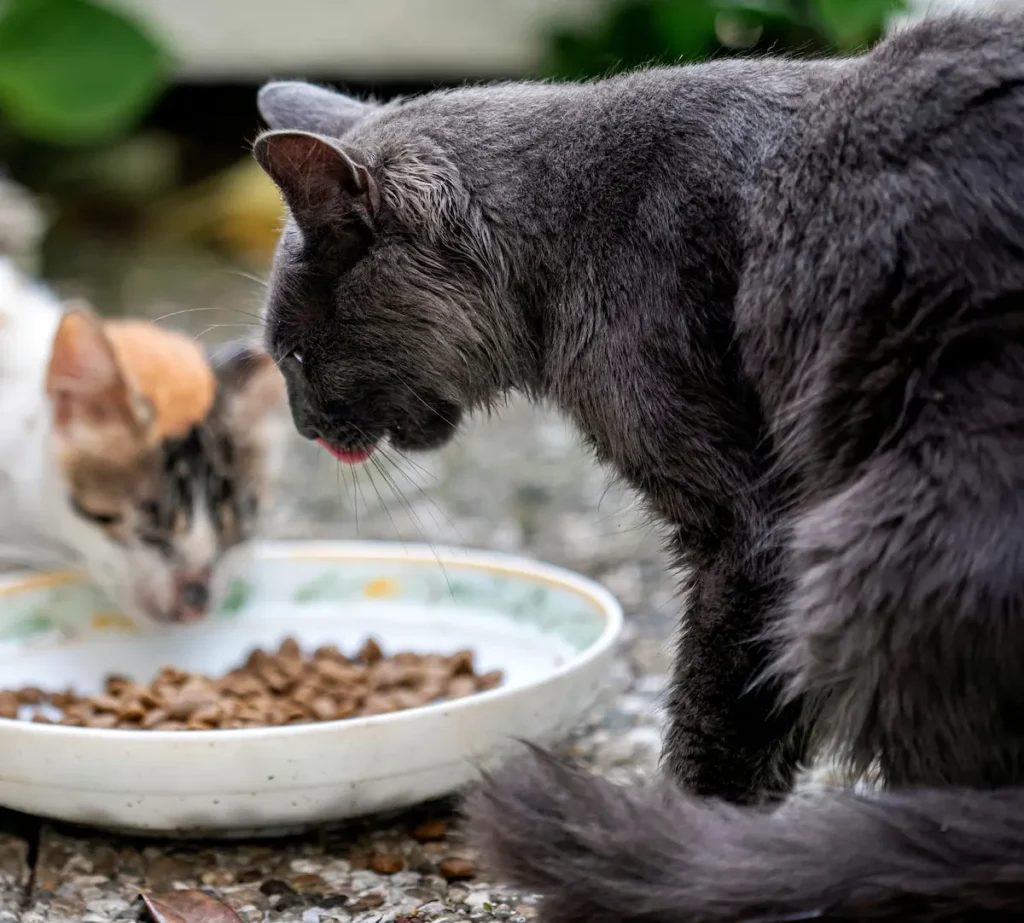
Step 2: Portions without overthinking (a practical method)
If you’re not sure whether you’re feeding “enough”, don’t jump straight into complicated calculators. Use a simple trend-based approach.
Use the “weekly trend” method (not daily panic)
Once a week (or every two weeks), check these:
- Is your cat finishing roughly the same amount as usual?
- Do they look and feel about the same around the back end and ribs?
- Is their energy and comfort broadly stable?
- Is their weight roughly stable (if you can weigh them at home)?
If the trend is stable, your routine is probably good enough.
If you’re seeing weight dropping over a few weeks (even with a normal appetite), read our guide to Senior cat weight loss and when to speak to your vet.
Keep treats from quietly replacing meals
Treats are fine — they can even be useful for bonding and routine. The problem is when treats become the “main calories” without you noticing.
A simple rule that keeps things calm:
- Give treats at predictable times (not all day).
- If your cat is leaving meals but taking treats, treat that as a signal to review the routine (and consider speaking to your vet if it persists).
Multi-cat homes: make sure the right cat eats the right amount
Common problems in multi-cat households:
- The confident cat eats both bowls.
- The older cat “nibbles” then walks away and misses out.
Simple fixes:
- Feed in separate rooms for 10–15 minutes.
- Pick up bowls after mealtimes if one cat is a thief.
- If needed, use a microchip feeder — but only if it genuinely reduces stress (optional, not required).
Step 3: Keep hydration support simple
Hydration is part of the daily feeding routine, but it does not need to become a wet-versus-dry debate. Wet food can add moisture, dry food can be practical, and many households use a mix.
For day-to-day feeding, focus on keeping the routine simple and consistent:
- Keep fresh water easy to access as part of your cat’s normal setup.
- If wet food already suits your cat, it can add moisture to the routine.
- If dry food is part of the routine, keep portions and meal times reasonably consistent.
- If you use a mixture, avoid changing the balance unnecessarily from day to day.
The important thing here is that your cat is eating consistently, maintaining a steady weight trend and seems comfortable at mealtimes.
If you want more detail on choosing between wet, dry or mixed feeding, see Senior cat food: how to choose the right diet for older cats.
Step 4: Changing food without drama (the gentle transition)
Older cats often do better with gradual change.
The slow-mix method (simple version)
- Start with a small amount of the new food mixed into the current food.
- Increase slowly over several days.
- If stools loosen or your cat becomes reluctant, slow down and hold steady for a bit.
When to pause a change
Pause and stabilise (go back a step) if:
- your cat refuses the bowl repeatedly
- they seem unsettled at mealtimes
- tummy upsets continue rather than settling
If your cat stops eating, or is eating much less than normal, don’t “push through the transition” — that’s a reason to speak to your vet.
Common real-life problems (and low-effort fixes)
“My older cat acts hungry but doesn’t finish meals”
Try:
- smaller meals more often
- a calmer feeding spot
- refreshing the food more often (rather than bigger portions)
- checking that another pet isn’t hovering and putting them off
If this is new, persistent, or paired with weight loss, speak to your vet.
“My cat grazes all day — should I switch to set mealtimes?”
You don’t have to, but mealtimes can help you notice changes sooner.
A gentle middle ground:
- keep two or three predictable “meal windows”
- allow a little grazing time during each window
- pick up bowls after, especially in multi-cat homes
“My cat only licks gravy and leaves the chunks”
Try:
- offering a different texture (paté vs chunks in gravy)
- adding a small splash of warm water to increase aroma (not to “dilute” the food — just to help it smell more interesting)
If chewing seems uncomfortable or your cat paws at their mouth, that’s a reason to speak to your vet.
“Is this pickiness… or a real change?”
A helpful way to tell:
- Pickiness tends to be consistent preferences (texture, temperature, location).
- “Real change” looks like a sudden shift, reduced interest, or a pattern that keeps worsening.
When in doubt, track it for a few days and speak to your vet if it’s not settling.
When to speak to your vet
These are owner-observation triggers — not diagnoses. If any of these feel true, it’s worth speaking to your vet:
- Your cat is not eating, or eating much less than usual, especially if sudden
- Weight loss, ongoing weight gain, or visible muscle loss over weeks
- Repeated vomiting, ongoing diarrhoea, or constipation that doesn’t settle
- Signs that eating may be painful (dropping food, chewing on one side, drooling, pawing at the mouth)
- Big changes in drinking/urination patterns
- Behaviour changes alongside appetite changes (hiding, irritability, unusual quietness)
If you can, take simple notes for 3–7 days (what they ate, how much, any changes). That helps your vet far more than a perfect guess.
For a broader overview of age-related changes and common senior cat concerns, visit our Senior Cat Health page.
For a wider look at senior cat feeding, hydration, appetite and weight changes, see our Senior Diet for Cats guide
FAQs
What if my older cat won’t eat wet food?
That’s common. Try a different texture or temperature. If your cat is eating well overall and staying healthy, you don’t necessarily need to force wet food. If appetite drops or weight changes, speak to your vet.
How often should I feed an older cat?
Many older cats do well with one to two meals a day, while others prefer smaller, more frequent meals — especially if they eat slowly or get picky. Cornell Feline Health Center notes that many senior cats keep the same basic meal pattern unless a vet advises otherwise. The best routine is the one your cat eats calmly and consistently, and that you can stick to day to day.
If you’re new to senior-cat care, our Senior Cat Lifespan page explains what typically changes with age (and what doesn’t).
Simple weekly checklist (save this)
- Same feeding spot and setup (quiet, comfortable)
- Appetite trend: about the same, more, or less?
- Weight trend: stable, up, or down? (weekly/fortnightly)
- Litter tray: any noticeable changes?
- Comfort: any new stiffness, grumpiness, or hiding?
- If anything is “new and persistent”, plan to speak to your vet
For more general older-cat care guidance, see our Senior Cat Care guide.
References
- International Cat Care (ISFM) — Inappetence in cats
- Cornell Feline Health Center — Loving Care for Older Cats