If your senior cat not pooping has you worried, the key is noticing where the effort is happening. Constipation usually shows up as repeated litter tray trips and straining. Hairballs usually show up as gagging/retching or vomiting. This guide helps you tell the difference and know when to speak to your vet.
Disclaimer: This article is for general education and isn’t a substitute for veterinary advice. If your cat seems unwell, in pain, or you’re worried about their comfort, speak to your vet.
Key takeaway
- Not pooing usually points to a litter tray / bowel issue (constipation) rather than a hairball.
- Hairballs more often show up as gagging/retching or vomiting, not repeated straining in the litter tray.
- The most useful clue is what your cat is doing: straining to pass stool vs retching/gagging.
- If your senior cat seems in pain, very uncomfortable, off their food, or lethargic, it’s time to speak to your vet.
If your senior cat not pooping has you worried, start here
Before you Google yourself into a panic, take 30 seconds to answer one question:
Is your cat mainly struggling in the litter tray… or mainly gagging/retching around the house?
That behaviour pattern is usually the quickest way to separate constipation from hairballs.
(And if your cat seems genuinely unwell, skip the detective work and speak to your vet.)
Constipation vs hairballs in senior cats: quick comparison
| What you’re seeing | More like constipation | More like hairballs |
|---|---|---|
| Repeated litter tray trips with little/no poo | ✅ | ❌ |
| Straining, crying, or sitting in the tray for longer | ✅ | ❌ |
| Small, hard, dry stools | ✅ | ❌ |
| Gagging/retching (often crouched), sometimes vomiting | ❌ | ✅ |
| Vomit with hair in it | ❌ | ✅ |
| Appetite/energy change | ✅ (can happen) | ✅ (can happen) |
Quick “spot the difference” checklist
Looks more like constipation (bowel / litter tray signs)
- More trips to the litter tray than usual, with little or no poo
- Straining or vocalising in the tray
- Small, hard, dry stools (or none at all)
- Sitting hunched or restless afterwards, as if they can’t get comfortable
- Avoiding the tray (some cats associate it with discomfort)
International Cat Care notes that constipation can be uncomfortable and often involves passing stools less often and/or with difficulty, with stools becoming hard and dry.
Looks more like hairballs (stomach / throat signs)
- Gagging/retching (often with a crouched posture)
- Vomiting that may include hair
- A spell of coughing/gagging that ends with bringing something up
- Heavy grooming (especially during seasonal shedding)
Cornell’s Feline Health Center explains hairballs are formed from swallowed hair during grooming, and notes large clumps can sometimes cause serious blockage.
Can overlap (and confuse owners)
These signs can happen with either issue, especially in older cats:
- Reduced appetite
- Hiding or being less social
- Changes in energy (quieter than usual)
- “Off” behaviour you can’t quite put your finger on
If your cat is eating less as well as toileting differently, this may be worth mentioning sooner — our guide on Senior cat not eating explains what owners can check first.
A quick note on senior cats: it’s the change that matters
Some older cats do poo a little less often than they used to. What matters is a change from your cat’s normal pattern, especially if it comes with discomfort or behaviour changes.
If you’re thinking “my cat’s routine has changed and they seem uncomfortable,” that’s enough to take it seriously.
If you’ve also noticed weight dropping (or you’re unsure whether it’s a real trend), see Senior cat weight loss for what to track and when to speak to your vet.
The single most helpful clue: behaviour pattern
If the main behaviour is “straining in the tray”
That pattern fits constipation more than hairballs.
You might see:
- repeated attempts
- longer time in the tray
- very small, dry stools (or nothing)
If the main behaviour is “gagging/retching”
That pattern fits hairballs more than constipation.
You might see:
- gagging spells around the house (not linked to the litter tray)
- occasional vomit with hair
International Cat Care notes that constipation can be painful, and that ongoing constipation needs veterinary advice rather than being left to “sort itself out”.
Safe checks you can do at home (no treatment)
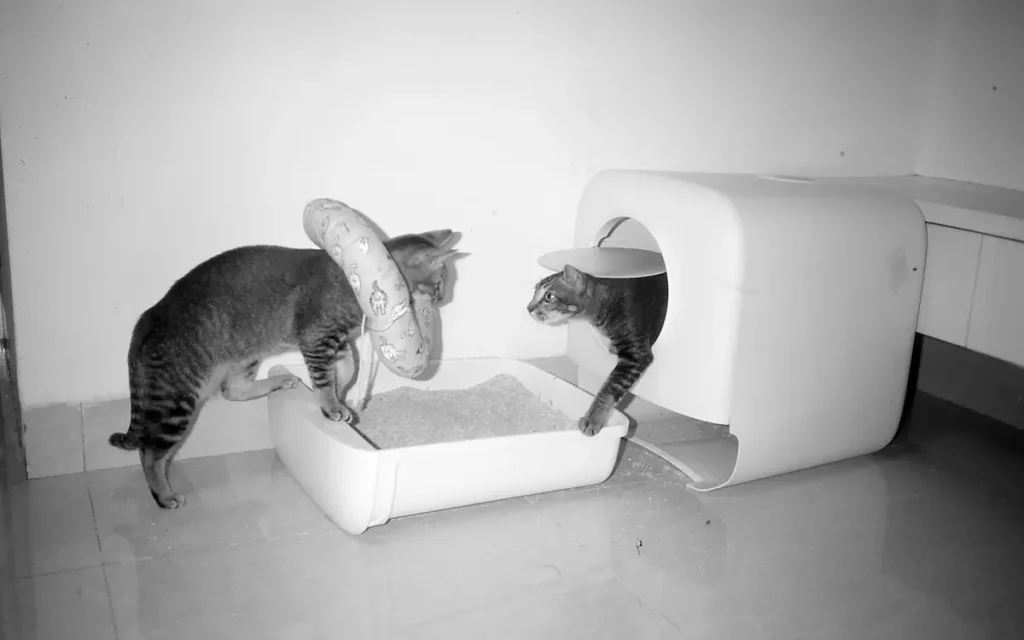
This isn’t about “fixing” it yourself. It’s about gathering a few simple facts so you can make a calmer decision.
1) Check the litter tray facts (takes 60 seconds)
- When did you last see a normal poo?
- Are there any tiny hard stools?
- Any diarrhoea (sometimes diarrhoea can sit “around” harder stool and confuse things)?
- Any change in wee (more/less, accidents, crying in the tray)?
2) Check access and comfort
Senior cats may avoid the tray if it’s difficult to use.
- Is the tray easy to step into (low entry)?
- Is it in a quiet, easy-to-reach spot?
- Has the litter type changed recently (scent, texture)?
- If you have a larger home, is there a tray on the level your cat spends most time on?
If your cat is struggling to reach the litter tray comfortably (especially in a larger home), a few Simple home adjustments can help while you arrange advice.
3) Check for “unwell” signals
- Not eating or eating much less
- Hiding, unusually quiet, or not interested in normal routines
- A hunched posture, restlessness, or obvious discomfort when touched
When to speak to your vet
You’re not trying to diagnose the cause at home. You’re deciding whether this is “watch and note” or “mention promptly”.
Mention it soon (within 24–48 hours) if:
- Your senior cat hasn’t pooed and this is unusual for them
- There’s repeated straining with little/no stool
- Your cat is off their food, quieter than usual, or seems uncomfortable
- There are repeated gagging/retching episodes (even if you suspect hairballs)
Speak to your vet urgently (same day) if:
- Your cat seems in pain, very distressed, or can’t settle
- Not pooing plus vomiting, or repeated retching
- Very low energy, weakness, collapse, or “something is really wrong”
- Straining in the tray and you’re not sure if it’s poo or wee (either can be urgent)
International Cat Care notes that constipation can be painful, and that ongoing constipation needs veterinary advice rather than being left to “sort itself out”.
FAQs
How long is “too long” for a senior cat not to poop?
There isn’t one perfect number because routines vary. A good rule is: if it’s unusual for your cat, or you’re seeing straining or discomfort, it’s worth mentioning sooner rather than later.
Can hairballs cause constipation?
Hairballs usually cause stomach or throat signs (retching or vomiting). Cornell Feline Health Center notes that a large hairball can sometimes cause a blockage, which is one reason repeated unproductive retching or ongoing vomiting is worth discussing with your vet.
My cat is straining — how do I tell if it’s poo or wee?
If you’re unsure, assume it’s important. Straining and frequent trips with little produced can look similar, and it’s safer to speak to your vet urgently than to guess.
My cat keeps gagging but nothing comes up — is that a hairball?
Cornell Feline Health Center notes that repeated, unproductive retching can be a warning sign, so it’s sensible not to wait too long — especially in older cats.
Do grooming changes matter more in older cats?
Yes. Older cats may groom differently due to mobility changes or discomfort. A sudden shift either way (much more grooming or much less) is a useful context clue to mention if you’re already speaking to your vet.
If you’re unsure, trust what you’re seeing: note the pattern for a day (litter tray vs retching), and speak to your vet sooner if your cat seems uncomfortable or “not themselves”.
References
- International Cat Care (ISFM) — Constipation in cats
- Cornell Feline Health Center — The Danger of Hairballs