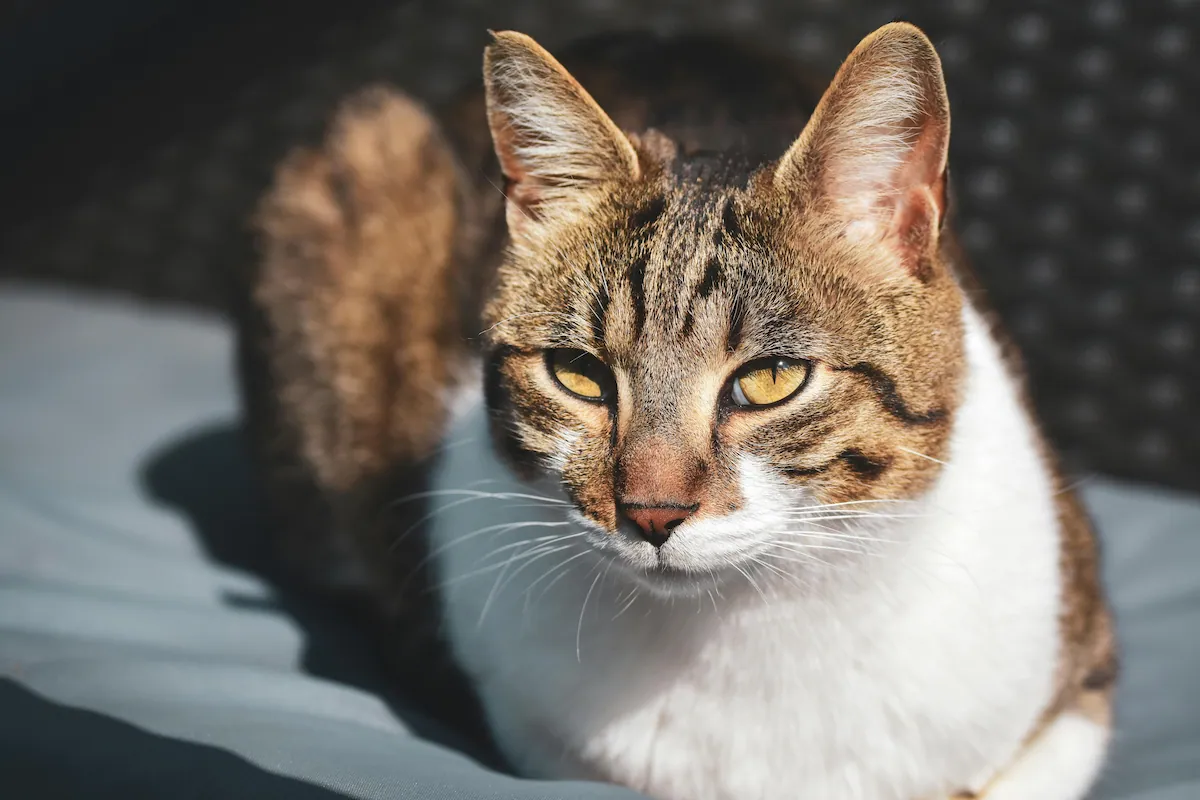
Senior cat shaking can be unsettling to watch. Sometimes it looks like a small tremble. Sometimes it is more obvious and seems to come out of nowhere. The difficult part is that shaking is a description, not an explanation. In older cats, it may happen alongside pain, weakness, feeling unwell, stress, feeling cold, poisoning, or seizure-type episodes. It is also important not to put new changes down to old age automatically. Cornell’s guide to older cats notes that older cats often become less active, may sleep more, and may gain or lose weight, but health or behaviour changes should not simply be chalked up to ageing.
Disclaimer: This article is for educational purposes only and is not a substitute for veterinary advice. If your cat’s shaking is new, repeated, severe, or comes with weakness, collapse, vomiting, breathing changes, or loss of awareness, speak to your vet promptly. Signs linked with poisoning or seizures can be urgent.
Key takeaway: Senior cat shaking is not something to ignore just because a cat is older. The most useful question is not “is this just age?” but “is this new, happening more often, or coming with other changes?”
Quick answer: why is my senior cat shaking?
Senior cat shaking can happen for several reasons, including feeling cold, stress, discomfort, weakness, feeling unwell, toxin exposure, or seizure-type episodes. The important thing is to look at the pattern: whether it is new, repeated, severe, or happening alongside other changes.
Speak to your vet promptly if the shaking is new, recurring, worsening, or comes with weakness, collapse, vomiting, drooling, breathing changes, loss of awareness, poor balance, or suspected toxin exposure.
For broader context on age-related health changes, you could also read Senior Cat Health: A Practical Guide for Older Cats.
Senior cat shaking can look different from one cat to another
What owners notice is not always the same.
Some cats seem to tremble very slightly while resting. Some look shaky after jumping down, using the litter tray, or climbing stairs. Some have a brief whole-body episode that is hard to describe afterwards. Others seem wobbly, weak, or unsettled as well.
That difference matters. A short tremble after effort is not the same pattern as sudden violent shaking with collapse or loss of awareness. International Cat Care describes seizures in cats as episodes that can include sudden collapse, loss of awareness, violent shaking, chewing movements, salivation, urination, or paddling of all four limbs.
What senior cat shaking may look like at home
A brief tremble at rest
You may notice your cat lying down or sitting quietly and see a fine tremble rather than dramatic shaking. This can be easy to second-guess, especially if the episode is short.
Shaking after movement
Some owners notice shaking after jumping, climbing, stretching, or getting in and out of the litter tray. That pattern may make you think about discomfort, weakness, or reduced steadiness rather than a random event.
Localised shaking versus full-body shaking
Sometimes only one area seems involved, such as a leg or the head. Other times the whole body appears to shake. Full-body episodes, especially if sudden or repeated, deserve more caution.
Shaking that comes with other changes
The shaking itself is only part of the picture. What matters just as much is what else changed at the same time, such as:
- lower appetite
- vomiting
- drooling
- wobbliness
- head tilt
- trouble breathing
- unusual sleepiness
- seeming “not quite right”
Senior cat shaking: useful details to observe
Shaking can look very different from one cat to another. Rather than trying to work out the cause yourself, it can help to note exactly what happened and the circumstances around it. These details may give your vet a clearer picture of the change you have noticed.
| What you notice | Useful detail to record |
|---|---|
| Fine trembling while resting | Note whether your cat was awake or asleep, approximately how long it lasted and whether it stopped on its own. |
| Shaking after jumping, climbing or moving around | Note what your cat had just been doing and whether you also noticed hesitation, stiffness or reduced confidence when moving. |
| One leg, the head or another specific area shaking | Record which area was involved and whether your cat remained alert and responsive. |
| Whole-body shaking | Note how long it lasted, what was happening immediately beforehand and how your cat behaved afterwards. |
| Shaking alongside another noticeable change | Record any changes you notice at the same time, such as appetite, balance, breathing, vomiting or unusual behaviour. |
You do not need to work out the cause yourself. The aim is simply to record what you have seen so you can describe it clearly if you speak to your vet.
Common reasons owners may notice shaking in an older cat
Pain or discomfort
Pain can sometimes show up as trembling, shakiness after movement, or a cat seeming less steady and more guarded. This is especially relevant in older cats, because age-related joint problems become more common with time. International Cat Care notes that arthritis is very common in older cats and may go unnoticed because cats often reduce their activity rather than showing obvious limping.
That does not mean shaking automatically equals arthritis. It just means pain and discomfort belong on the list of sensible possibilities, especially if your cat also seems stiff, slower on stairs, less willing to jump, or less keen to be handled.
For a broader look at stiffness, jumping changes, limping and comfort, our Senior Cat Mobility & Pain guide may help you look at the wider pattern.
If you are also noticing stiffness, reluctance to jump or other mobility changes, our Arthritis in Senior Cats guide explains the signs owners may notice.
Weakness or frailty
Older cats can become less strong and less steady. Cornell says older cats may have trouble reaching favourite places and may show changes such as weight gain or loss and lower activity.
If shaking happens after effort, when standing for longer, or when your cat seems generally less robust than before, weakness or frailty may be part of the picture. This is one of those situations where the pattern matters more than any one moment on its own.
Stress, fear, or feeling cold
A frightened or chilled cat may tremble. This is one of the less alarming possibilities, but it still depends on context. A brief shake after a stressful noise is different from repeated shaking with poor balance or drooling.
This is where common sense helps. Ask yourself:
- Did something stressful just happen?
- Does your cat settle quickly afterwards?
- Is the episode isolated, or is it becoming a pattern?
Nausea or feeling unwell
Cats that feel sick can look shaky, unsettled, or not fully themselves. Cornell notes that vomiting combined with lethargy, weakness, decreased appetite, increased thirst, or urination changes should be evaluated promptly by a vet.
So if the shaking appears alongside appetite change, vomiting, or a generally “off” cat, it is more sensible to think of it as part of a wider health change than as a harmless tremor. If your cat also seems less interested in food, you could also read Senior cat not eating: what to check first and when to speak to your vet.
Neurological-type episodes, including seizures
This is one of the more worrying possibilities, but it is still important to stay calm and think in terms of what you actually saw.
International Cat Care says seizure episodes can include sudden collapse, loss of awareness, violent shaking, paddling movements, chewing motions, salivation, and urination or defecation during the event.
Not every shaking episode is a seizure. But a seizure-type event is more likely if:
- the episode is sudden and dramatic
- your cat seems unaware during it
- there is collapse
- the limbs paddle or stiffen
- recovery afterwards is slow or odd
Poisoning or toxin exposure
This is one of the most important red-flag categories. Cornell’s page on feline poisons lists common signs of poisoning as including uncharacteristic sluggishness, unsteady gait, drooling, heavy breathing, diarrhoea, seizures, and sudden vomiting, and says immediate treatment may be the only way a cat’s life is saved.
International Cat Care’s permethrin poisoning guide notes that signs can include tremors, shaking, twitching, and oversensitivity to touch and sound.
If there is any chance your cat has been exposed to a toxin, this is not a wait-and-see situation.
When shaking in a senior cat is worth mentioning to your vet
It is sensible to speak to your vet if the shaking:
- is new
- is happening more often
- seems stronger or longer-lasting
- happens with weakness, wobbliness, or poor balance
- comes with vomiting, drooling, appetite loss, or breathing change
- happens during a broader change in behaviour or comfort
This matters because new health and behaviour changes in older cats should not be dismissed as age alone. Cornell explicitly advises owners not to chalk such changes up to old age automatically.
Signs that make shaking more urgent
Some patterns deserve faster action.
Speak to your vet urgently if your cat has:
- collapse
- loss of awareness
- repeated episodes close together
- violent full-body shaking
- suspected toxin exposure
- trouble breathing
- marked drooling or vomiting
- sudden head tilt or severe loss of balance
These are the sorts of patterns linked in reliable sources with seizures, poisoning, or vestibular-type problems. Cornell says vestibular disease commonly causes circling or falling to one side, a pronounced head tilt, and abnormal eye movements.
Is shaking ever just old age?
This is the question most owners really want answered.
Older cats do change with age. Cornell says many cats begin to encounter age-related physical changes between seven and ten years of age, and most do so by twelve. Older cats may sleep more, be less active, and have more difficulty reaching favourite places.
But that is not the same thing as saying shaking is a normal ageing change that can be ignored.
A better way to think about it is this: age can make health problems more likely, but age alone is rarely a satisfying explanation for a new shaking pattern.
Gentle next steps for owners
If your senior cat is shaking, try to keep the next steps simple:
- keep your cat somewhere safe and quiet
- do not force movement
- note what you saw
- look at the wider pattern, not just the shaking itself
- speak to your vet if the change is new, recurring, or comes with other symptoms
If your cat also seems generally less active or is sleeping more than usual, you could also read Older cat sleeping more: what’s normal and when to pay attention.
FAQs
Why is my senior cat shaking while resting?
It can happen for several reasons, including discomfort, weakness, feeling unwell, feeling cold, or a neurological-type episode. The most helpful question is whether it is a one-off mild tremble or part of a wider change.
Is trembling normal in an old cat?
Not really as a blanket explanation. Older cats do go through age-related changes, but Cornell advises owners not to assume new health or behaviour changes are simply old age.
What is the difference between shaking and a seizure in cats?
A mild shaking episode may involve trembling without collapse or loss of awareness. International Cat Care says seizures are more likely to include sudden collapse, loss of awareness, violent shaking, paddling movements, chewing motions, salivation, or urination and defecation during the event.
Should I worry if my cat shakes after jumping?
It is worth paying attention to, especially in an older cat. Shaking after movement can sit alongside discomfort, weakness, or reduced steadiness. It is more worth mentioning if it is new, recurring, or comes with stiffness or lower confidence moving around.
Can stress make an older cat shake?
Yes, stress or fear can cause trembling in some cats. But it is still worth looking at the whole situation. A brief situational tremble is different from repeated shaking with other symptoms.
When is cat shaking an emergency?
It is more urgent if there is collapse, loss of awareness, repeated episodes, suspected toxin exposure, trouble breathing, or major balance problems. Cornell’s poisoning guidance and International Cat Care’s seizure guidance both support treating those patterns seriously.
Wrap-up
Senior cat shaking can have several different explanations, and some are much more important than others. What matters most is not whether the word is shaking, trembling, or tremors. What matters is pattern, context, and what else has changed.
If the shaking is new, recurring, stronger than before, or happening alongside other changes, speaking to your vet is the sensible next step.