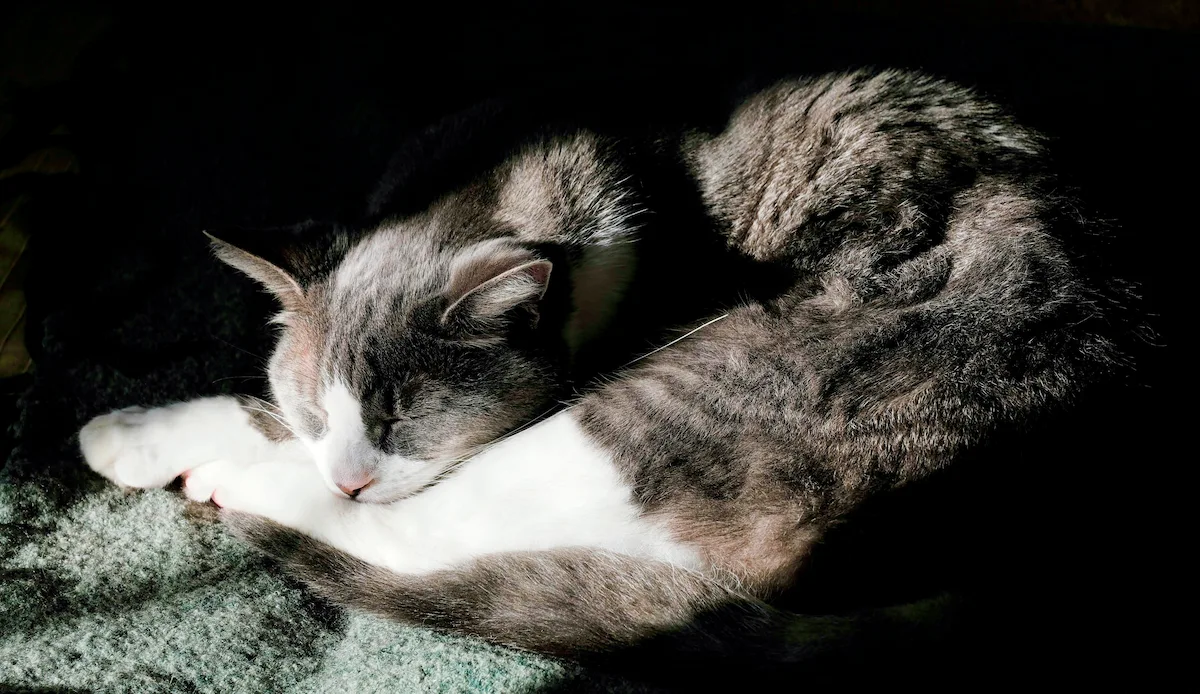
Senior cat pain signs are not always obvious. Many older cats do not cry, limp dramatically, or make it clear that something hurts. Instead, discomfort can sometimes show through small changes in movement, grooming, mood, appetite, litter tray habits, or daily routine.
This guide will help you notice subtle changes without panicking. The aim is not to diagnose pain at home, but to help you track what has changed and know when to speak to your vet.
Disclaimer: This article is for educational purposes only and is not a substitute for professional veterinary advice. If your cat is in pain, losing weight, vomiting frequently, or acting differently, speak to your vet.
Key takeaway: Senior cat pain signs can be subtle. Changes in movement, grooming, mood, litter tray habits, appetite, or daily routine do not prove pain on their own, but they are worth tracking and discussing with your vet if they are new, persistent, worsening, or happening together.
Quick answer: what are common senior cat pain signs?
Common senior cat pain signs may include moving less, hesitating before jumping, avoiding stairs, sleeping in lower or easier-to-reach places, hiding more, grooming less, becoming irritable when touched, changing litter tray habits, eating less, or seeming unusually quiet.
These signs do not prove pain on their own. In older cats, the most useful clue is often a clear change from their normal routine, especially if it is new, persistent, worsening, or happening alongside other changes.
Why senior cat pain signs can be easy to miss
Pain in older cats can be difficult to spot because cats often adapt quietly. Instead of crying or limping, a senior cat may simply stop doing something they used to do.
For example, they may no longer jump onto a favourite chair. They may sleep downstairs instead of climbing to a bedroom. They may stop grooming their back properly, avoid being picked up, or become less interested in play.
These changes are easy to explain away as “just old age”. Sometimes ageing does change a cat’s habits, but discomfort can also be part of the picture. The safest approach is to notice patterns and raise them with your vet if they continue.
For a wider overview of age-related changes, see our Senior Cat Health guide.
Subtle senior cat pain signs owners often overlook
Moving less or avoiding favourite places
One of the most common signs your older cat may be in pain is a quiet reduction in movement.
You might notice your cat:
- spending more time on the floor
- avoiding high windowsills or furniture
- no longer using a favourite perch
- choosing shorter routes around the home
- seeming less interested in exploring
This does not automatically mean your cat is in pain. However, if your cat has clearly changed how they move around the home, it is worth noting.
Older cats may avoid movement because it feels harder, uncomfortable, tiring, or less predictable than before. A change in movement is especially worth mentioning if it appears alongside stiffness, irritability, reduced grooming, or changes in litter tray use.
Hesitating before jumping or climbing
Some senior cats do not stop jumping completely. Instead, they pause, calculate, or take a different route.
You may notice your cat:
- hesitating before jumping onto the sofa
- jumping down more carefully
- using a chair as a halfway step
- avoiding stairs
- missing jumps they used to manage
- landing stiffly or awkwardly
International Cat Care notes that cats with arthritis may show changes such as reluctance to jump, reduced jumping height, stiffness, or difficulty with stairs.
If movement changes are your main concern, our guide to Arthritis in Senior Cats explains what owners often notice at home.
Sleeping in new or lower places
Senior cats often sleep more than younger cats, so extra rest does not always mean pain. What matters more is whether the pattern has changed.
A possible pain-related change might look like:
- sleeping on the floor instead of the bed
- choosing lower, easier-to-reach places
- resting closer to food, water, or the litter tray
- avoiding previously loved sleeping spots
- seeming restless or unable to settle comfortably
Some cats simply change preferences with age. Others may choose easier resting places because jumping, climbing, or walking further has become uncomfortable.
The key question is: is this different from your cat’s normal routine?
Hiding, withdrawing, or seeking quiet
Some older cats become more withdrawn when they are uncomfortable. This can be easy to miss, especially if your cat has always been independent.
You might notice:
- hiding under furniture
- spending more time in quiet rooms
- avoiding visitors or other pets
- sitting away from family activity
- becoming less interested in usual attention
Stress, sensory changes, illness, fear, and household disruption can also affect behaviour. But if hiding is new, persistent, or paired with other changes, it is worth discussing with your vet.
If hiding is one of the clearest changes you are seeing, our Older cat hiding guide may help you compare the wider pattern.
For a broader look at behaviour shifts in older cats, see our guide to senior cat behaviour changes.
Grooming less or looking untidy
A senior cat who is uncomfortable may groom less thoroughly, especially around areas that are harder to reach.
You may notice:
- a greasy-looking coat
- mats or tangles
- dandruff
- less grooming around the back, hips, or tail base
- a generally scruffier appearance
Reduced grooming does not prove pain. Some older cats groom less because of dental issues, weight changes, fatigue, illness, or reduced flexibility.
However, a sudden change in coat condition is worth noting, especially if your cat also seems stiff, reluctant to jump, or sensitive when touched.
Irritability when touched or picked up
Pain can sometimes affect how a cat reacts to handling.
If your cat has started hissing, swatting, biting, or reacting defensively in a way that feels out of character, our Senior cat sudden aggression guide may help you notice possible triggers.
A senior cat may:
- flinch when touched
- move away from stroking
- swish their tail when handled
- hiss, growl, or nip when picked up
- dislike being brushed in certain areas
- react differently when touched near the back, hips, legs, mouth, or belly
This does not mean your cat is being “bad” or difficult. It may mean they are trying to avoid discomfort, stress, fear, or unwanted handling.
Avoid repeatedly touching the area to test the reaction. Instead, make a note of what happened and mention it to your vet.
Changes around the litter tray
Litter tray changes can sometimes be linked with discomfort, especially if movement is harder.
You may notice your cat:
- having accidents near the tray
- avoiding a tray upstairs
- struggling to step in or out
- choosing a softer surface
- spending longer in the tray
- seeming reluctant to posture normally
These signs can have several possible causes, including urinary, digestive, mobility, or stress-related issues. Because some litter tray changes can be medically important, they should not be dismissed as ageing.
If your senior cat is straining, repeatedly visiting the litter tray, crying in the tray, passing little or no urine, or seems unable to toilet normally, speak to your vet promptly.
Appetite, weight, or drinking changes
Pain may sometimes affect appetite, but appetite changes in senior cats can have many causes.
Watch for:
- eating less than usual
- approaching food but walking away
- dropping food
- chewing differently
- seeming interested but reluctant to eat
- gradual or sudden weight loss
Weight loss in an older cat should always be taken seriously. It does not tell you the cause, but it is worth speaking to your vet about.
The same applies if drinking habits change. Drinking more or less can be linked with several health issues, so it is better to track the change than guess the reason.
Facial expression, posture, or body tension
Some senior cat pain signs are very subtle and easy to miss unless you know your cat well.
You might notice:
- a hunched posture
- sitting tucked up rather than relaxed
- squinting or narrowed eyes
- a tense body
- ears held differently
- reluctance to stretch out
- resting in an unusual position
If you are noticing trembling or shaking alongside other changes, our guide to senior cat shaking explains what to note and when to speak to your vet.
These signs should be viewed alongside the full picture, not in isolation. A tense posture, narrowed eyes, or unusual resting position is more useful to note when it appears with other changes, such as reduced movement, hiding, appetite changes, or sensitivity to touch.
Becoming quieter, clingier, or more vocal
A change in your cat’s personality can sometimes be a clue that something is wrong.
Some cats become quieter and less interactive. Others become more clingy, restless, or vocal. You may notice your older cat:
- following you more than usual
- meowing more at certain times
- seeming unsettled at night
- becoming less playful
- reacting differently to normal household routines
Senior cats can also change behaviour because of sensory decline, cognitive changes, stress, or other health problems.
A useful question is:
“Is this a clear change from my cat’s normal behaviour?”
If yes, and it persists, it is worth mentioning.
What does not always mean pain?
It is important not to panic over every small change. Some changes can happen with ageing, routine changes, weather, stress, or normal variation.
For example:
- one missed jump does not prove pain
- one grumpy moment does not mean your cat is unwell
- sleeping more can be normal for older cats
- choosing a new bed may simply be preference
- grooming may vary from day to day
The concern increases when a change is new, repeated, worsening, or happening alongside other signs.
Pain is one possible reason for behaviour change, but it is not the only one.
Senior cat pain signs observation checklist
Before speaking to your vet, it can help to write down what you are seeing. This makes the conversation clearer and helps avoid relying on memory.
If movement, jumping, litter tray access or difficulty settling are part of the change, our Senior Cat Observation Toolkit includes a Mobility & Comfort Tracker for recording everyday activities without trying to score pain.
Use this simple checklist:
- What has changed?
- When did it start?
- Is it occasional, daily, or getting worse?
- Does it happen after jumping, stairs, grooming, eating, or litter tray use?
- Is your cat eating normally?
- Has your cat’s weight changed?
- Is your cat drinking more or less than usual?
- Is your cat hiding, restless, or unusually quiet?
- Are there changes in toileting?
- Does your cat react differently when touched?
- Has grooming changed?
- Can you safely record a short video for your vet?
A short video of your cat walking, jumping, using stairs, or reacting to normal handling can sometimes be helpful for your vet. Do not force your cat to perform movements that seem uncomfortable.
When to speak to your vet
Speak to your vet if senior cat pain signs are new, persistent, worsening, or happening together.
It is especially worth booking advice if your cat:
- seems painful when touched
- avoids movement they used to manage
- is eating less
- is losing weight
- is grooming less
- is hiding more than usual
- has changed litter tray habits
- seems unusually withdrawn, restless, or irritable
- has several subtle changes at the same time
You do not need to wait until your cat is obviously distressed. Subtle changes are often easier to discuss early, while there is still a clear pattern to describe.
Seek veterinary advice promptly if your cat seems severely unwell, cannot get comfortable, is suddenly very weak, cannot move normally, is struggling to breathe, collapses, or cannot pass urine.
How to make daily life easier while waiting for advice
While you arrange veterinary advice, keep your cat’s normal routine as easy and comfortable as possible. Avoid forcing movements or handling that seems uncomfortable.
For practical ideas around easier routes, resting places, litter tray access and slippery floors, see our Senior Cat Comfort & Lifestyle guide. If movement and stiffness are the main changes you are noticing, our Senior Cat Mobility & Pain guide provides broader context.
Do not give human painkillers, leftover pet medication, supplements or other pain remedies unless your vet has specifically advised them for your cat.
FAQs
How can I tell if my senior cat is in pain?
You may notice changes in movement, grooming, appetite, mood, litter tray habits, posture, or daily routine. These signs do not prove pain on their own, but they are worth tracking if they are new, persistent, or happening together.
Do cats hide pain as they get older?
Yes, cats can hide discomfort well. In older cats, pain may show as small behaviour changes rather than obvious crying or limping.
Is sleeping more a sign of pain in senior cats?
Not always. Many senior cats sleep more as they age. However, a sudden change in sleeping place, posture, restlessness, hiding, or reluctance to move may be worth discussing with your vet.
Can pain make an older cat grumpy or withdrawn?
Yes, discomfort can sometimes make an older cat more irritable, withdrawn, or sensitive to touch. Stress, illness, sensory changes, and cognitive changes can also affect behaviour, so persistent changes are worth checking.
Should I give my cat pain relief at home?
No. Do not give human painkillers, leftover medication, or supplements for pain unless your vet has advised it. Speak to your vet so your cat can be assessed safely.
When should I speak to my vet about possible pain?
Speak to your vet if changes are new, persistent, worsening, or happening together, especially if appetite, weight, movement, grooming, mood, or litter tray habits have changed.
Final thoughts
Senior cat pain signs are often quiet rather than dramatic. Your cat may not cry or clearly show where something hurts. Instead, you may notice small changes in how they move, rest, groom, eat, use the litter tray, or respond to touch.
The most helpful thing you can do is notice patterns, write down what has changed, and speak to your vet if the changes continue. You know your cat’s normal habits better than anyone, and those small observations can be very useful.
External references
International Cat Care: Arthritis in cats
AAFP/ISFM: How Do I Know if My Cat is in Pain?