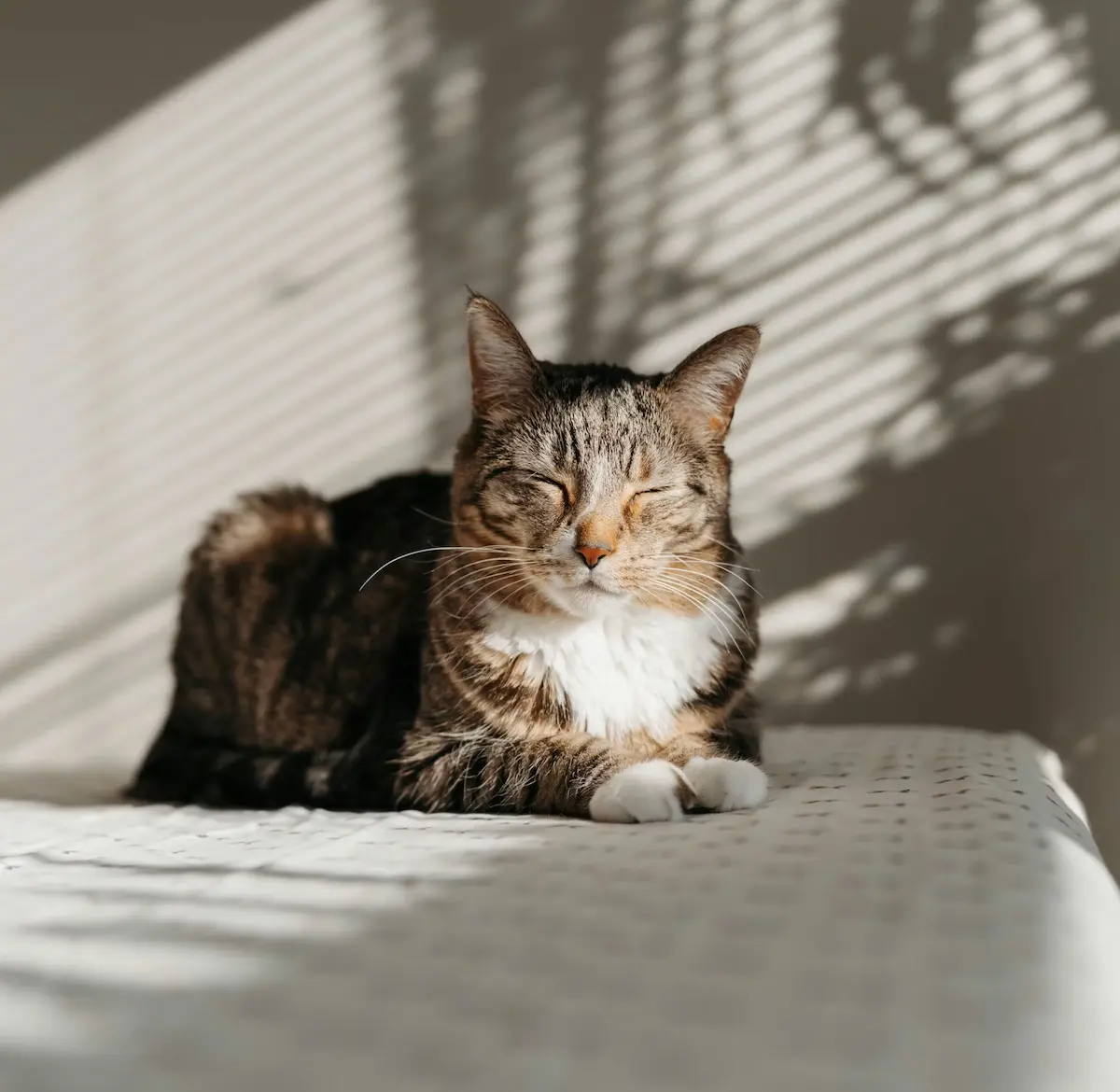
Senior cat hearing loss can be easy to miss at first. In many older cats, the change is gradual, so owners often notice it through small everyday moments rather than one dramatic event. You may find your cat sleeps through noise, does not respond to your voice as reliably as before, or startles when touched because they did not hear you coming. Some older cats do hear less well with age, but not every behaviour change should automatically be put down to age alone. Cornell notes that hearing loss is common in cats of advanced age, while International Cat Care includes reduced hearing among the physiological changes seen in senior cats.
Disclaimer: This article is for educational purposes only and is not a substitute for professional veterinary advice. If your cat seems distressed, confused, off balance, or has other new changes alongside reduced hearing, speak to your vet.
Key takeaway: Some older cats do hear less well with age, and the signs are often subtle at first. Owners may notice reduced response to voice, sleeping through familiar noise, startling more easily, or louder vocalising. Simple changes at home can help a hard-of-hearing cat feel calmer and more secure, but sudden change or hearing change alongside other symptoms is worth mentioning to your vet.
Quick answer: signs of senior cat hearing loss
Signs of senior cat hearing loss can include not responding to familiar sounds, sleeping through noise, seeming startled when approached, meowing more loudly, or appearing less aware of what is happening around them.
Some hearing changes can develop gradually with age, but sudden hearing changes, head tilt, balance problems, ear discomfort, discharge, or a clear change in behaviour should be mentioned to your vet.
What senior cat hearing loss can look like at home
Most owners do not discover hearing loss through a single “proof” moment. It is usually more of a pattern. Your cat may seem the same in many ways, but a few small behaviours start to stand out.
Signs owners often notice
- not responding to your voice as reliably as before
- sleeping through household sounds that used to wake them
- seeming harder to rouse
- startling when touched because they did not hear you approach
- meowing more loudly than before
- seeming less aware of activity behind them
- relying more on seeing you first rather than hearing you nearby
These signs can fit hearing change, but they are not specific to hearing loss alone. An older cat who seems less responsive may also be sleepy, uncomfortable, less mobile, or dealing with another age-related change. That is why the overall pattern matters more than any one sign on its own.
If reduced responsiveness appears alongside changes in sleep, vocalising, mood or routine, our Senior cat behaviour changes guide may help you look at the wider pattern.
Can hearing loss happen gradually in older cats?
Yes, it can. Cornell says hearing loss is common in cats of advanced age, and International Cat Care lists reduced hearing as one of the physiological changes that may happen in senior cats.
That gradual pattern is one reason owners often second-guess themselves. Your cat may still respond sometimes, especially when they see you, feel movement nearby, or expect something like food. So the change may look inconsistent at first.
Even so, “gradual” does not mean it should always be ignored. If the pattern is clearly new, becoming more noticeable, or sitting alongside other changes, it is sensible to mention it rather than assuming it is simply old age.
How to help a senior cat with hearing loss at home
Home support is mostly about helping your cat feel safe, predictable, and less likely to be startled. Cornell’s deafness guidance supports a calm, adjusted approach around cats with hearing loss, especially in how you approach and handle them.
Make your approach easier to predict
A cat who hears less well may startle if touched before they realise someone is nearby.
Try to:
- approach where your cat can see you
- pause for a moment before touching them
- avoid sudden handling when they are asleep
- encourage other people in the home to approach calmly too
The aim is not to test your cat’s hearing. It is simply to make everyday contact easier to anticipate.
Use visual cues and routine
Cats often cope better when daily life stays predictable. If hearing is changing, visual cues and routine can become more important.
Helpful examples include:
- letting your cat see you before you put food down
- keeping meal times fairly consistent
- using the same calm approach at greeting times
- avoiding lots of unnecessary changes to their usual setup
This does not need to be complicated. Often, the most helpful thing is simply being easier to read.
Keep the home predictable
A cat who hears less well may rely more on familiar routines and visual cues.
Try to keep important resources such as food, water, litter trays and favourite resting places in familiar locations, and avoid unnecessary changes to the layout your cat already knows.
The aim is not to redesign the home. It is simply to make everyday surroundings easier to predict.
Think about outdoor safety
Reduced hearing can make outdoor access less predictable because a cat may not hear traffic, dogs or other warning sounds.
If you think your cat’s hearing has changed, speak to your vet and consider whether unsupervised outdoor access is still appropriate.
A secure outdoor space or supervised access may be a safer option for some cats while still allowing outdoor enrichment.
When to speak to your vet
It is sensible to mention hearing changes if:
- the change feels sudden
- your cat seems confused as well as less responsive
- there are balance changes
- appetite, weight, grooming, or energy has changed too
- loud vocalising is new or persistent
- the overall pattern feels broader than hearing alone
You do not need to panic over every small sign, but you also do not need to write off a clear change as “just age”. If the pattern is new, worsening, or part of a broader change, it is sensible to mention it.
Final thought
Some senior cats do lose hearing gradually, and many adapt surprisingly well when home life feels predictable and safe. Small changes in how you approach them, how consistent the routine is, and how calm the environment feels can make a real difference.
If the pattern is new, worsening, or seems to come with other changes, speaking to your vet is a sensible next step. For broader context on age-related changes, see Senior Cat Health: A Practical Guide for Older Cats.
FAQs
Can senior cats lose hearing with age?
Yes. Cornell says hearing loss is common in cats of advanced age, and International Cat Care includes reduced hearing among the changes that can happen in senior cats.
How can I tell if my older cat is losing hearing?
Owners often notice reduced response to voice, sleeping through familiar sounds, startling when touched, or louder meowing than before. These signs can suggest hearing change, but they are not a diagnosis on their own.
Why is my senior cat meowing more loudly?
Some cats vocalise more loudly when hearing changes make it harder for them to judge their own volume. But louder meowing can happen for other reasons too, so it is best not to assume hearing loss is the only explanation.
How do I avoid startling a hard-of-hearing cat?
Approach where your cat can see you, avoid sudden touch from behind, and let them notice you before handling. Cornell’s deafness guidance supports signaling your presence rather than surprising the cat.
Should a senior cat with hearing loss go outside?
Reduced hearing can make outdoor access riskier because a cat may not hear traffic, dogs or other warning sounds. Speak to your vet and consider whether unsupervised access is still appropriate. A secure outdoor space or supervised access may be a safer option for some cats.
When should I speak to my vet about hearing changes?
It is sensible to mention hearing changes if they seem sudden, are getting worse, or appear alongside confusion, balance changes, appetite change, weight loss, or other new behaviour changes.