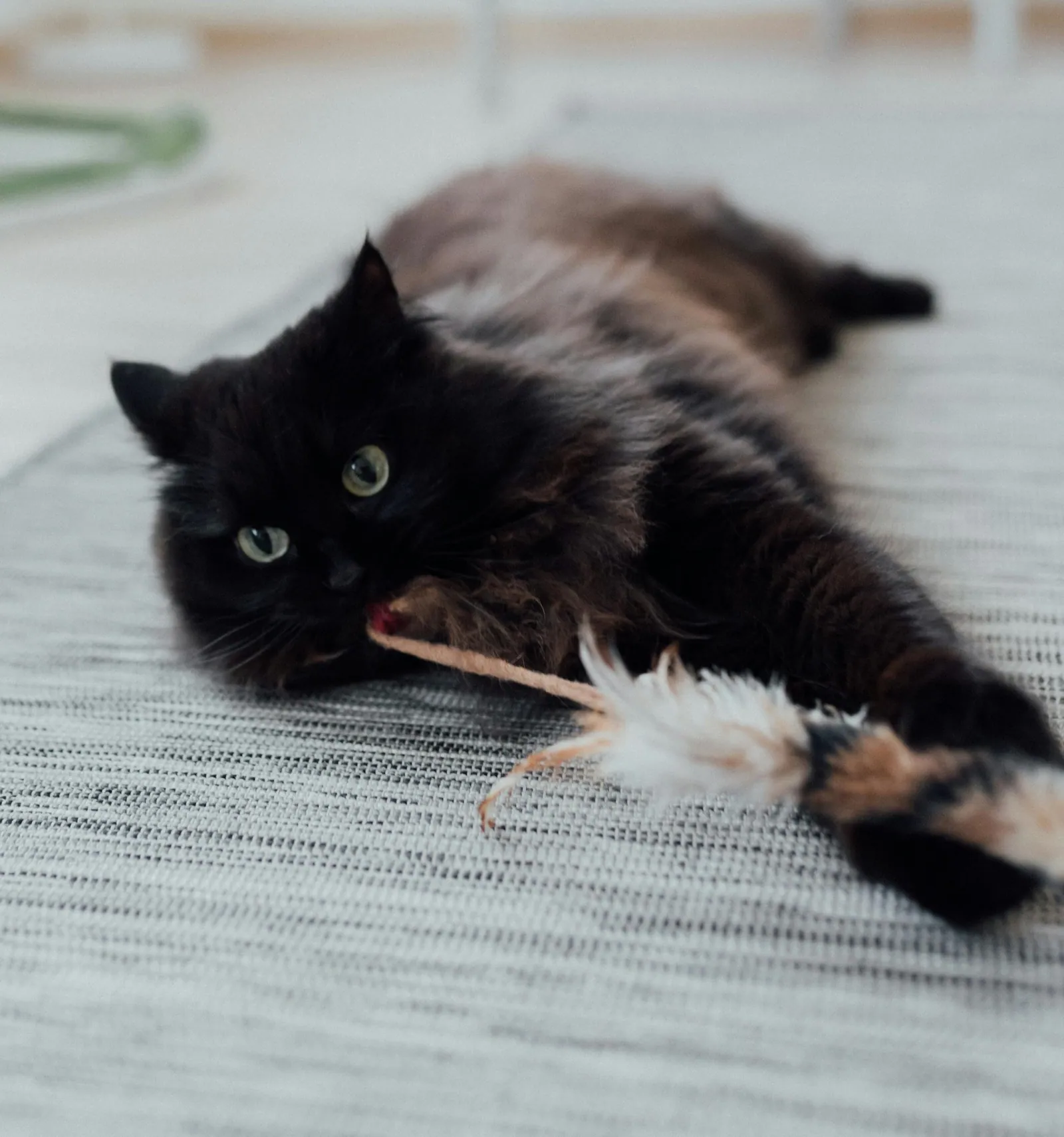
Senior cat play can look very different from the play you saw in earlier years. Many older cats still enjoy some form of play or enrichment, but they often prefer it to be slower, shorter, and easier on the body. The aim is not high-energy activity, but comfortable, low-pressure engagement that suits your cat’s confidence and daily routine.
Disclaimer: This article is for educational purposes only and is not a substitute for veterinary advice. If your cat’s interest in play changes suddenly, or the change comes with stiffness, pain, appetite changes, weight loss, or other behaviour changes, speak to your vet.
Key takeaway: Senior cat play does not need to look dramatic to be worthwhile. Many older cats do best with short, calm, low-pressure enrichment that matches their comfort and energy.
Do senior cats still need play?
Yes, many do.
Older cats may not chase, leap, or pounce the way they once did, but that does not mean play has stopped mattering. International Cat Care notes that senior cats still enjoy playing and that play should be kept adapted to their mobility It also points out that even if a cat stays lying down while interacting, that can still count as enjoyable play.
In later life, play is less about high energy and more about keeping your cat interested, involved, and comfortable.
How play often changes with age
Play may happen in shorter bursts
A senior cat may engage for a minute or two, pause, and then stop. That is often more realistic than a long play session.
Movement may become slower and smaller
You may see more watching, sniffing, reaching, or light batting, and less sprinting, jumping, or sudden turning. This is one reason floor-level play often works better than fast overhead movement.
Familiar games may work best
Older cats can become more selective. A familiar toy, a known spot in the house, and a predictable time of day may all help.
Watching can still be part of play
Some senior cats enjoy tracking movement, leaning forward to watch, or giving a toy one or two careful bats before stopping. That still counts as engagement.
Gentle enrichment ideas for older cats
Floor-level wand play
A wand toy moved slowly across the floor can work well for many senior cats. Keep the movement small and predictable. Let your cat watch first, then decide whether to follow, reach, or bat.
This is often easier than encouraging jumps or fast turns.
Soft toys that are easy to hold
Lightweight toys that can be nudged, trapped, or held between the paws can suit older cats better than hard, bouncy, unpredictable toys. International Cat Care also notes that larger kick toys can appeal to some older cats.
Simple puzzle feeders
A very easy puzzle feeder can add interest without demanding too much movement. It can also suit cats who enjoy sniffing, pawing, and exploring more than active chase. International Cat Care’s home-modification guidance also notes that regular short, easy play sessions can be beneficial for cats with mobility issues, alongside mental stimulation.
Keep it simple. The aim is interest and reward, not difficulty.
Easy hide-and-find games
You can place a few treats or pieces of food in obvious, easy-to-reach places around one room. This creates a small foraging game without asking your cat to climb, stretch awkwardly, or cover too much ground.
Scent-based enrichment
Not every older cat wants to chase. Some prefer to investigate. A safe new scent, a different cardboard box, or rotating familiar toys can be enough to create interest.
Window watching and observation spots
A comfortable place to watch the garden, street, or birds can still be meaningful enrichment. For some senior cats, quiet observation is more appealing than active play.
Rotate toys rather than offering too many at once
A small rotation often works better than leaving everything out all the time. It keeps things interesting without overwhelming your cat.
How to make play easier for a senior cat
Use a comfortable, non-slip surface
Cats often move more confidently when they feel steady underfoot. A rug, mat, or grippy surface may make easier play possible.
For more help with that side of home setup, see Non-slip flooring for senior cats: traction tips that actually help.
Keep sessions short
A few minutes can be enough. Stopping while your cat still seems comfortable is often better than pushing for a longer session.
Let your cat set the pace
Some senior cats will watch more than they move. Some will join in for only a few seconds. That is fine. Try to follow their lead rather than building the session around what you think play should look like.
Choose the right time of day
Many cats respond better when play happens at a familiar, naturally alert time rather than being introduced randomly.
Make success easy
Older cats usually do better when toys are easy to reach and easy to understand. Slower, clearer movement is often more inviting than frantic movement.
Signs your senior cat may need easier play
Sometimes the answer is not “stop play altogether” but “make it easier”.
You may need to adjust things if your cat:
- watches but rarely joins in
- seems interested but tires quickly
- avoids slippery areas
- prefers to sit or lie down while playing
- bats once or twice, then rests
- seems more interested in sniffing and watching than chasing
This kind of quieter participation can still be useful and enjoyable.
For related comfort ideas at home, you could also read Senior cat resting spots: cosy places that reduce pressure on joints.
When to speak to your vet about a change in play
A gradual change in play style can happen with age. A sudden or more noticeable change is worth paying attention to.
The 2021 AAFP Feline Senior Care Guidelines include willingness to play or hunt as one of the everyday changes owners may notice and track in older cats.
It is sensible to speak to your vet if:
- your cat suddenly loses interest in play
- they seem stiff, sore, or reluctant to move
- they appear uncomfortable during or after play
- they stop jumping or turning in ways they managed before
- the change comes with appetite changes, grooming changes, weight loss, sleep changes, or other behaviour changes
That does not mean every quieter play session is a problem. It just means a clear change is worth noticing.
For broader context on age-related changes, you could also read Older cat sleeping more: what’s normal and when to pay attention and Senior Cat Care Guide.
Final thought
Senior cat play is often quieter, slower, and shorter than it used to be. That does not make it unimportant.
For many older cats, the best enrichment is simple, low pressure, and easy to engage with. A bit of watching, a few careful bats at a toy, or a short puzzle session can still be a worthwhile part of the day.
If play changes are part of a wider pattern, our Senior Cat Health guide can help you understand other age-related changes to watch for.
For wider home changes that may help older cats feel more settled, including resting spots, safer routes and access to favourite places, see our Senior Cat Comfort & Lifestyle guide
FAQs
Do senior cats still play?
Yes, many do. They often prefer slower, shorter, more predictable play than they did when younger.
Is it normal for an older cat to play less?
Often, yes. A gradual reduction can happen with age, but a sudden or obvious drop in interest is worth mentioning to your vet.
What toys are best for senior cats?
Usually the easiest options are lightweight toys, soft toys, larger kick toys, and slow floor-level interaction rather than fast, high-energy chase.
Can puzzle feeders help senior cats?
They can, as long as they are simple, accessible, and not frustrating.
How long should play sessions be for an older cat?
Many older cats do best with short sessions and plenty of pauses rather than one long session.