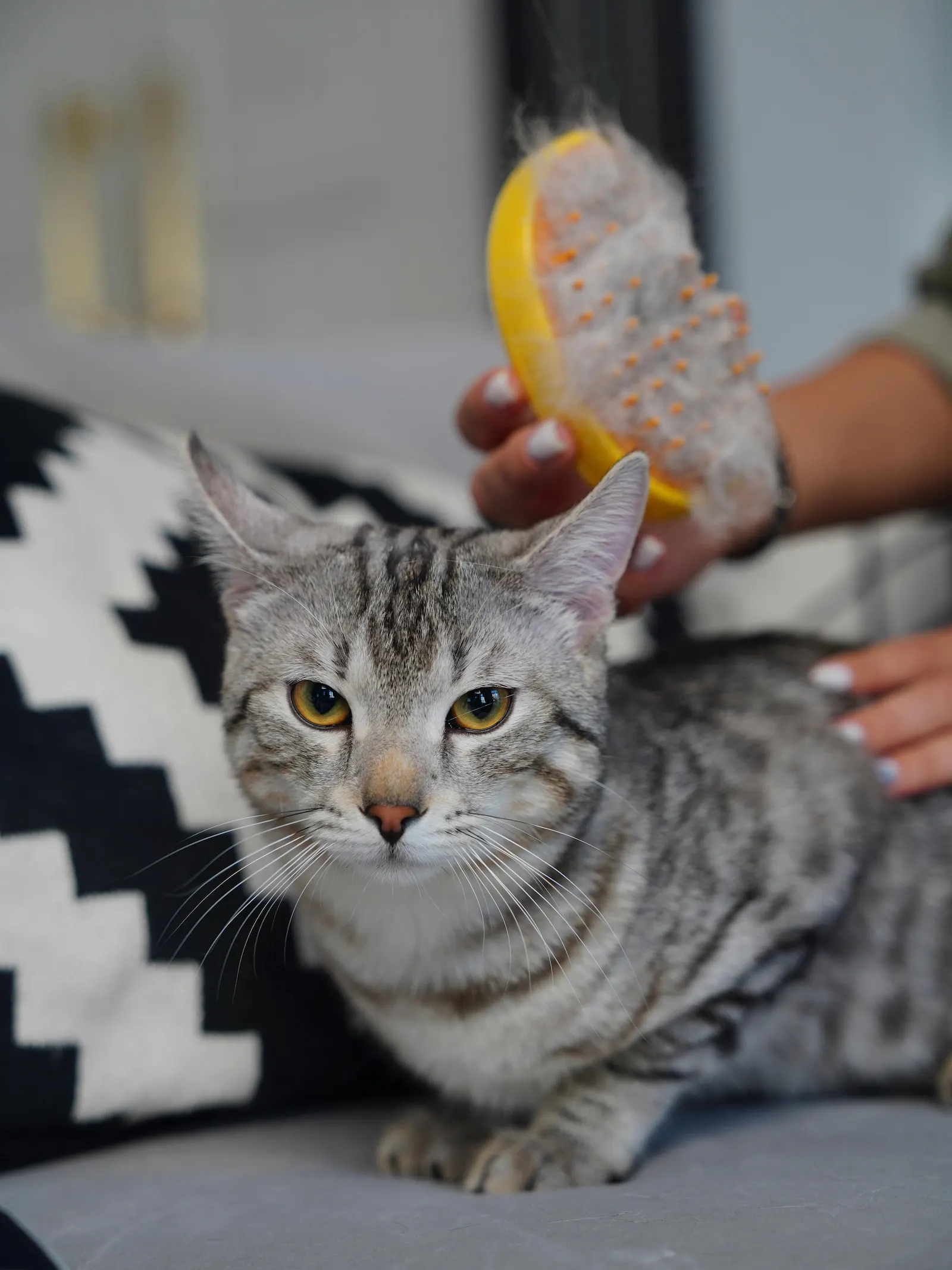
Senior cat grooming can change in small, easy-to-miss ways. You may notice your cat’s coat looks less tidy than it used to, mats are forming more often, or certain areas are not being cleaned as well. That can happen gradually with age, but it is still worth paying attention to, especially if the change is new or clearly different from your cat’s usual pattern.
Disclaimer: This article is for educational purposes only and is not a substitute for veterinary advice. If your cat’s grooming change is sudden, or comes with pain, weight loss, eating changes, skin irritation, or behaviour changes, speak to your vet.
Key takeaway: Some senior cats groom themselves less effectively as they get older, which can leave the coat looking messy, greasy, or matted. Gentle help at home can make a real difference, but a clear change in grooming can also be a useful clue that something else is going on, so it is sensible to mention it to your vet if the change is marked or comes with other changes.
Quick answer: senior cat grooming
Senior cat grooming can change when an older cat finds it harder to twist, stretch, reach awkward areas, or keep up with their usual coat care. Owners may notice a messier coat, greasy patches, dandruff, mats, or areas such as the lower back, tail base, or back end looking less tidy than before.
Gentle brushing or combing may help if your cat tolerates it, but a clear grooming change should not be dismissed as just old age. If the change is sudden, getting worse, or appears alongside pain, weight loss, eating changes, skin irritation, stiffness, or behaviour changes, speak to your vet.
Why senior cat grooming can change with age
Grooming changes are fairly common in older cats because daily coat care can simply become harder work than it used to be.
One common reason is stiffness. A cat who is less flexible may struggle to twist comfortably to reach the lower back, hips, or back end. That does not automatically tell you why the stiffness is there, but it does help explain why an older cat may start missing patches that used to stay neat.
Lower energy can play a part too. Some older cats simply do not keep up the same grooming routine they once did. Over time, that can leave the coat looking duller or less well kept, especially in long-haired cats or in cats with thicker coats.
Some areas can also become harder to reach and keep clean. Owners often notice the lower back, around the tail base, or the back end looking less well groomed than before.
Claws may change too. In some older cats, they become thicker, more brittle, or less naturally worn down. That means grooming change is not always only about fur. Sometimes owners notice a few small daily-care changes building up together.
If claws are becoming thicker, longer or more likely to catch, our Senior cat nail care guide explains what to check and when to speak to your vet.
Gentle ways to help a senior cat with grooming
A little help can go a long way, but the key is to keep it gentle. Cornell says older cats can benefit from more frequent hands-on help if self-grooming begins to wane, and recommends gentle brushing or combing, especially for long-haired cats.
Keep sessions short and calm
Short, low-pressure sessions are usually easier than trying to do everything at once. A minute or two when your cat is relaxed is often more helpful than a long grooming session that becomes stressful.
Start with the easiest areas first
It often helps to begin with areas your cat already tolerates well, such as the sides of the body or along the back, rather than going straight to sensitive or tangled spots. That can help your cat stay calm and makes it easier to stop on a good note.
Use a soft brush or comb only if your cat tolerates it
Not every cat likes the same grooming tool. For some older cats, a soft brush or grooming glove feels easier than a comb. Different cats tolerate different tools, so comfort matters more than choosing a “best” brush. The goal is not a perfect coat in one go. The goal is gentle, regular help that your cat can accept without stress.
Stop before your cat gets fed up
Watch body language. If your cat stiffens, turns quickly, swishes the tail, vocalises, or walks away, that is a sign to stop rather than push on.
Do not pull at mats
If a mat is tight, close to the skin, or clearly uncomfortable, do not try to cut or pull it out at home. It is safer to get advice from your vet or from a groomer your vet recommends.
When to speak to your vet
A grooming change is worth mentioning to your vet when it is sudden, marked, or part of a bigger change. Cornell notes that a sudden lack of grooming may signal a health problem, which is why a clear change is worth mentioning.
It is especially sensible to speak to your vet if the grooming change comes with any of the following:
- clear discomfort when being touched
- eating changes or bad breath
- weight loss
- lower activity or stiffness
- repeated matting
- skin irritation or a strong coat odour
- trouble keeping the back end clean
- behaviour changes alongside the coat change
This does not mean every messy coat is a serious problem. It just means grooming can be a useful everyday clue. In older cats, small changes often matter most when they are new, building, or happening alongside other changes.
If you are also noticing weight loss, our guide to Senior cat weight loss: common reasons and when to speak to a vet may help.
If grooming changes are part of wider comfort, mobility or home setup changes, our Senior Cat Comfort & Lifestyle guide may help you look at the bigger picture.
Final thought
Senior cat grooming changes are often gradual, and many owners first notice them through small coat changes rather than one obvious problem. Gentle help at home can make daily life easier, especially if your cat is less flexible than before. If the change is clearly new, getting worse, or coming with other changes, speaking to your vet is a sensible next step.
For wider daily care guidance, see our Senior Cat Care guide.
FAQs
Is it normal for a senior cat to groom less?
It can be. Some older cats groom less effectively as they age, especially if they are less flexible than before. It is more reassuring when the change is gradual, but a noticeable change from your cat’s normal pattern is still worth mentioning to your vet.
Why does my older cat’s fur look messy or greasy?
That can happen when grooming is less effective than it used to be. Reduced flexibility, lower mobility, and trouble reaching certain areas can all play a part. Persistent coat changes, especially alongside discomfort or skin irritation, deserve attention.
How can I help my senior cat with grooming at home?
Keep it gentle: short sessions, a soft brush or comb if tolerated, easy areas first, and no forcing. The aim is to make grooming support feel calm and manageable, not stressful.
Do older cats get matted more easily?
They can, especially if they are long-haired or grooming less thoroughly. Even a small drop in self-grooming can allow tangles to build up more quickly over time.
When are grooming changes worth mentioning to a vet?
They are worth mentioning when the change is sudden, clearly worse than usual, or comes with discomfort, eating changes, bad breath, weight loss, stiffness, skin irritation, or trouble keeping the coat clean.