Senior cat not drinking? It can feel worrying, especially if you are used to seeing your cat visit their water bowl each day. Older cats can be good at hiding changes, so it is sensible to pay attention when something feels different.
Not seeing your cat drink is not always the same as them taking in no fluid. Some cats drink at night or use another water source, while cats eating wet food may drink less visibly because their food already contains moisture. Cornell Feline Health Center explains that wet food can contain up to 80% water.
Disclaimer: This article is for educational purposes only and is not a substitute for professional veterinary advice. If your cat has suddenly stopped drinking, is not eating, is vomiting or has diarrhoea, seems weak, has unusual urination, or is acting unlike themselves, speak to your vet.
Key takeaway: A senior cat who seems not to be drinking may still be getting moisture from wet food, but a sudden or ongoing change in drinking, appetite, toileting, energy, or behaviour should be discussed with your vet.
Quick answer: senior cat not drinking
Not seeing your senior cat drink does not always mean they are taking in no fluid. Cats may drink when the house is quiet, use another water source or get much of their moisture from wet food.
Check whether the change is genuinely new, whether water is fresh and easy to reach, and whether eating, urination, energy or behaviour have also changed. Speak to your vet if your cat appears to have stopped drinking, seems unwell or the change is persistent.
What if your senior cat is drinking less rather than stopping completely?
A reduction can matter too. What is most useful is comparing your cat with their own normal pattern rather than trying to judge a fixed amount of water.
Notice whether the bowl seems fuller than usual over several days and whether there are changes in appetite, urination, weight, energy or behaviour at the same time.
Wet food can make bowl drinking less obvious, but it should not be used to dismiss a clear and persistent change.
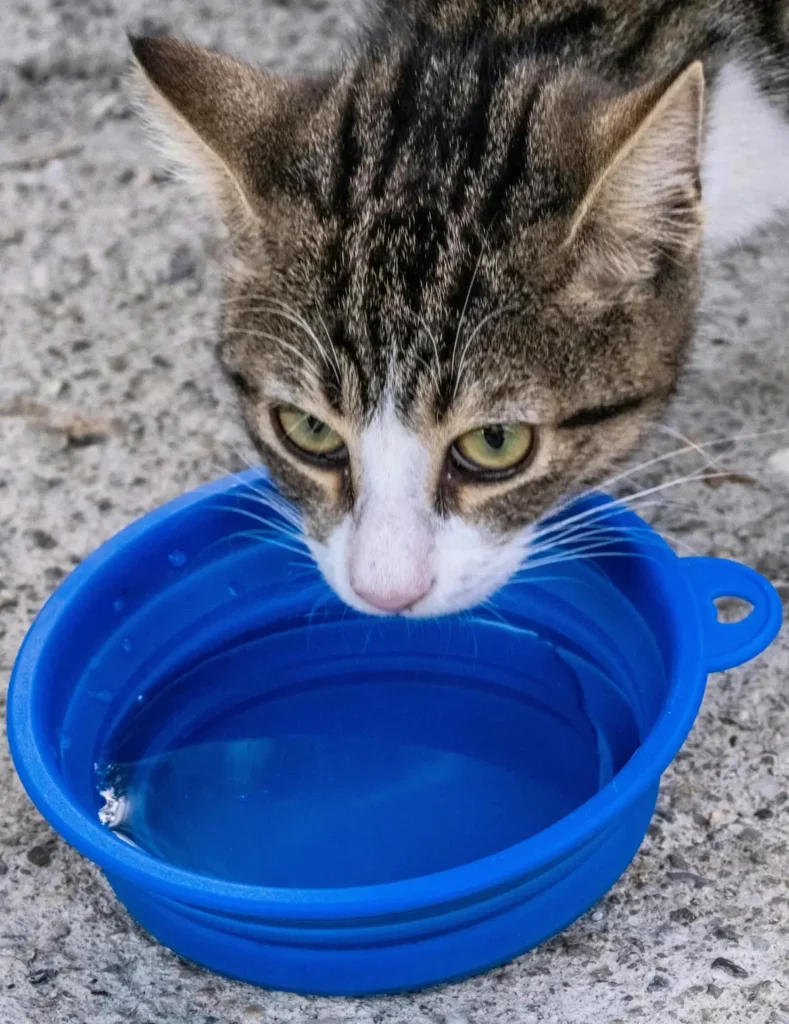
First, check whether your cat is definitely not drinking
Before assuming your cat has stopped drinking completely, look at the full picture.
Your cat may be drinking less visibly if:
- They eat mostly wet food
- They drink at night or when the house is quiet
- They have access to more than one water bowl
- Someone else in the home is topping up the water
- They go outdoors and may drink elsewhere
- Their bowl is being refilled before you notice how much has gone
This does not mean you should ignore a change. It simply means that water intake can be harder to judge than it first appears.
If your cat seems bright, is eating normally, toileting normally, and behaving like themselves, these simple checks can help you understand whether access, routine, or bowl placement may be part of the picture.
If they seem unwell, withdrawn, weak, sick, or unlike themselves, speak to your vet.
Quick checks to make at home
These checks are safe, simple, and practical. They are not a replacement for veterinary advice, but they may help you spot an obvious reason your older cat is avoiding the bowl.
| What to check | Why it matters |
|---|---|
| Is the water fresh? | Some cats avoid stale water. |
| Is the bowl clean? | Residue, odour, or food debris can put some cats off. |
| Is the bowl easy to reach? | Senior cats may avoid bowls that require stairs, jumping, or awkward movement. |
| Is the bowl in a quiet place? | Noise, busy walkways, or other pets can make a cat avoid the area. |
| Is water too close to the litter tray? | Many cats prefer water away from toileting areas. |
| Has their food changed? | Wet food can make drinking from the bowl less noticeable. |
| Has anything changed at home? | Visitors, building work, moved furniture, or stress can affect routines. |
Common reasons a senior cat may seem to drink less
There are several non-diagnostic reasons an older cat may appear to drink less. Some are practical. Some may need veterinary attention, especially if other changes are happening too.
They are eating more wet food
If your cat has recently moved from dry food to wet food, or now eats more wet food than before, you may see them drinking less often.
This can be normal for some cats because wet food contributes moisture. However, it is still important to look at the overall pattern. Appetite, litter tray habits, energy, weight, and behaviour all matter.
If your cat is eating less as well as drinking less, that is more concerning than drinking less while otherwise behaving normally.
The water bowl is harder to access
Older cats may find certain areas harder to reach than they used to.
For example, your cat may avoid a water bowl if it involves:
- Going upstairs
- Jumping onto a surface
- Crossing a slippery floor
- Bending awkwardly
- Passing another pet
- Walking through a busy or noisy area
Check that at least one water bowl is easy to reach from your cat’s main resting area, without stairs, jumping or slippery flooring.
The bowl location no longer feels comfortable
A bowl that worked well before may become less appealing if something changes around it.
Your cat may avoid a bowl that is:
- Next to a washing machine or loud appliance
- Close to the litter tray
- In a busy hallway
- Near a dog’s bed or another cat’s favourite spot
- Beside food, if your cat prefers water separately
- In a place where they feel cornered
Senior cats often do best when essentials are easy to reach, predictable, and placed in calm areas.
Their routine has changed
Cats are sensitive to routine, and older cats may be even less tolerant of disruption.
Drinking habits may change around:
- Visitors
- Building work
- Moving house
- New pets
- Furniture being moved
- New feeding areas
- Changes in household noise
- Changes in who is at home
This does not mean stress is definitely the cause. It simply means routine changes are worth noting, especially if the timing lines up.
They may feel unwell
Sometimes a senior cat not drinking is part of a bigger change.
This is where it becomes important not to assume it is “just age”. Cats Protection advises that significant changes in appetite or thirst in elderly cats should be checked by a vet.
Speak to your vet if drinking changes appear alongside:
- Eating less
- Not eating
- Vomiting
- Diarrhoea
- Hiding
- Weakness
- Weight loss
- Restlessness
- Confusion
- Toileting changes
- Urinating more or less than usual
- Seeming painful or withdrawn
You do not need to work out the cause yourself. Your role is to notice the pattern and share clear observations with your vet.
When to speak to your vet
Speak to your vet if:
- Your senior cat suddenly seems to stop drinking
- You are unsure whether they are getting enough fluid
- They are also eating less or not eating
- They seem weak, withdrawn, restless, painful, confused, or unlike themselves
- They are vomiting or have diarrhoea
- Their urination or litter tray habits have changed
- The change is new, persistent, or getting worse
- You are worried and cannot confidently explain the change
This is especially important with older cats because small changes can be easier to miss at first.
If you are worried about wider changes linked with fluid intake, our Senior cat dehydration signs guide explains what owners may notice and when to speak to a vet.
What owners can do safely
There are a few safe steps you can take at home while keeping a close eye on your cat.
You can:
- provide fresh water in a clean bowl
- make sure at least one bowl is quiet and easy to reach
- keep water away from litter trays
- offer more than one accessible water point
- note changes in eating, drinking, urination and behaviour
These steps are about access and observation, not treatment. If your cat seems unwell or appears to have stopped drinking, speak to your vet rather than relying on home changes.
What to track before speaking to your vet
A few notes can make it easier to explain what has changed when you speak to your vet.
Senior cat not drinking checklist
Before you speak to your vet, note:
- When you first noticed the change
- Whether your cat is eating normally
- Whether they eat wet food, dry food, or both
- Whether they are urinating more, less, or differently
- Any litter tray changes
- Any vomiting or diarrhoea
- Any hiding, restlessness, or unusual behaviour
- Any weakness or mobility changes
- Any recent household changes
- Any visible weight loss or change in body shape
- Whether water bowls are being used overnight
- Whether the bowl location has changed
- Whether another pet could be blocking access
You do not need a perfect record. Even a few notes can help your vet understand what has changed.
For wider context on age-related health changes, you may also find our Senior Cat Health guide helpful.
What not to do if your senior cat is not drinking
It is natural to want to help quickly, but some actions can make things riskier.
Avoid:
- Syringe-feeding water unless your vet has specifically told you to
- Assuming the change is “just old age”
- Using home remedies instead of veterinary advice
- Adding broths, supplements, or flavourings without checking they are safe for your cat
- Making sudden diet changes while your cat already seems unwell
- Waiting for several symptoms to appear if your cat is clearly not themselves
Do not force water into your cat’s mouth, as this can be stressful and may be unsafe unless your vet has specifically instructed you.
The safest approach is simple: make water easy to access, track what you notice, and speak to your vet when the change is sudden, ongoing, or paired with other signs.
How this relates to senior cat hydration
This article focuses on what to check when a senior cat appears not to be drinking and when veterinary advice is sensible.
For detailed guidance on water bowls, fountains, placement and accessible water stations, see our Senior cat hydration guide.
If your cat is also eating less, our Senior cat not eating guide explains what to check and when to speak to your vet.
Final thoughts
Not seeing your senior cat drink does not always mean they are taking in no fluid. Wet food, quiet night-time drinking and more than one water source can make intake difficult to judge.
Check whether the change is genuinely new and whether eating, urination, energy or behaviour have also changed. Make water fresh, clean and easy to reach, but do not force your cat to drink.
Speak to your vet if your cat appears to have stopped drinking, seems unwell or the change is sudden, persistent or worsening.
FAQs
Is it normal for a senior cat not to drink much water?
Some cats appear to drink very little, especially if they eat wet food. Wet food contains moisture, so bowl drinking may be less noticeable. However, a noticeable change in drinking habits is still worth paying attention to in a senior cat. Watch for changes in appetite, toileting, energy, weight, and behaviour.
Why is my senior cat not drinking water but still eating?
Your cat may be getting moisture from wet food, drinking when you are not watching, or avoiding the bowl because of access, placement, stress, or another pet.
If the change is new, ongoing, or paired with other changes, speak to your vet.
Can wet food mean my older cat drinks less?
Yes. Cats eating wet food may drink less from the bowl because wet food already contains moisture. That said, you should still watch the wider picture, including appetite, litter tray habits, energy, and behaviour.
How can I encourage my senior cat to drink safely?
Start with fresh water, clean bowls, quiet placement and easy access. More than one accessible water point may also help you see which location your cat prefers. Do not force water into your cat’s mouth. If your cat appears not to be drinking or seems unwell, speak to your vet.
Should I force my cat to drink water?
No. Do not force water into your cat’s mouth unless your vet has specifically instructed you to do so. If your cat is not drinking, seems unwell, is not eating, or is acting differently, speak to your vet.
When should I speak to my vet about a senior cat not drinking?
Speak to your vet if the change is sudden, persistent, getting worse, or paired with reduced appetite, vomiting, diarrhoea, weakness, hiding, toileting changes, weight loss, or behaviour changes. You should also speak to your vet if you are unsure whether your cat is getting enough fluid.
External references
Cornell Feline Health Center — Hydration in cats
Cats Protection — Elderly Cats: Care Guide for Older Cats