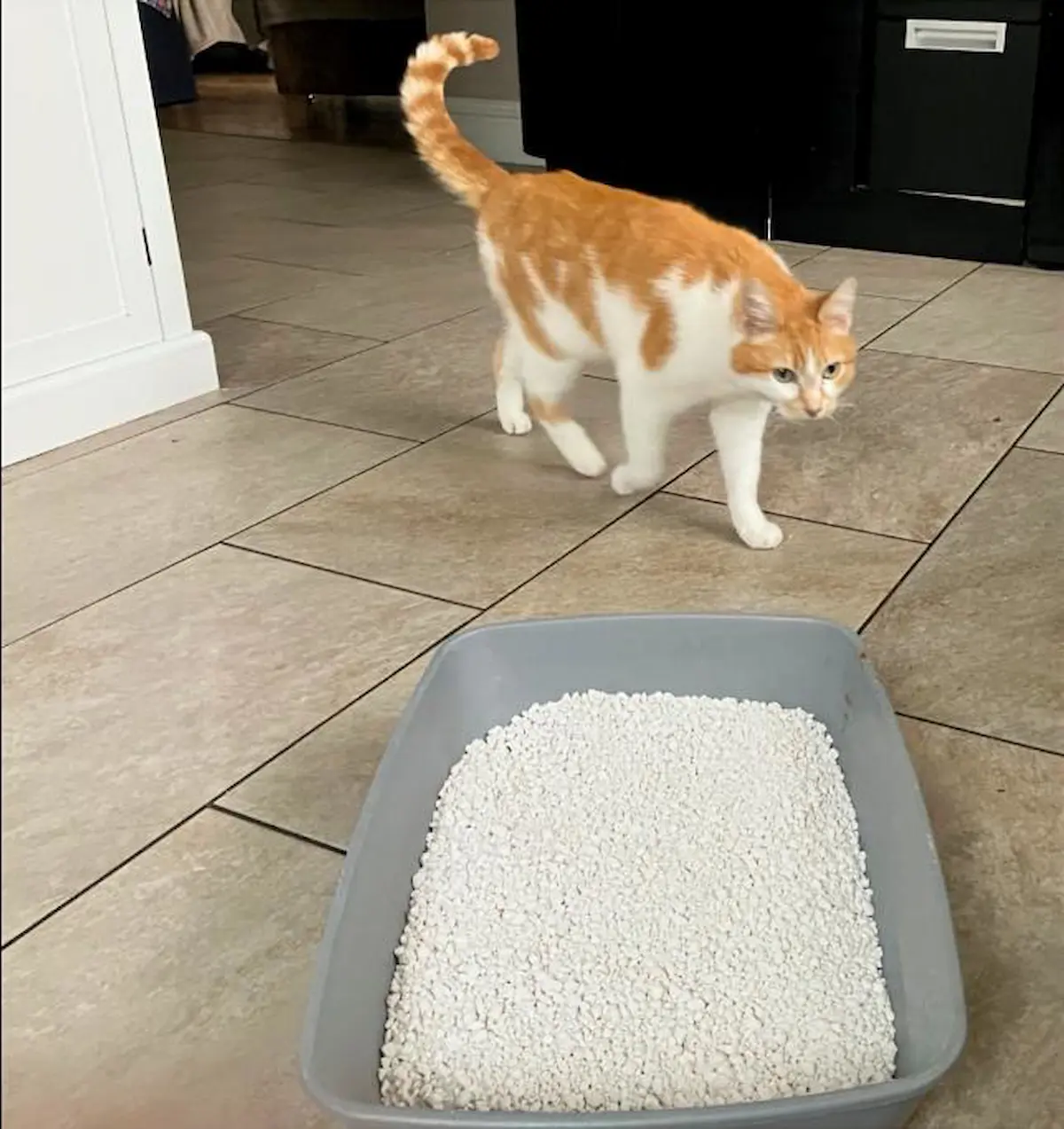
A good litter box setup can make a real difference for an older cat. The best litter box for senior cats is usually not the fanciest one. It is the one that is easy to reach, easy to step into, roomy enough to use comfortably, and simple to keep clean. For many older cats, small setup changes can help them feel more confident and reduce mess around the tray area. As Cornell Feline Health Center explains, older cats may need very low-sided trays and easier access to litter boxes, especially if stairs or high sides have become harder to manage.
Disclaimer: This article is for educational purposes only and is not a substitute for professional veterinary advice. If your cat seems in pain, suddenly stops using the tray, is straining, or is acting differently, speak to your vet.
Key takeaway: For most senior cats, a better litter box setup means low entry, enough space to turn, a quiet location, and easy access without stairs or obstacles. If your cat still seems reluctant, uncomfortable, or starts missing the tray after you improve the setup, it is worth speaking to your vet.
Quick answer: best litter box for senior cats
The best litter box for senior cats is usually one that is easy to enter, easy to turn around in, stable underfoot, and placed somewhere quiet and easy to reach. A low-entry tray often helps older cats who are stiff, hesitant, or less confident stepping over a high side.
There is no single best litter box for every older cat. What matters most is whether your cat can get in and out comfortably, use the tray without slipping or struggling, and reach it in time. If litter tray habits change suddenly, or your cat seems painful, strained, confused, or unsettled, speak to your vet.
Why litter box setup matters more for senior cats
Many older cats still want to use the litter tray as normal, but the setup may no longer suit them.
A tray that once seemed fine can become awkward with age. High sides may be harder to step over. A cramped covered box may feel less comfortable. A tray tucked away upstairs or behind furniture may simply be too much effort when your cat needs to go quickly.
This does not always mean something dramatic is wrong. Sometimes it means the environment has not kept up with your cat’s changing needs. As Cornell Feline Health Center explains, litter trays should be easy to reach and, in some homes, placed on every floor so older cats do not have to climb stairs if they do not want to.
If you are noticing broader mobility changes as well, our Senior Cat Mobility & Pain guide may help you connect tray access, stiffness, jumping changes and daily comfort.
What makes the best litter box for senior cats easier to use
The best litter box for senior cats is usually one that is easy to enter, roomy enough to turn in, and simple to reach without obstacles.
Low entry matters more than fancy features
For many older cats, the most helpful feature is a low entry.
That could mean:
- a tray with one lower side
- a tray designed for easier step-in access
- a simple open tray that does not require your cat to climb over a tall front edge
International Cat Care says open trays with low sides are often ideal for older cats, though individual preference still matters.
Enough room to turn comfortably
A senior cat may be less willing to squeeze into a small or cramped tray.
A larger tray can help because it gives your cat more room to:
- step in and out without bumping the sides
- turn around more easily
- choose a comfortable position
Cornell Feline Health Center also notes that larger cats need bigger boxes, and elderly cats need boxes with low sides.
Open trays are often easier
Many cats prefer an uncovered tray. For an older cat, an open tray can be easier because it feels less enclosed and gives more space around the head and shoulders.
Covered trays may reduce visible mess for owners, but they can also create a tighter, darker space. If your older cat seems hesitant, switching to a more open setup is often a sensible thing to try. Cornell also notes that many cats prefer uncovered boxes and unscented litter.
Familiar litter usually helps
Older cats often cope better when the tray feels familiar.
If your cat already seems uncertain, changing the tray type, litter type, tray location, and cleaning products all at once can make things harder. It is usually better to make one or two simple changes first and see how your cat responds.
How to make a senior cat’s litter tray easier to access
Put trays where your cat already spends time
If your cat mainly rests downstairs during the day, a tray upstairs may be less useful than it used to be.
Try to place the tray:
- near the rooms your cat already uses
- on the same floor as favourite sleeping spots
- somewhere your cat can reach quickly
In larger homes, more than one tray may help. Cornell Feline Health Center
recommends making litter boxes easy to reach and placing them on every floor where needed.
For wider home setup ideas, including litter tray access, safer routes and calmer resting places, see our Senior Cat Comfort & Lifestyle guide.
Avoid awkward routes
A good tray in the wrong place can still be a poor setup.
Try to avoid:
- long routes with stairs
- tight gaps behind furniture
- noisy utility rooms if your cat dislikes them
- locations where dogs, children, or other cats may cause stress
A tray should feel easy to get to, not hidden at all costs.
Keep the approach simple
Look at the area just outside the tray.
Ask yourself:
- Is there enough clear floor space in front of it?
- Is the floor slippery?
- Is the tray pressed into a corner too tightly?
- Does your cat have to twist or shuffle awkwardly to get in?
If the floor near the tray is slippery, our Non-slip flooring for senior cats guide may help you make the approach steadier without changing the whole room.
Small layout changes can sometimes help more than replacing the tray itself.
How to reduce litter mess without making access harder
It is easy to focus on the mess and accidentally make the tray harder to use.
Use a mat outside the tray
A litter mat can catch loose litter from paws without creating a barrier at the entrance.
This is usually more senior-friendly than simply choosing the highest-sided tray possible.
Think carefully about high sides
High sides may contain scatter better, but they can also make entry harder.
That is the main trade-off with senior cats:
- more containment
- but sometimes less comfort and easier avoidance
A better balance is often:
- one lower entry side
- a roomy tray
- a mat outside the tray
- regular scooping and tidy-up around the area
Keep the area easy to clean
A clean tray matters. Cornell Feline Health Center advises keeping litter boxes as clean as possible, and notes that some cats dislike dirty trays or strong odours.
That usually means:
- scoop regularly
- wipe around the tray area
- avoid strong perfumes in or around the tray
- do not let waste build up because the tray is “still mostly fine”
A simple senior cat litter tray setup checklist
You can use this as a quick home check:
- The tray has a low entry or one lowered side.
- The tray is large enough for your cat to turn comfortably.
- The tray is open or at least not cramped.
- The route to the tray is simple and clear.
- The tray is on the floor your cat uses most.
- There is a mat outside to catch scatter.
- The tray is scooped often and kept fresh.
- Food and water are not right beside it.
- There is another tray available if distance or stairs are a problem.
- You have changed the setup simply, not all at once.
When setup may not be the whole issue
A better setup can help a lot, but it cannot explain every change.
It is worth looking beyond setup if:
- your cat suddenly stops using the tray
- your cat seems uncomfortable getting in or out
- accidents continue after sensible setup changes
- your cat is straining, vocalising, or clearly distressed
- the change feels sudden rather than gradual
If your cat reaches the tray but often toilets over the edge or just beside it, our Senior Cat Missing the Litter Tray guide explains what to check.
If your cat is avoiding the tray or toileting elsewhere, our Senior Cat Toileting Changes guide may help you look at the wider pattern.
When to speak to your vet
Speak to your vet if:
- your cat suddenly changes toilet habits
- your cat seems in pain or distressed around the tray
- your cat is straining
- your cat is repeatedly missing the tray
- your cat still seems reluctant after you improve access and comfort
The aim of a better setup is to remove obvious barriers. If your cat still seems uncomfortable, that is useful information to mention to your vet.
For more senior cat comfort and home setup support, see our Senior Cat Comfort & Lifestyle guide.
FAQs
What is the best litter box for senior cats?
Usually, the best litter box for senior cats is one with a low entry, enough room to turn comfortably, and a simple open design. It should also be easy to reach and easy to keep clean.
Should a senior cat have a low-sided litter tray?
Often, yes. A low-sided litter tray can be easier for an older cat to step into, especially if high sides seem awkward or your cat hesitates at the entrance. Cornell Feline Health Center notes that some older cats may need litter boxes with very low sides to make access easier.
Where should I put a litter tray for an older cat?
Choose a quiet, easy-to-reach spot away from food, water, and loud appliances. In a larger home, it may help to keep a tray on each floor so your cat does not have to travel far or use stairs.
How do I reduce litter mess without making the tray harder to use?
Start with a litter mat, regular scooping, and a tray that is roomy enough to contain scatter. Be careful not to solve mess by creating a higher barrier than your cat can comfortably step over.
How many litter trays should a senior cat have?
That depends on the home, but more than one tray can help if your cat uses different parts of the house or if stairs are becoming less convenient. As Cornell Feline Health Center explains, older cats should have easy access to litter boxes, and in some homes it helps to place them on every floor.
External references
Cornell Feline Health Center — The Special Needs of the Senior Cat
International Cat Care — Special considerations for senior cats