Older cats can change in quiet, confusing ways. A cat who used to be settled at night may start meowing more. A confident jumper may hesitate. A social cat may seem distant—or suddenly clingy. It’s normal to wonder: can cats have dementia, or is this “just old age”?
Disclaimer: This article is for educational purposes only and is not a substitute for professional veterinary advice. Behaviour changes in older cats can have many possible causes. If changes are sudden, worsening, or affecting your cat’s comfort or safety, speak to your vet.
Key takeaway: Cats can experience age-related cognitive changes, sometimes described as dementia or feline cognitive dysfunction, but similar signs can have other causes. If your older cat seems confused, restless, vocal at night, or different in their usual routines, track what has changed and speak to your vet if the changes are new, worsening, or affecting comfort or safety.
Quick answer: can cats have dementia?
Yes, older cats can develop age-related cognitive changes, sometimes described as feline cognitive dysfunction or cat dementia. Owners may notice confusion, night-time restlessness, louder meowing, changes in sleep, altered routines, or a cat seeming less settled in familiar places.
These signs can overlap with other health changes, so it is important not to assume dementia on your own. If your older cat seems confused, unsettled, vocalises more, gets lost in familiar areas, changes their toileting habits, or seems unlike themselves, speak to your vet.
This guide explains what people mean by “cat dementia,” the common behaviour changes owners may notice, what can overlap with normal ageing, and what’s worth mentioning to your vet. It also covers simple, non-medical ways to support comfort at home—without trying to diagnose your cat.
If you’d like a broader overview of age-related changes, see our Senior Cat Health guide.
Can cats have dementia? What people mean by “cat dementia”
“Cat dementia” is a common phrase people use when an older cat seems confused, restless, or different in their usual routines. In veterinary settings, you may see this described as feline cognitive dysfunction or cognitive dysfunction syndrome in cats—terms used for age-related changes in brain function that can affect behaviour, awareness, and daily patterns.
One important point: it’s not something you can confirm at home. Many issues can look similar from the outside. Pain, reduced vision or hearing, stress, and other age-related conditions can all change how a cat behaves. That’s why it helps to approach this as:
- “These are changes I’m noticing,” and
- “Here’s when it makes sense to speak to my vet.”
Early signs of dementia in cats: behaviour changes owners may notice
There isn’t one “classic” sign of cat dementia. Changes are often subtle at first, and they can come and go. These changes don’t automatically point to one cause—but they are worth noting, especially if they’re new or getting worse.
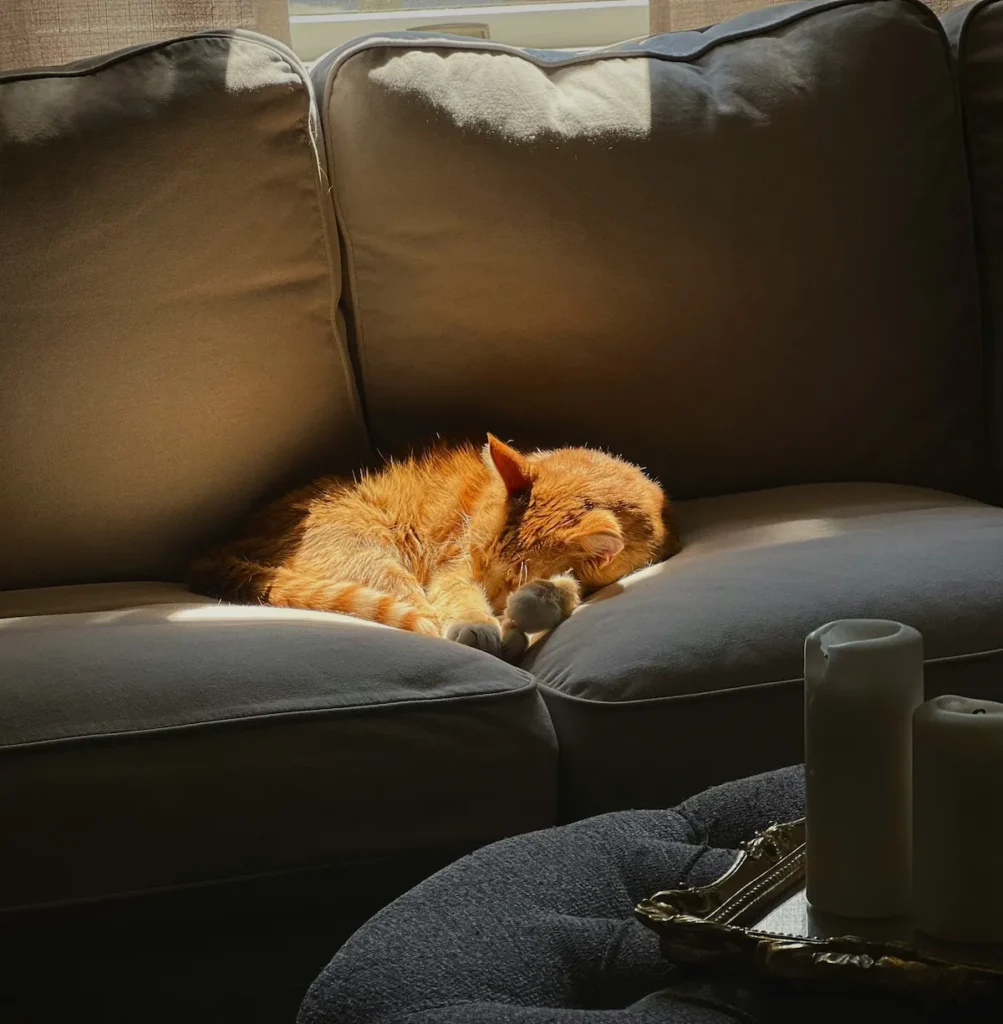
Sleep-wake changes (especially at night)
Some older cats start sleeping more during the day and pacing or waking more at night. Owners often describe their cat as “restless,” “unable to settle,” or awake at unusual hours.
If the changes are mostly happening after dark, our Cat Dementia at Night guide explains night-time pacing, meowing, confusion and practical ways to support a calmer routine.
Increased vocalising
More meowing or yowling—particularly at night—can be one of the first things people notice. It may sound like calling out, complaining, or seeming unsettled. Because this can happen for several reasons in older cats, it’s best seen as a signal to pay attention, not a conclusion.
If yowling after dark is the main change, our Older cat yowling at night guide may help you compare the wider pattern.
Disorientation or seeming “confused”
Some cats appear to get “stuck” in corners, pause in odd places, stare at walls, or hesitate in familiar rooms. You might see them wander as if they’ve forgotten where they were going. These changes can be distressing to watch, and they’re also a good reason to check in with your vet—many conditions can cause similar outward behaviour.
Changes in social behaviour
A normally independent cat may follow you more, seek reassurance, or seem needy. Other cats become more withdrawn, less interactive, or less tolerant of handling. Personality changes aren’t automatically “dementia”—but they’re worth noticing and tracking.
Litter tray changes
House-soiling or litter tray “misses” are common reasons owners start searching for signs of cat dementia. But litter changes can also relate to mobility, discomfort, stress, or routine changes. If this is new, recurring, or escalating, it’s worth mentioning sooner rather than later.
Repetitive behaviours (pacing, wandering, fixed routes)
Some cats begin pacing the same route, wandering without an obvious goal, or repeating the same behaviour in a loop. A new pattern that happens often is more meaningful than a one-off strange moment.
Reduced interest in play or routine
Many cats slow down with age. But if your cat’s engagement drops sharply—less interest in favourite spots, people, toys, or normal routines—it’s worth paying attention, especially if it overlaps with other changes.
Normal ageing vs changes worth mentioning
Ageing alone can explain some gentle shifts: sleeping more, being less athletic, or preferring warm, quiet places. What separates “likely normal” from “worth mentioning” is usually how sudden the change is, how quickly it’s progressing, and whether it affects comfort or safety.
| More likely normal ageing | Worth mentioning to your vet |
|---|---|
| Sleeping more overall | Sudden day/night reversal or new night-time distress |
| Slower movement, less jumping | Getting stuck, seeming distressed, or unsafe wandering |
| Mild hearing/vision decline | New disorientation that affects daily routines |
| Gradually playing less | Rapid withdrawal or major behaviour change |
| Occasional “off day” | Repeated accidents or new house-soiling |
If you’d like more context on typical age-related changes, see our guide: Signs of Ageing in Cats: What Changes Are Normal as Cats Get Older.
If you’re unsure, it’s reasonable to mention it. Many owners worry they’ll “waste the vet’s time.” In reality, bringing clear observations early can help your vet spot patterns, rule out obvious causes, and guide you on what to monitor next.
When to speak to your vet
A vet visit isn’t just about “testing for dementia.” It’s about checking whether your cat might be dealing with something else (like pain or a sensory change) that can look similar from the outside.
It is worth speaking to your vet if you notice:
- A sudden change (over days) or rapid progression (over weeks)
- New or worsening night-time restlessness or distress
- Repeated litter tray accidents that are new
- Behaviour change plus other concerns like reduced appetite, weight change, vomiting, hiding, weakness, or clear signs of pain
- Any change that makes you worry about safety (getting stuck, falling, panic, disorientation)
What to track before your appointment (simple and useful)
You don’t need a diagnosis checklist. A few notes can help your vet understand the change clearly:
- What changed (one sentence)
- When it started (approximate date)
- How often it happens (daily/weekly)
- Time of day (especially night-time patterns)
- Anything that changed at home (routine, visitors, moving furniture, new pets)
- Short video clips (if safe and easy)
Daily routine and home changes for a senior cat with dementia signs
If your older cat seems confused, unsettled, or more dependent on familiar routines, small changes at home may help daily life feel calmer. These steps are not treatments, and they do not confirm that your cat has dementia. They are simple, low-risk ways to support comfort while you continue to monitor what has changed.
The aim is to make the home feel predictable. For many senior cats, especially those dealing with cognitive change, sensory decline, stiffness, or general ageing, familiar routines and easy access to essentials can reduce stress.
For wider practical ideas around home setup, resting spaces, and senior-friendly routines, you may also find our Senior Cat Comfort & Lifestyle guide helpful.
Keep daily routines predictable
Cats often feel safest when daily life follows a familiar pattern. If your senior cat seems more confused or unsettled, try to keep the basics as steady as possible.
This may include:
- Feeding at similar times each day
- Keeping bowls, beds, and litter trays in familiar places
- Cleaning the litter tray on a predictable routine
- Using the same gentle bedtime cues each evening
- Avoiding sudden changes to rooms, furniture, or resting areas where possible
A predictable routine does not need to be strict or complicated. The goal is simply to reduce surprises, especially if your cat already seems less confident in familiar spaces.
Keep important areas easy to find
If your cat sometimes wanders, pauses in odd places, or seems unsure where to go next, make the main routes around your home as simple as possible.
Focus on the areas your cat uses every day:
- Food
- Water
- Litter tray
- Favourite bed
- Warm resting spot
- Your usual sitting area, if your cat seeks reassurance
Try to keep these areas in consistent locations. If you need to move something, make the change gradually where possible, and watch whether your cat seems more unsettled afterwards.
Reduce confusion in the environment
Frequent changes can be harder for some older cats. This does not mean your home has to stay exactly the same forever, but it does help to think carefully before rearranging the spaces your cat relies on.
Helpful changes may include:
- Keeping key pathways clear
- Avoiding clutter near bowls, beds, and litter trays
- Leaving familiar beds or blankets in place
- Keeping furniture stable if your cat uses it as part of a route
- Avoiding sudden changes to the room where your cat sleeps
If your cat already follows a fixed route around the home, try not to block that route unless there is a safety reason.
Make essentials easier to access
Some behaviour that looks like confusion may also be affected by mobility, stiffness, eyesight, hearing, or confidence. Making essentials easier to reach can help without assuming one cause.
You could consider:
- A low-entry litter tray if your cat struggles to step in and out
- An extra litter tray in a quiet, easy-to-reach place
- Food and water placed where your cat does not need to climb stairs
- A soft bed in a warm, familiar room
- Stable steps or ramps only if your cat already uses them confidently
Avoid making several changes at once. If you add a new tray, bed, or bowl location, keep the old one available too while your cat adjusts.
If confusion, pacing or vocalising mainly happens after dark, see our Cat Dementia at Night guide for practical night-time support and signs worth mentioning to your vet.
Keep reassurance calm and consistent
Some older cats become more clingy, while others seem less social. Try to respond in a calm, familiar way rather than forcing interaction.
This might mean:
- Speaking softly when your cat seems unsettled
- Offering gentle contact if your cat seeks it
- Letting your cat move away if they prefer space
- Keeping play short and low-pressure
- Using familiar toys, sounds, and routines rather than constant novelty
The goal is comfort, not retraining. If your cat seems confused, frustrated, or easily startled, a calm response is usually more helpful than correction.
Think about safety without overcorrecting
If your cat appears disoriented or unsteady, it may help to reduce obvious risks while keeping the home familiar.
Simple safety steps may include:
- Blocking access to high ledges if your cat seems unsafe
- Keeping floors clear of trip hazards
- Making sure steps, ramps, or platforms are stable
- Avoiding slippery routes where possible
- Keeping doors to risky areas closed if your cat gets stuck or panics
Try not to remove every familiar route at once. Sudden changes can sometimes make an older cat more unsettled. Make the smallest useful change first, then watch how your cat responds.
These steps can support comfort, but they do not replace veterinary advice. If your cat’s behaviour is new, worsening, distressing, or affecting eating, drinking, toileting, sleep, mobility, or safety, speak to your vet.
FAQs
Can cats have dementia?
Cats can experience age-related cognitive changes, often described as cognitive dysfunction. Owners may notice shifts in sleep, vocalising, awareness, or routines. Because many conditions can look similar, it’s best to treat these changes as information to share with your vet—not something to confirm at home.
What is feline cognitive dysfunction?
Feline cognitive dysfunction is a term used to describe age-related decline in cognitive abilities in some older cats. It’s linked with behavioural changes that can resemble “dementia” in people, but it isn’t something you can diagnose just by observation at home.
What age does it start?
There isn’t a single age where it “begins.” It’s generally discussed in senior and geriatric cats, and changes can develop gradually. If you’re noticing new behaviour changes in an older cat, it’s reasonable to mention it at routine check-ups—or sooner if changes are significant.
Is night meowing a sign of cat dementia?
Night meowing can be one change owners notice, but it can also happen for other reasons (including stress, discomfort, or sensory changes). If it’s new, frequent, or escalating, it’s worth mentioning to your vet—especially if your cat seems distressed.
Can vision or hearing loss look like dementia?
Yes. Sensory changes can affect confidence, navigation, and behaviour in ways that may look like confusion. If your cat seems disoriented or startled more easily, a vet check can help you understand what might be contributing.
What should I tell my vet?
Focus on what changed, when it started, and how often it happens. Mention patterns like night-time restlessness, accidents, pacing, or social changes, and bring short videos if you have them. Clear observations help your vet assess what to look into and what to monitor next.
Final thoughts
Noticing behaviour changes in an older cat can be unsettling—and it’s easy to fear the worst. The most helpful approach is calm and practical: observe patterns, support comfort with steady routines, and speak to your vet if changes are new, worsening, or affecting daily life.
External references
- International Cat Care: cognitive dysfunction syndrome in cats
- Cornell Feline Health Center: cognitive dysfunction overview