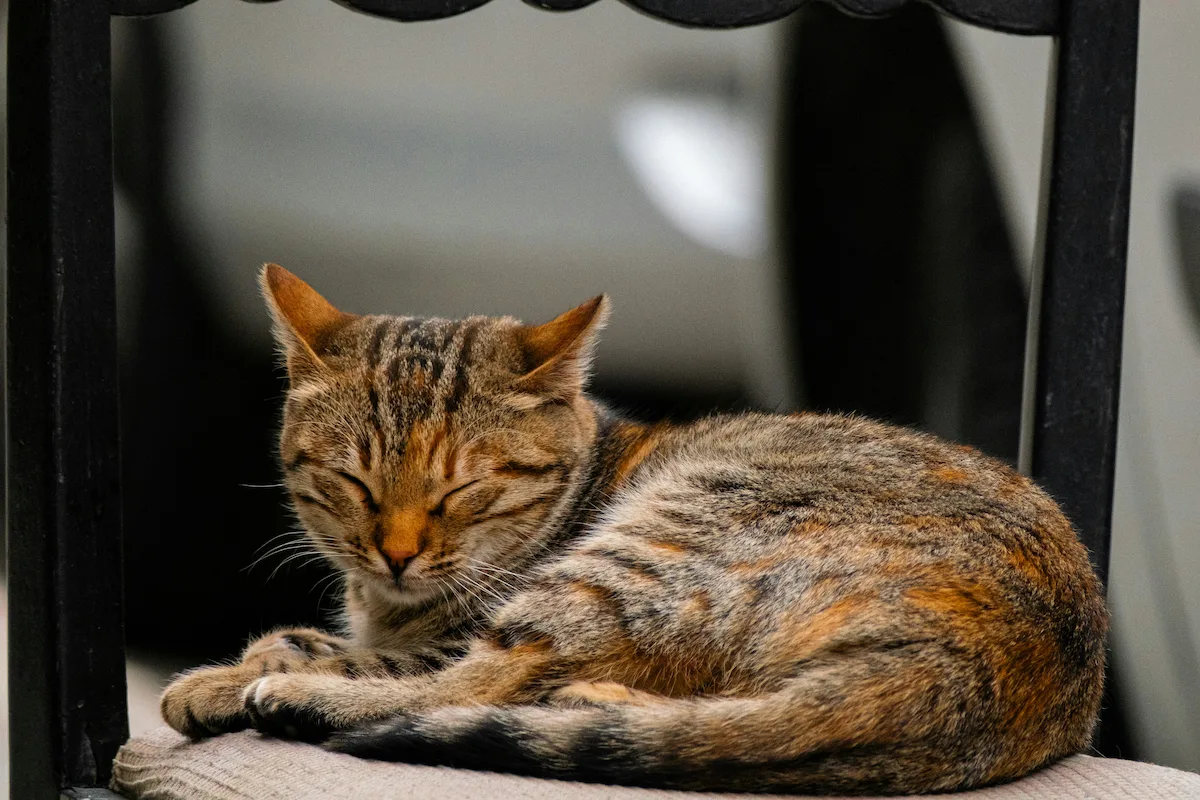
Senior cat dandruff can be worrying when you first notice it. You may see pale flakes on your cat’s coat, dry-looking skin, or a duller coat than usual.
In older cats, dandruff can have several possible causes. Sometimes it is linked with dry skin or reduced grooming. Other times, it may appear alongside irritation, discomfort, parasites, allergies, or wider health changes. The aim is not to panic, but to notice the pattern and know when it is sensible to speak to your vet.
Disclaimer: This article is for educational purposes only and is not a substitute for professional veterinary advice. If your cat is in pain, losing weight, vomiting frequently, or acting differently, speak to your vet.
Key takeaway: Senior cat dandruff can become more noticeable when an older cat is grooming less effectively, has dry or flaky skin, or is dealing with another change such as stiffness, irritation, or discomfort. Mild flakes are not always urgent, but new, worsening, itchy, sore, greasy, or widespread dandruff is worth discussing with your vet.
Quick answer: why does my senior cat have dandruff?
Senior cat dandruff can happen when an older cat is grooming less effectively, has dry or flaky skin, or is struggling to reach areas such as the back, hips, rump or tail base.
A few mild flakes are not always urgent, but dandruff that is new, worsening, itchy, sore, greasy, widespread, scabby, linked with hair loss, or appearing with changes in appetite, weight, drinking, toileting, movement or behaviour is worth discussing with your vet.
What does senior cat dandruff look like?
Senior cat dandruff usually appears as small white or pale flakes on the coat or close to the skin. You may notice it more when stroking your cat, brushing them, or seeing flakes on darker fur.
It may appear with:
- dry-looking skin
- a dull or clumpy coat
- flakes along the back, hips, rump, or base of the tail
- areas your cat seems less able to groom
- oily or matted fur in the same region
A few occasional flakes are not always a crisis. What matters more is whether the dandruff is new, getting worse, spreading, or appearing with other changes such as itching, soreness, weight loss, appetite changes, or reduced grooming.
Is dandruff common in older cats?
Dandruff can become more noticeable in older cats, but that does not mean it should always be dismissed as “just age”.
As cats get older, their grooming habits may change. Some cats become less flexible. Some sleep more. Others may find it harder to reach their back, hips, or tail base. If grooming becomes less effective, flakes, loose fur, and oils can build up more easily.
If flakes are part of a wider coat change, you may also find it helpful to read Senior cat grooming problems: mats, dandruff, oily coat (what’s common).
The key is context. Mild flakes on their own may simply be something to watch. Dandruff that is new, uncomfortable, widespread, or linked with other changes deserves closer attention.
Why senior cat dandruff can happen
There is rarely one single explanation that applies to every older cat. Senior cat dandruff can be linked with grooming changes, dry skin, coat changes, irritation, or underlying discomfort.
Reduced grooming
Older cats may not groom as thoroughly as they once did. This can happen for several reasons, including stiffness, dental discomfort, pain, tiredness, or reduced flexibility.
International Cat Care notes that decreased grooming in senior cats may indicate chronic pain from problems such as arthritis or dental disease, so a clear change in grooming habits is worth taking seriously. You can read more in its guide to special considerations for senior cats.
When grooming becomes harder, dandruff may be more noticeable in places your cat struggles to reach, especially along the back, hips, rump, and base of the tail.
Dry skin and indoor air
Dry skin can make flakes more visible. In some homes, central heating, colder weather, and dry indoor air may make the coat and skin seem drier than usual.
This does not mean dry air is definitely the cause. If dandruff keeps returning, gets worse, or appears with itching or soreness, it is safer to treat it as something worth checking rather than assuming it is only environmental.
Coat changes with age
Some older cats develop a coat that looks less smooth than it used to. It may appear duller, clumpier, oilier, or less neatly maintained.
If the coat change is more greasy or clumped than flaky, our guide to senior cat oily coat explains what that can mean and when to speak to your vet.
This can make dandruff more obvious, especially on dark coats. You may also notice that loose fur and flakes build up more quickly between grooming sessions.
Weight, mobility, and hard-to-reach areas
Cats who are overweight, stiff, uncomfortable, or less flexible may find it harder to groom certain areas. The back half of the body is often where owners notice this first.
You may see:
- flakes near the rump
- an oily patch near the base of the tail
- mats forming over the hips or back
- your cat reacting when touched in certain areas
- less jumping, climbing, or stretching than before
If your cat also seems stiff, slow to jump, or less comfortable moving around, you may find Arthritis in Senior Cats helpful.
Skin irritation, parasites, or other health issues
Dandruff can also appear alongside skin irritation, parasites, allergies, infections, or other health problems. You cannot reliably tell the cause just by looking at flakes.
Cornell Feline Health Center explains that feline skin disease can have several possible causes, including parasites, allergies, and infections. It also lists signs such as excessive scratching, redness, fur loss, scabby skin, flaky skin, and bumps as changes that may be seen with skin disease. You can read more in Cornell’s guide to feline skin diseases.
This is why it is sensible to look at the whole picture, not just the flakes.
What to check at home before speaking to your vet
You do not need to solve the cause yourself. Your role is to notice useful details that can help your vet understand what has changed.
These notes can be especially helpful if the dandruff changes over time or appears alongside other symptoms.
Quick senior cat dandruff checklist
| What to check | Why it matters |
|---|---|
| Where the flakes are | Hard-to-reach areas may suggest your cat is grooming less effectively |
| Whether it is mild or widespread | Widespread dandruff is more concerning than a few occasional flakes |
| Whether the skin looks red or sore | Redness, scabs, broken skin, or swelling may suggest irritation or discomfort |
| Whether your cat is itchy | Scratching, licking, chewing, or overgrooming can point to discomfort |
| Coat condition | Mats, oiliness, clumping, or dullness may show reduced grooming |
| Wider changes | Appetite, drinking, weight, toileting, sleeping, and behaviour all add context |
| How long it has been happening | New, recurring, or worsening dandruff is more important than one-off flakes |
It can help to take a photo every few days if the dandruff is visible. This gives you a simple record without constantly checking or worrying.
When to speak to your vet about senior cat dandruff
Speak to your vet if the dandruff is:
- new
- getting worse
- widespread
- itchy
- sore-looking
- greasy
- scabby
- linked with hair loss
- appearing with mats, oiliness, or a strong smell
You should also speak to your vet if dandruff appears alongside other changes, such as:
- eating less
- drinking more
- losing weight
- hiding more
- sleeping much more than usual
- vocalising more
- seeming sensitive to touch
- grooming less
- overgrooming
- struggling to jump, climb, or stretch
- acting unlike themselves
For broader context on age-related changes that are worth watching, see Senior Cat Health: A Practical Guide for Older Cats.
The aim is not to assume the worst. It is simply that older cats can hide discomfort well, and skin or coat changes are sometimes one of the first visible signs that something has shifted.
What not to do without vet advice
It is natural to want to fix dandruff quickly, but some home approaches can irritate a cat’s skin or delay proper help.
Avoid the following unless your vet has advised otherwise:
- using human dandruff shampoo
- applying essential oils
- rubbing in coconut oil, olive oil, or home remedies
- starting supplements just for dandruff
- using medicated shampoos without guidance
- bathing a senior cat if it causes stress or you are unsure it is safe
- assuming dandruff is only due to old age
Cats are sensitive to many products that seem harmless to people. Senior cats may also have other health needs that make “simple” home fixes less suitable.
Final thoughts
Senior cat dandruff is not always an emergency, but it is worth noticing.
A few mild flakes may simply be something to monitor. But dandruff that is new, worsening, itchy, sore, greasy, widespread, or appearing with other changes should not be ignored.
The safest approach is calm observation. Look at where the flakes are, how your cat is behaving, whether grooming has changed, and whether appetite, drinking, weight, toileting, or movement has shifted too. If the pattern is clear or ongoing, speak to your vet.
FAQs
Why does my senior cat suddenly have dandruff?
Sudden dandruff in a senior cat can happen for several reasons, including dry skin, reduced grooming, skin irritation, parasites, discomfort, stiffness, or wider health changes. If the dandruff is new, worsening, itchy, sore, or appears with other changes, speak to your vet.
Is dandruff normal in older cats?
Dandruff can become more noticeable in older cats, especially if grooming becomes less effective. However, it should not automatically be dismissed as normal ageing. New, widespread, or uncomfortable dandruff is worth checking.
Can arthritis cause dandruff in senior cats?
Arthritis does not directly “cause” dandruff, but stiffness or discomfort may make grooming harder. If a cat cannot easily reach the back, hips, rump, or tail base, flakes, oils, and mats may build up in those areas.
Should I bathe a senior cat with dandruff?
Bathing should not be the default response to senior cat dandruff. Many cats find bathing stressful, and unsuitable shampoos can irritate the skin. Do not use human dandruff shampoo or medicated products unless your vet recommends them.
Can food cause dandruff in senior cats?
Diet and overall health can affect skin and coat condition, but dandruff should not be self-diagnosed as a food problem. Avoid sudden diet changes or supplements without vet advice, especially for an older cat.
When should I worry about cat dandruff?
Speak to your vet if dandruff is new, getting worse, widespread, itchy, sore, greasy, scabby, linked with hair loss, or appears with changes in appetite, weight, drinking, toileting, grooming, movement, or behaviour.
External references
- International Cat Care: Special considerations for senior cats
- Cornell Feline Health Center: Feline skin diseases