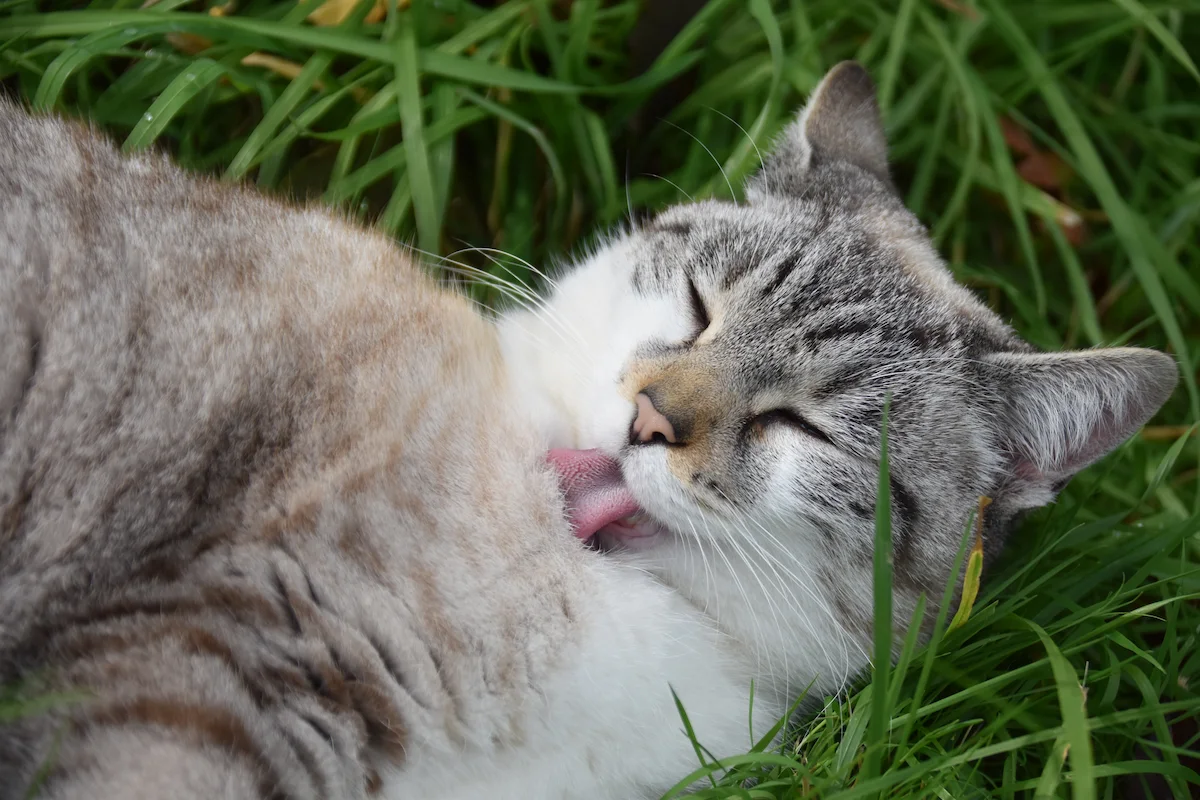
Senior cat toileting hygiene may become more important when urine, faeces, damp litter or staining starts collecting around an older cat’s back end, legs or tail.
A small mess can often be managed with brief, gentle spot-cleaning. Repeated soiling, sore skin or a sudden change in toileting habits is worth discussing with your vet because cleaning alone does not explain why it is happening.
Disclaimer: This article is for educational purposes only and is not a substitute for professional veterinary advice. Speak to your vet if soiling is new or repeated, the skin is red or broken, or your cat has diarrhoea, constipation, straining, blood, pain or behaviour changes. Seek urgent advice if your cat repeatedly tries to urinate but passes little or nothing.
Key takeaway: Clean small areas of soiled fur with a soft cloth dampened with lukewarm water, wipe gently and dry the coat afterwards. Do not scrub, pull dried material from the fur or force your cat to be handled. Ask for help when the area is heavily soiled, tightly matted, sore or repeatedly becoming dirty.
Quick answer: senior cat toileting hygiene
For a small toileting mess, clean only the affected area with a soft cloth and lukewarm water. Dampen dried material before wiping, keep the session brief and stop if your cat becomes tense or uncomfortable.
Dry the fur gently afterwards. Speak to your vet or veterinary team when soiling keeps returning, the skin looks sore, tight mats are present or your cat cannot be cleaned without distress.
Why toileting hygiene can become harder for senior cats
Older cats may find toileting or grooming more difficult because of:
- reduced flexibility or mobility
- difficulty balancing or squatting in the tray
- reduced grooming
- long or thick fur
- softer or harder stools
- difficulty entering or turning inside the tray
- changes in weight or body condition
These changes should not automatically be dismissed as ageing. A repeated hygiene problem can provide useful information about your cat’s mobility, grooming, litter tray access or toileting pattern.
For a broader overview of urine, stool and litter tray changes, see our Senior Cat Toileting Changes guide.
What owners may notice
You may notice:
- damp or stained fur around the back legs, tummy or tail
- faeces or litter caught in the coat
- clumped, matted or separated fur
- a stronger smell after toileting
- increased licking around the back end
- sensitivity when the area is touched
- damp or soiled bedding
- more mess around the litter tray
Check particularly carefully when your cat is long-haired, less mobile, carrying extra weight or grooming less than usual.
How to clean a senior cat gently after toileting
Spot-cleaning is usually less stressful than bathing the whole cat.
A gentle approach is:
- Choose a quiet moment when your cat is calm.
- Prepare a soft cloth, lukewarm water and a dry towel.
- Clean only the affected area.
- Dampen dried material before trying to remove it.
- Wipe gently rather than scrubbing or pulling.
- Stop if your cat becomes tense, vocal, frightened or uncomfortable.
- Dry the fur gently with the towel.
Keep the session brief. If your cat appears painful or will not tolerate the area being touched, stop and speak to your vet.
What not to use on senior cat fur or skin
Avoid:
- household cleaners or disinfectants
- essential oils
- fragranced wipes
- human shampoo or harsh soap
- human wet wipes unless your vet confirms they are suitable
- creams or medicated products not prescribed for your cat
- scissors close to the skin
- forceful bathing or restraint
A soft cloth and lukewarm water are usually the gentlest starting point for a small mess. Ask your veterinary team for advice when the area is heavily soiled, sore or difficult to clean safely.
When a fuller clean may be needed
Ask for professional help when:
- a large area of fur is urine-soaked or heavily soiled
- dried faeces cannot be removed gently
- the skin is red, broken, swollen or painful
- tight mats are present
- your cat becomes distressed during cleaning
- you cannot handle the area safely
A vet, veterinary nurse or suitable professional groomer can help decide how the fur can be cleaned or trimmed without causing unnecessary discomfort.
Long-haired senior cats and hygiene trims
Long or thick fur can trap urine, faeces and litter, particularly when a senior cat is less flexible or grooming less.
A professional hygiene trim may help some cats, but do not cut tight mats or trim close to the skin with scissors at home. Matted fur can pull the skin upwards, making accidental injury more likely.
Gentle brushing before mats form may help when your cat accepts it comfortably. Stop when brushing causes discomfort or stress.
For broader coat-care difficulties, see our Senior Cat Grooming Problems guide.
Litter tray access can affect hygiene
A senior cat may get urine, faeces or litter on their fur if entering, turning or squatting in the tray has become difficult.
Check that the tray is easy to reach, stable and large enough for your cat to use comfortably. If access seems to be part of the problem, our Best Litter Box for Senior Cats guide covers senior-friendly tray setup in more detail.
Do not make several sudden changes at once if your cat is already having toileting difficulties.
Bedding and home setup for easier hygiene
Small home changes can make accidents and cleaning easier to manage:
- use washable covers on favourite resting places
- keep spare bedding ready
- place an easy-clean mat near the litter tray
- check beds and resting spots for dampness
- keep the route to the tray clear
- clean accidents calmly without scolding
Treat recurring mess as information rather than bad behaviour. Note whether it appears alongside softer stools, difficulty squatting, reduced grooming or problems reaching the tray.
Skin signs to watch around the back end and legs
Repeated contact with urine, faeces or damp litter can irritate the skin.
Watch for:
- redness or soreness
- damp or broken skin
- fur loss or scabs
- swelling
- a strong or unusual smell
- repeated licking or chewing
- flinching when touched
Do not scrub sore skin or apply creams unless your vet has advised them. Speak to your vet when these signs are new, repeated or worsening.
When to speak to your vet about toileting hygiene
Speak to your vet when:
- soiling is new, repeated or becoming more frequent
- the skin is red, sore, smelly or broken
- stools are repeatedly loose, hard or difficult to pass
- your cat is straining
- blood is present in urine or faeces
- appetite, weight, mobility, grooming or behaviour has changed
- handling the area appears painful
Seek urgent veterinary advice when:
- your cat repeatedly tries to urinate but passes little or nothing
- there is marked pain or distress
- bleeding is significant
- your cat appears weak, collapsed or very unwell
You do not need to determine the cause before contacting your vet. Explain what type of soiling you have noticed, how often it occurs and whether anything else has changed.
If urinating outside the tray is the main concern, see our Senior Cat Peeing Outside the Litter Tray guide.
Final thoughts
Senior cat toileting hygiene is best kept gentle and simple. Spot-clean small areas, dry the fur afterwards and stop when handling causes pain or distress.
Easier litter tray access, washable bedding and regular visual checks may help prevent some mess from becoming a larger problem. Repeated soiling, tight mats or sore skin deserves a conversation with your vet rather than increasingly forceful cleaning.
For a wider overview of health changes owners may notice in older cats, see our Senior Cat Health guide.
FAQs
Why is my senior cat getting poo stuck in their fur?
Reduced flexibility, long fur, reduced grooming, softer stools or difficulty squatting can all contribute. Speak to your vet when it happens repeatedly or appears alongside loose stools, constipation, blood, straining or discomfort.
Can I use baby wipes on my senior cat?
Avoid ordinary baby wipes unless your vet confirms they are suitable for your cat. Fragrances and other ingredients may irritate the skin or be licked from the coat. A soft cloth and lukewarm water are usually a gentler first option for a small mess.
Should I bathe my senior cat if they smell of urine?
Spot-cleaning is usually less stressful than a full bath. Ask your veterinary team for help when a large area is soaked, the skin looks sore or your cat cannot be cleaned without distress.
Should I trim the fur around my senior cat’s bottom?
A professional hygiene trim may help some long-haired cats. Do not cut tight mats or trim close to the skin with scissors at home because the skin can be pulled into the matted fur.
When is dirty fur a vet issue?
Speak to your vet when dirty fur is new, repeated, painful or linked with sore skin, diarrhoea, constipation, straining, blood, appetite changes, weight loss or altered toileting habits.