Older cat sleeping more can be a normal part of ageing, but it can still feel worrying when the change becomes noticeable. The key is working out whether this looks like a gradual shift from age, or a clear change from your cat’s usual pattern.
Disclaimer: This article is for educational purposes only and is not a substitute for veterinary advice. If your cat’s sleep change is sudden, or comes with changes in appetite, drinking, toileting, breathing, comfort, or behaviour, speak to your vet.
Key takeaway: Many older cats do sleep more, and that can be a normal part of ageing. What matters most is whether the change is gradual or sudden, and whether other changes have appeared too.
Quick answer: do older cats sleep more?
Yes, many older cats do sleep more than they did when they were younger. Senior cats may rest for longer, choose warmer or quieter places, and spend less time playing or roaming.
But a clear change in sleep should still be noticed. If your old cat is sleeping a lot but still eating, that can be less worrying than sleeping more alongside appetite loss, weight loss, hiding, weakness, breathing changes, litter tray changes, confusion, or behaviour that feels unlike them. If the change is new, marked, or worrying, speak to your vet.
International Cat Care says older cats often sleep for longer periods and are generally less active, while Cornell notes that older cats may sleep more but behaviour or health changes should not simply be written off as old age.
If you want broader context first, our guide to Senior Cat Health: A Practical Guide for Older Cats may help.
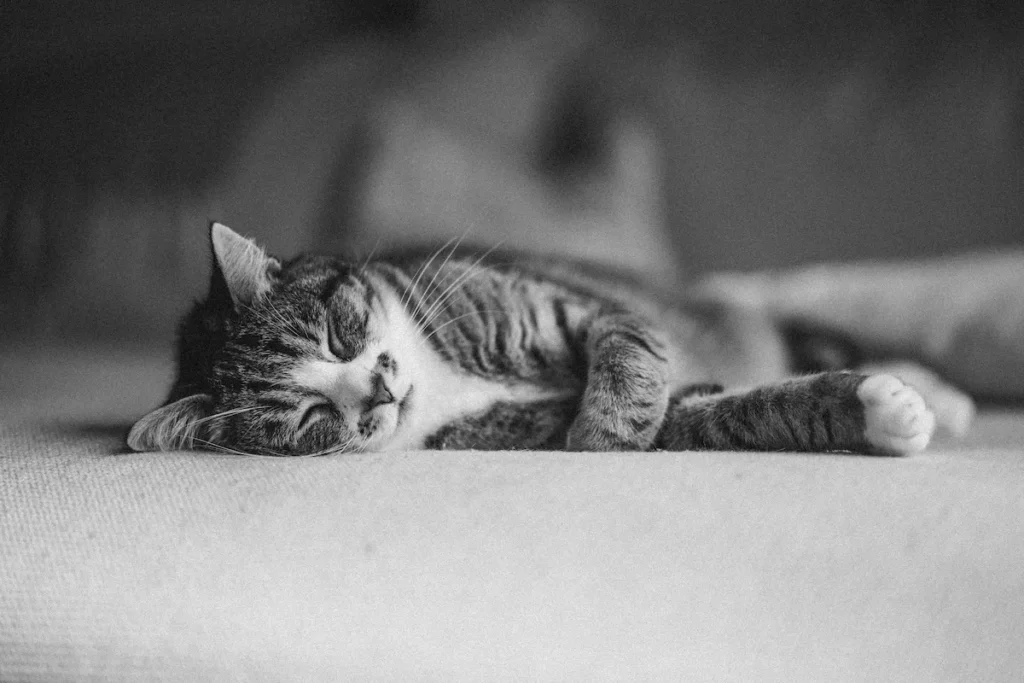
Why older cats often sleep more
Many older cats have shorter bursts of activity and longer rest periods in between. They may still have lively moments, but spend more of the day dozing or choosing quiet resting spots. International Cat Care says this is one of the common changes seen in older cats.
Common everyday reasons include:
- lower activity with age
- more resting between short busy periods
- colder weather or darker days
- a quieter household routine
- less stimulation, especially for indoor cats
This is why more sleep on its own is not automatically a red flag. The pattern matters more than the total number of naps.
Older cat sleeping more: what can still be normal
Sleeping more may still be fairly reassuring when the pattern looks like this:
- the change has been gradual, not sudden
- your cat still eats and drinks in their usual way
- litter tray habits are unchanged
- they still respond to you, food, and familiar sounds
- they still have some bright moments during the day
- they are moving around in their usual way, even if they are slower than they used to be
Cornell’s older-cat guidance supports this general picture: older cats may be less active and may sleep more, but changes in behaviour or health should still be noticed rather than simply put down to age.
For a wider look at age-related changes, see Signs of Ageing in Cats: What Changes Are Normal as Cats Get Older.
Old cat sleeping a lot but still eating
If your old cat is sleeping a lot but still eating, drinking, using the litter tray, and acting normally when awake, the pattern may be less concerning than sleepiness with obvious illness signs.
The useful question is whether this is normal for your cat. A gradual increase in rest can happen with age, but a sudden change, much deeper sleep, reduced interest in normal routines, or sleepiness alongside other changes is worth mentioning to your vet.
When to pay closer attention
Older cat sleeping more is worth paying closer attention to when the change is clear, recent, or appears alongside other changes.
It is sensible to pay closer attention if:
- the increase in sleep is sudden rather than gradual
- your cat seems withdrawn, flatter than usual, or less responsive
- appetite, drinking, or litter tray habits have changed
- hiding is new or happening more often
- breathing seems different when they are awake
- they seem less comfortable, less steady, or less willing to move normally
If sleeping more appears alongside hiding, clinginess, confusion, vocalising or other changes in normal routines, our Senior Cat Behaviour Changes guide may help you look at the wider pattern.
A useful rule of thumb is this: sleep changes plus other changes matter more than sleep changes alone.
A simple 3–7 day checklist
If you think your older cat is sleeping more than usual, it can help to track the pattern for a few days. A short set of notes is often more useful than trying to remember everything later.
Over 3–7 days, note:
- when the change started
- whether it feels gradual or sudden
- where they are sleeping
- whether they wake and respond normally
- appetite
- water intake
- litter tray habits
- grooming
- sociability
- mobility confidence
- breathing when awake
You can also use Senior Cat Health: A Practical Guide for Older Cats as a broader reference point.
Sleepier or possibly unwell? A plain-English comparison
It is not always obvious, but these comparisons can help.
Often more reassuring
- eats with normal interest
- still has some good moments during the day
- responds to you as usual
- toileting is normal
- still moves around in their usual way, even if slower
More worth mentioning
- seems flat or unusually withdrawn
- multiple changes appear at once
- looks uncomfortable or restless
- breathing seems different when awake
- seems weaker, less steady, or reluctant to move normally
You know your cat’s baseline best. If the change feels out of character for them, that is a fair reason to mention it.
If your cat is simply resting more and you want practical ideas for warm, comfortable and easy-to-reach sleeping areas, see our Senior Cat Resting Spots guide.
When to speak to your vet
It is sensible to speak to your vet if:
- the sleep change is sudden
- your cat seems withdrawn or not quite themselves
- appetite, drinking, or toileting has changed
- breathing seems different when awake
- your cat seems less comfortable or less confident moving around
- the pattern is continuing or worsening
- your instincts tell you something is off
You do not need to wait until a change feels dramatic. A short description of what you have noticed, especially over a few days, can be very helpful.
FAQs
Is it normal for an older cat to sleep more?
Yes, it can be. Many older cats do sleep more and become less active with age. What matters most is whether the change is gradual and whether everything else still seems normal.
My older cat is sleeping more but still eating. Is that reassuring?
It can be. If your cat is still eating well, toileting normally, responding to you, and having some bright moments, that is more reassuring than sleepiness plus other changes. It is still worth paying attention to the overall pattern.
Should I worry if my older cat is sleeping more and hiding?
Hiding alongside increased sleep is more worth noticing than sleep alone. If hiding is new, increasing, or comes with other changes, mention it to your vet.
How long should I monitor a change before mentioning it?
If it is a mild change and your cat otherwise seems normal, tracking it for 3–7 days can help you spot a pattern. But if the change is sudden or comes with appetite, drinking, toileting, breathing, or behaviour changes, it is sensible to speak to your vet sooner.
Final thought
Older cat sleeping more can be part of normal ageing, especially when the change is gradual and your cat otherwise seems like themselves.
If you are unsure, make a few notes and speak to your vet — you do not need to guess on your own.
External references
Cornell Feline Health Center — Loving Care for Older Cats.
International Cat Care — Special considerations for senior cats