Many cats do not drink large amounts of water in obvious ways, so it is not always easy to tell whether an older cat is drinking enough. Some cats sip quietly when no one is watching, while others get a lot of moisture from wet food.
Still, if you are wondering how to encourage an older cat to drink more water, it is worth making their water easier to reach, fresher, and more comfortable. Small changes around the home can often help, especially for senior cats who are stiffer, less confident, or more set in their routines.
Disclaimer: This article is for educational purposes only and is not a substitute for professional veterinary advice. If your cat is drinking much more or less than usual, eating less, losing weight, vomiting, seeming weak, or acting differently, speak to your vet.
Key takeaway: To encourage an older cat to drink more water, make water easy to reach, keep it fresh, use comfortable bowls, offer quiet drinking spots, and consider wet food or a fountain if suitable. Speak to your vet if drinking habits change suddenly or your cat seems unwell.
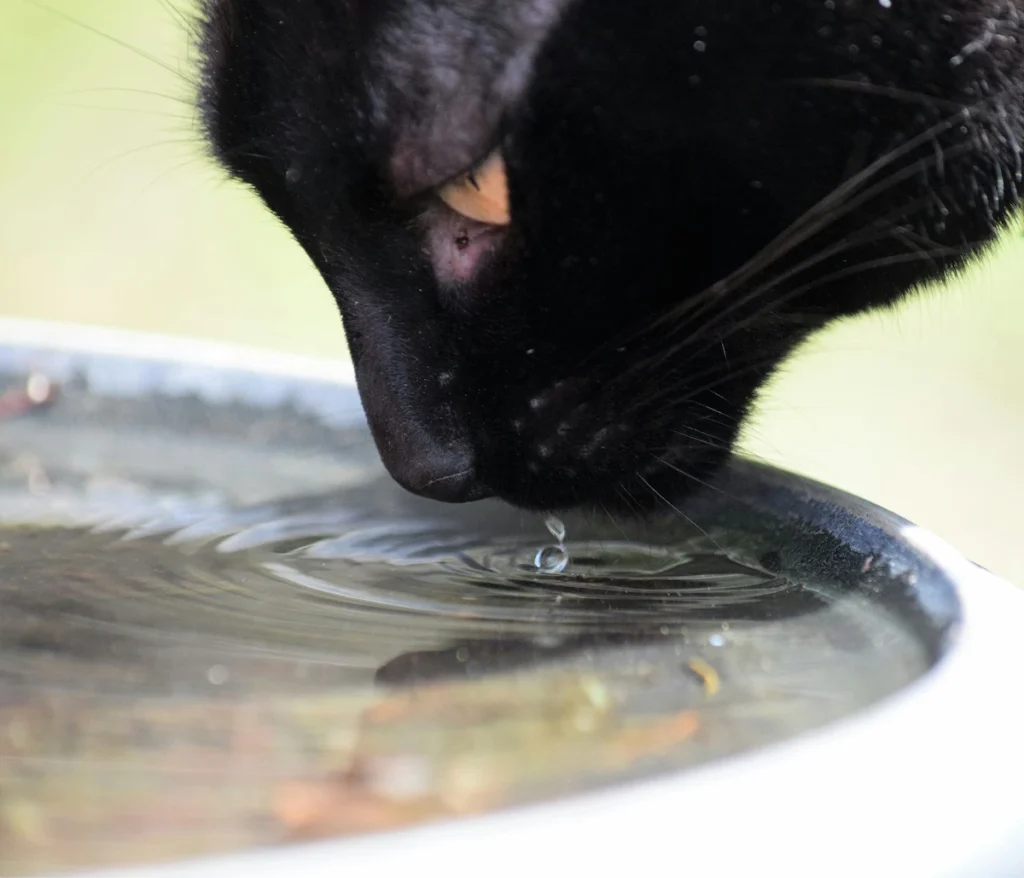
Quick answer: how to encourage an older cat to drink more water
To encourage an older cat to drink more water, try:
- Adding extra water bowls around the home
- Placing water near favourite resting spots
- Using wide, shallow bowls
- Keeping water fresh and bowls clean
- Moving water away from litter trays and noisy areas
- Making sure your cat can drink without jumping
- Offering wet food if it suits your cat
- Adding a small amount of water to food gradually, if accepted
- Trying a quiet water fountain
- Watching for changes in appetite, weight, toileting, and behaviour
Fresh water should always be available. Cats eating wet food may drink less from a bowl because wet food contains much more moisture than dry food. That can be normal for some cats, but any clear change in drinking habits should be looked at alongside appetite, weight, urination, and behaviour.
For a broader overview of health changes in later life, you may also find our guide to senior cat health helpful.
First, check whether your older cat is actually drinking less
Before changing everything at once, spend a few days calmly watching the pattern.
An older cat may seem to drink less because:
- They eat wet food
- They drink at night
- They drink from another bowl
- They drink outside
- Someone else refills the bowl
- Another pet uses the same water bowl
- The bowl has been spilled or moved
Instead of guessing, look for a wider pattern.
Ask yourself:
- Is the water bowl staying fuller than usual?
- Is your cat eating normally?
- Has their weight changed?
- Are they urinating more or less?
- Are they using the litter tray differently?
- Are they hiding, sleeping more, or seeming weaker?
- Have they vomited or had diarrhoea?
A small change in bowl level is not always a problem. A clear change in drinking, especially alongside other changes, is more important.
Why older cats may avoid the water bowl
Older cats can be particular about water. Sometimes the issue is not the water itself, but where it is, how the bowl feels, or how much effort it takes to reach.
The bowl may not feel comfortable
Some cats dislike deep or narrow bowls. If their whiskers touch the sides, or they need to lower their head awkwardly, they may avoid drinking as often.
Try to notice whether your cat:
- Sniffs the water but walks away
- Drinks from puddles, taps, or glasses instead
- Paws at the water
- Seems awkward when lowering their head
- Prefers one bowl over another
Wide, shallow bowls can be easier for some cats because they allow the cat to drink without pressing their whiskers against the sides.
The water may be hard to reach
A water bowl that was fine years ago may be less suitable for a senior cat now.
Older cats may find it harder to:
- Walk upstairs for water
- Jump onto a counter
- Cross slippery flooring
- Reach a bowl in a busy room
- Bend comfortably to a very low or awkward bowl
A simple fix is to place water where your cat already spends time.
The location may feel stressful
Cats often prefer quiet, safe drinking spots. A bowl may be ignored if it is:
- Next to a litter tray
- Close to a washing machine or tumble dryer
- In a busy hallway
- Beside a dog’s bowl
- In a corner where your cat feels trapped
- In a shared area where another cat blocks access
This matters more in older cats because they may be less confident, less mobile, or less willing to compete for resources.
Your cat may not feel well
Sometimes a drinking change is not about the bowl.
Dental discomfort, nausea, pain, kidney issues, diabetes, and other health problems can sometimes affect drinking, eating, urination, or behaviour. This does not mean you should assume the worst. It simply means changes in drinking should be viewed as part of the bigger picture.
You do not need to work out the cause yourself. Your role is to notice what has changed and share that information with your vet.
Gentle ways to help a senior cat drink more
The safest approach is to make drinking easier without forcing anything. Try one or two changes at a time so you can see what your cat actually prefers.
The best way to encourage an older cat to drink more water is usually to reduce small barriers rather than forcing a big change.
Add more water bowls around the home
One bowl may not be enough for an older cat.
Try placing water:
- Near a favourite sleeping spot
- On each floor of the home
- Away from litter trays
- Away from food if your cat prefers that
- In quiet rooms your cat already uses
- Somewhere your cat can reach without jumping
This is especially useful if your cat has stiff joints, reduced confidence, or limited access to parts of the home.
Try a wide, shallow bowl
A wide, shallow bowl can make drinking feel easier.
Look for a bowl that is:
- Wide enough that whiskers do not press against the sides
- Shallow enough for easy access
- Stable and not easy to tip
- Made from ceramic, glass, or stainless steel
- Easy to wash
Avoid changing every bowl at once. Keep the old bowl available while testing the new one.
Keep water fresh and bowls clean
Some cats are very sensitive to smell and taste.
Helpful habits include:
- Refreshing water daily
- Washing bowls regularly
- Rinsing away any cleaning product smell
- Replacing scratched plastic bowls if they hold odours
- Keeping a spare bowl in rotation
If your cat drinks from glasses, taps, or puddles, freshness may be part of the appeal.
Separate food and water if your cat prefers it
Some cats prefer drinking water away from their food.
You can test this gently by placing one extra bowl in a quiet area away from meals. Do not remove the original bowl straight away. Let your cat choose.
This can also help in multi-cat homes, where one cat may quietly avoid a shared feeding area.
Make water easier for stiff cats to reach
For senior cats, access is often more important than persuasion.
Try to make water available without:
- Jumping
- Climbing stairs every time
- Crossing slippery floors
- Passing another pet
- Walking far from resting areas
If the floor around the bowl is slippery, a stable non-slip mat may help. Just make sure the mat itself does not slide or make your cat feel unsteady.
Try wet food if suitable
Wet food can support fluid intake because it contains much more moisture than dry food. Some cats eating wet food may naturally drink less visible water from a bowl because they are getting more moisture through their meals.
However, appetite matters most. Do not make sudden food changes just to increase water intake.
Speak to your vet before changing food if your older cat:
- Has a medical condition
- Is on a prescribed diet
- Has digestive upset
- Has a poor appetite
- Is losing weight
- Has recently been unwell
If your cat is eating less as well as drinking differently, you may also find our guide to senior cat appetite changes helpful.
If you do introduce wet food, do it gradually and keep your cat’s normal eating pattern in mind.
Add a little water to food gradually
Some cats accept a small amount of water mixed into wet food. Others dislike it.
If you try this:
- Start with a very small amount
- Mix it in gently
- Keep the texture familiar
- Watch whether your cat still eats well
- Stop if your cat refuses the food
Do not make the food so watery that your cat eats less. For an older cat, reduced food intake can become a bigger concern than the original hydration worry.
Consider a quiet water fountain
Some cats enjoy moving water. A fountain may encourage drinking if your cat likes taps or running water.
But it is not essential, and it will not suit every senior cat.
A good fountain for an older cat should be:
- Quiet
- Stable
- Easy to clean
- Easy to reach
- Not intimidating
- Used alongside a normal water bowl
Keep a still water bowl available at all times. If your cat dislikes the fountain, remove it and return to a simpler setup.
For more detailed setup advice, see our guide to senior cat water bowl placement, including where to put bowls, when fountains may help, and how to make drinking easier for older cats.
What not to do when trying to increase water intake
It is understandable to worry when an older cat seems to drink less. But some approaches can make things worse or delay proper help.
Avoid:
- Forcing water into your cat’s mouth
- Syringing water unless your vet has specifically advised and shown you how
- Adding milk, broths, flavourings, supplements, or electrolyte products without checking they are suitable
- Suddenly switching foods
- Making food so wet that your cat refuses it
- Removing familiar bowls too quickly
- Assuming a fountain will solve a health-related drinking change
- Waiting too long if your cat seems unwell
The goal is to make drinking easier, not to pressure your cat.
When to speak to your vet
Speak to your vet if your older cat:
- Drinks much more or much less than usual
- Is eating less
- Is losing weight
- Is vomiting or has diarrhoea
- Seems weak, withdrawn, painful, or confused
- Is urinating more, less, or outside the litter tray
- Has bad breath, drooling, or difficulty eating
- Has changes such as tacky-feeling gums, sunken-looking eyes, or seems generally unwell
- Has a sudden drinking change after being stable
You do not need to know what is causing the change before asking for help. Your role is to notice the pattern and explain what has changed.
If your cat is also drinking more than usual or urinating more, our guide to senior cat kidney disease explains why those changes are worth mentioning to your vet.
Simple hydration checklist for older cats
Use this checklist as a calm starting point.
- Fresh water is available every day.
- There are at least two water stations.
- One bowl is near a favourite resting area.
- Water is away from litter trays.
- Bowls are wide, shallow, stable, and easy to clean.
- Bowls are washed regularly.
- Your cat can drink without jumping.
- Wet food has been considered if suitable.
- A fountain has been tested only if your cat seems comfortable with it.
- Normal bowls remain available even if using a fountain.
- Appetite, weight, urination, and behaviour are being watched.
- Your vet is contacted if drinking changes are sudden or paired with other signs.
FAQs
Why is my older cat not drinking much water?
Your older cat may not be drinking much visible water because they eat wet food, drink when you are not watching, or prefer another water source. They may also avoid a bowl if it is uncomfortable, hard to reach, too close to a litter tray, or in a stressful place.
If this is a clear change for your cat, especially with appetite, weight, toileting, or behaviour changes, speak to your vet.
How can I help a senior cat drink more water?
You can help a senior cat drink more water by adding extra bowls, keeping water fresh, using wide shallow bowls, and placing water in quiet, easy-to-reach spots. Wet food, a small amount of added water, or a quiet fountain may also help if your cat accepts them.
Make changes gently and avoid anything that reduces your cat’s appetite.
Is wet food enough water for an older cat?
Wet food can contribute useful moisture, but fresh drinking water should still be available every day.
Some cats on wet food drink less from a bowl because they are getting more moisture from meals. That can be normal for some cats, but any clear change in drinking, eating, weight, urination, or behaviour should be discussed with your vet.
Should I add water to my older cat’s food?
You can try adding a very small amount of water to wet food if your cat accepts it. Keep the texture familiar and watch whether your cat still eats normally.
If your cat refuses the food, go back to their usual meal. Do not let a hydration change reduce food intake, especially in an older cat.
Are water fountains good for senior cats?
Water fountains can help some senior cats, especially those who seem interested in moving water. Other older cats dislike the sound, movement, or unfamiliar shape.
If you try a fountain, choose a quiet one that is easy to clean. Keep a normal water bowl available too.
When should I worry about my older cat drinking less?
One quiet day is not always a problem, but a clear pattern matters.
Speak to your vet if your older cat is drinking less and also eating less, losing weight, vomiting, having diarrhoea, seeming weak, hiding more, urinating differently, or acting unlike themselves.
Final thoughts
Encouraging an older cat to drink more water is usually about comfort and access. Fresh water, quiet locations, wide bowls, and easy placement can make drinking feel simpler for a senior cat.
The safest way to think about how to encourage an older cat to drink more water is to make drinking easier, more appealing, and less stressful, rather than trying to force a change.
Keep the changes gentle. Watch the wider pattern. If drinking habits change suddenly or your cat seems unwell, speak to your vet rather than trying to manage the problem at home.
External references
Cornell Feline Health Center — Hydration
Cats Protection — 8 tips to get your cat to drink more water