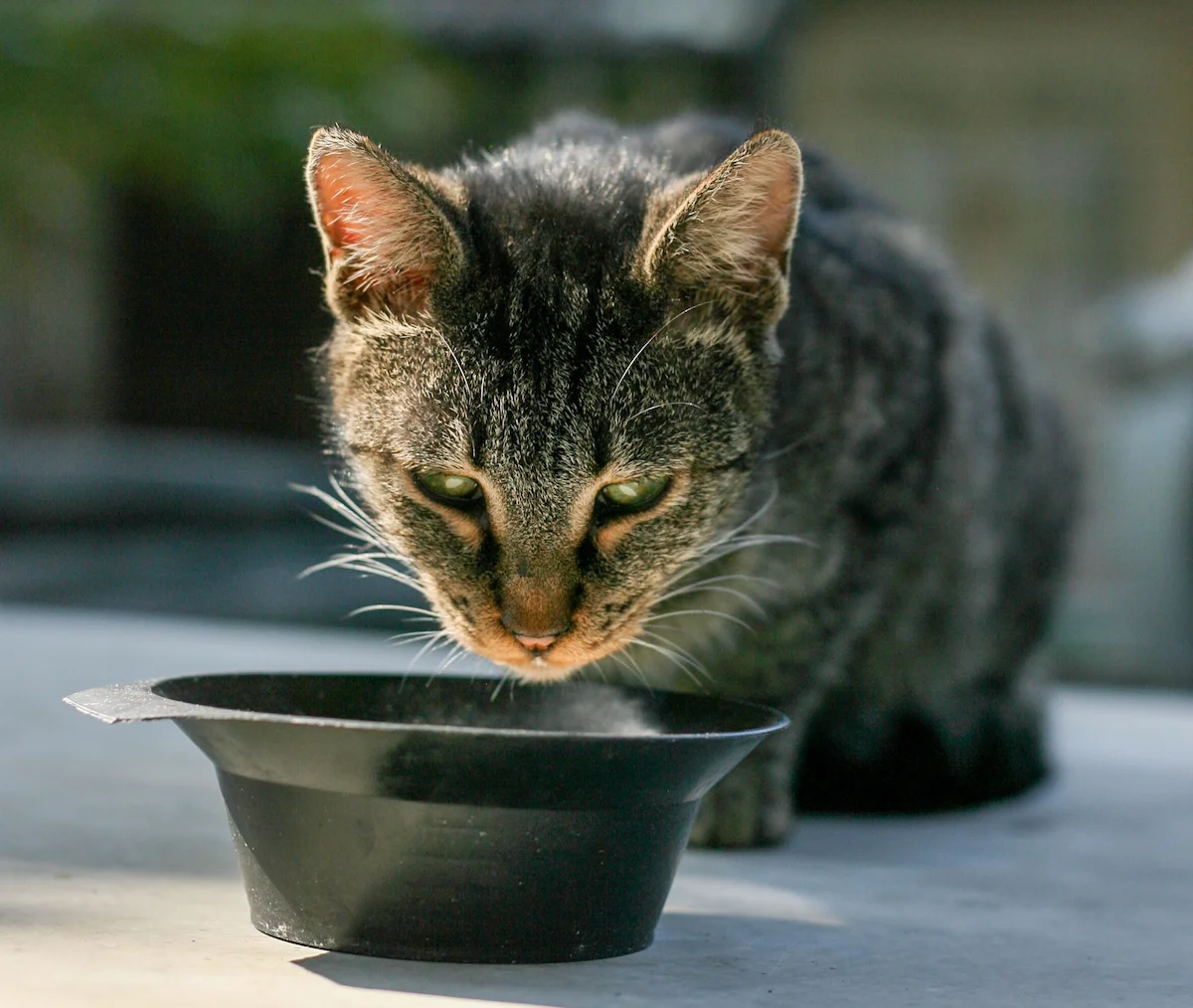
Diabetes in older cats can be easy to miss because the first changes may be gradual. Owners may first notice increased thirst, more urination, weight loss despite eating, appetite changes or reduced energy.
These signs do not confirm diabetes and can occur with other health problems in older cats. If a change is new or persistent, note the pattern and speak to your vet.
Disclaimer: This article is for educational purposes only and is not a substitute for professional veterinary advice. If your cat is losing weight, drinking more, urinating more, vomiting, seeming weak, or acting differently, speak to your vet.
Key takeaway: Diabetes in older cats may show through increased drinking, larger wees, weight loss despite eating, appetite changes or reduced energy. These signs can have other causes, so look for patterns and speak to your vet rather than trying to diagnose diabetes at home.
Quick answer: signs of diabetes in older cats
Early signs owners may notice include:
- drinking more than usual
- urinating more often or producing larger litter tray clumps
- losing weight despite eating normally or more than usual
- asking for food more often
- seeming tired, quieter or less active
- reduced grooming or a duller coat
Cornell Feline Health Center notes that weight loss despite a good appetite and increased thirst and urination are common signs. These changes do not confirm diabetes, so a vet check is needed to understand the cause.
Why diabetes can be easy to miss in older cats
Diabetes can be harder to spot in older cats because many early signs can look like general ageing at first.
An older cat may already sleep more, move less, groom less thoroughly, or have small changes in appetite. If the changes happen slowly, they can be easy to explain away as “just getting older”.
It can also be harder to notice drinking and litter tray changes if:
- more than one cat shares the same water bowl
- several cats use the same litter tray
- your cat drinks from outdoor sources, taps or sinks
- weight loss happens gradually
- your cat has a thick coat that hides body changes
This is why patterns matter. A single change may not tell you much, but several changes together are worth taking seriously.
For broader guidance on health changes in older cats, see our Senior Cat Health guide.
1. Drinking more than usual
One of the most noticeable signs owners may see is an older cat drinking more.
You may notice that:
- the water bowl empties faster
- your cat visits the bowl more often
- your cat starts drinking from taps, sinks or unusual places
- your cat seems more interested in water than before
- you are refilling bowls more often than usual
Drinking more does not automatically mean diabetes. Older cats can drink more for several reasons, including kidney disease, thyroid disease and other health problems.
The important point is that a new or persistent increase in thirst is worth mentioning to your vet. This is especially true if it happens alongside weight loss, appetite changes or larger wees.
For a closer look at thirst changes, see Senior Cat Drinking More: Possible Reasons and When to Mention It.
2. Urinating more or leaving larger litter tray clumps
Increased urination often goes hand in hand with increased drinking. Owners may notice this first in the litter tray.
You may see:
- larger wet patches
- heavier litter clumps
- a tray that needs cleaning more often
- more frequent trips to the litter tray
- accidents if the tray becomes wet or uncomfortable quickly
In a multi-cat home, it can be difficult to know which cat is producing more urine. If you are unsure, simply note what you can see. Your vet does not need a perfect report — just a clear description of what has changed.
Litter tray changes are clues, not proof. They are still useful because they help your vet decide what questions to ask and what checks may be needed.
3. Weight loss, even if your cat is eating
Weight loss in an older cat should not be ignored, especially if your cat is still eating well.
You may notice that:
- your cat feels bonier over the spine, hips or shoulders
- their collar feels looser
- their face looks more drawn
- they seem thinner when you stroke them
- they are eating but not maintaining condition
Some cats with diabetes may lose weight despite having a good or increased appetite. However, weight loss in senior cats can have many possible causes, so it should not be treated as a diabetes sign on its own.
To track gradual weight changes at home, see How to Weigh Your Cat at Home.
4. Appetite changes
Appetite changes can be confusing because they do not always look the same.
Some owners notice that their older cat seems hungrier. Others notice that appetite becomes less predictable.
You may see:
- asking for food more often
- finishing meals quickly
- seeming hungry soon after eating
- eating well but still losing weight
- appetite changing from day to day
Avoid making major diet changes if you suspect diabetes or another health issue. This is especially important if your cat is older, losing weight, vomiting, or has other known health conditions.
Food changes should be discussed with your vet, because appetite and weight changes need proper context.
For more on appetite patterns, see Senior Cat Appetite Changes: What’s Common as Cats Age.
5. Tiredness, reduced activity or looking generally less well
Not every sign is as obvious as drinking or weight loss.
Some older cats simply seem less bright than usual. You may notice that your cat:
- sleeps in different places
- plays less
- grooms less often
- has a duller or less tidy coat
- seems quieter
- avoids jumping
- appears less steady or less confident
These signs are very general. They can be linked with many senior-cat issues, including pain, arthritis, dental problems, kidney disease, thyroid disease or general illness.
They matter more when they appear alongside increased thirst, larger wees, weight loss or appetite changes.
6. Walking or back-leg weakness
Some cats with diabetes may develop changes in the way they use their back legs. An owner might notice a new wobbly gait, weakness or an unusual way of placing the back feet.
These changes are not specific to diabetes. Arthritis, pain, injury and other health problems can also affect movement in an older cat.
If your cat develops a new walking or back-leg change, especially alongside increased thirst, urination or weight loss, note when it started and speak to your vet.
Why these signs need a vet check, not a home diagnosis
The signs above can be useful clues, but they cannot confirm diabetes at home.
Increased drinking, urination, weight loss and appetite changes can overlap with several senior-cat health conditions. That is why these signs are useful clues, but not enough to confirm the cause at home.
Your vet may need to examine your cat and may suggest tests such as blood or urine checks. This helps avoid guessing and gives a clearer picture of what is happening.
It is best not to try to manage suspected diabetes with home remedies, supplements or sudden food changes. If diabetes or another health condition is possible, your cat needs proper veterinary assessment.
For plain-English explanations of common test terms, see Senior Cat Blood Test Results.
What to note before speaking to your vet
You do not need to work out the cause before contacting your vet. A few simple notes can help show the pattern.
Record:
- when you first noticed the change
- which changes are happening together
- whether they are becoming more noticeable
- anything that makes drinking, urination or appetite harder to monitor, such as shared bowls or litter trays
Even brief notes on your phone can give your vet useful context.
When to speak to your vet
Speak to your vet if changes such as increased drinking or urination, unexplained weight loss, appetite changes or reduced energy are new, persistent or happening together.
Seek prompt veterinary advice if your cat becomes very weak, stops eating, vomits repeatedly, collapses or seems suddenly very unwell.
These signs can have several causes in older cats, so it is safer to have the pattern assessed than to assume diabetes is the reason.
Final thoughts
Diabetes in older cats cannot be diagnosed from home observations alone, but owners are often the first to notice changes in normal routines.
Increased thirst, more urination, weight loss despite eating, appetite changes or reduced energy are useful clues to record. If these changes are new, persistent or happening together, speak to your vet.
Noting when the changes started and whether they are becoming more noticeable can give your vet useful context.
FAQs
Can older cats get diabetes?
Yes. Older cats can develop diabetes, and owners may first notice changes in drinking, urination, appetite, weight, energy or coat condition. These signs can also have other causes, so a vet check is needed.
What are the early signs of diabetes in older cats?
Early signs may include drinking more, urinating more, larger litter tray clumps, weight loss, appetite changes, tiredness or reduced grooming. These signs do not confirm diabetes, but they are worth mentioning to your vet.
Can I tell if my cat has diabetes from drinking more water?
No. Drinking more water can happen for several reasons in older cats. It is a useful sign to notice, but your vet would need to check your cat properly before confirming the cause.
Should I change my older cat’s food if I suspect diabetes?
No major diet changes should be made without veterinary guidance. This is especially important if your older cat is losing weight, eating differently, vomiting, or has other health conditions.
Is diabetes in older cats an emergency?
Early signs are not always an emergency, but prompt veterinary advice is needed if your cat is very weak, not eating, vomiting repeatedly, collapsing, or seems suddenly very unwell.
External references
Cornell Feline Health Center — Feline Diabetes
International Cat Care — Diabetes Mellitus in Cats