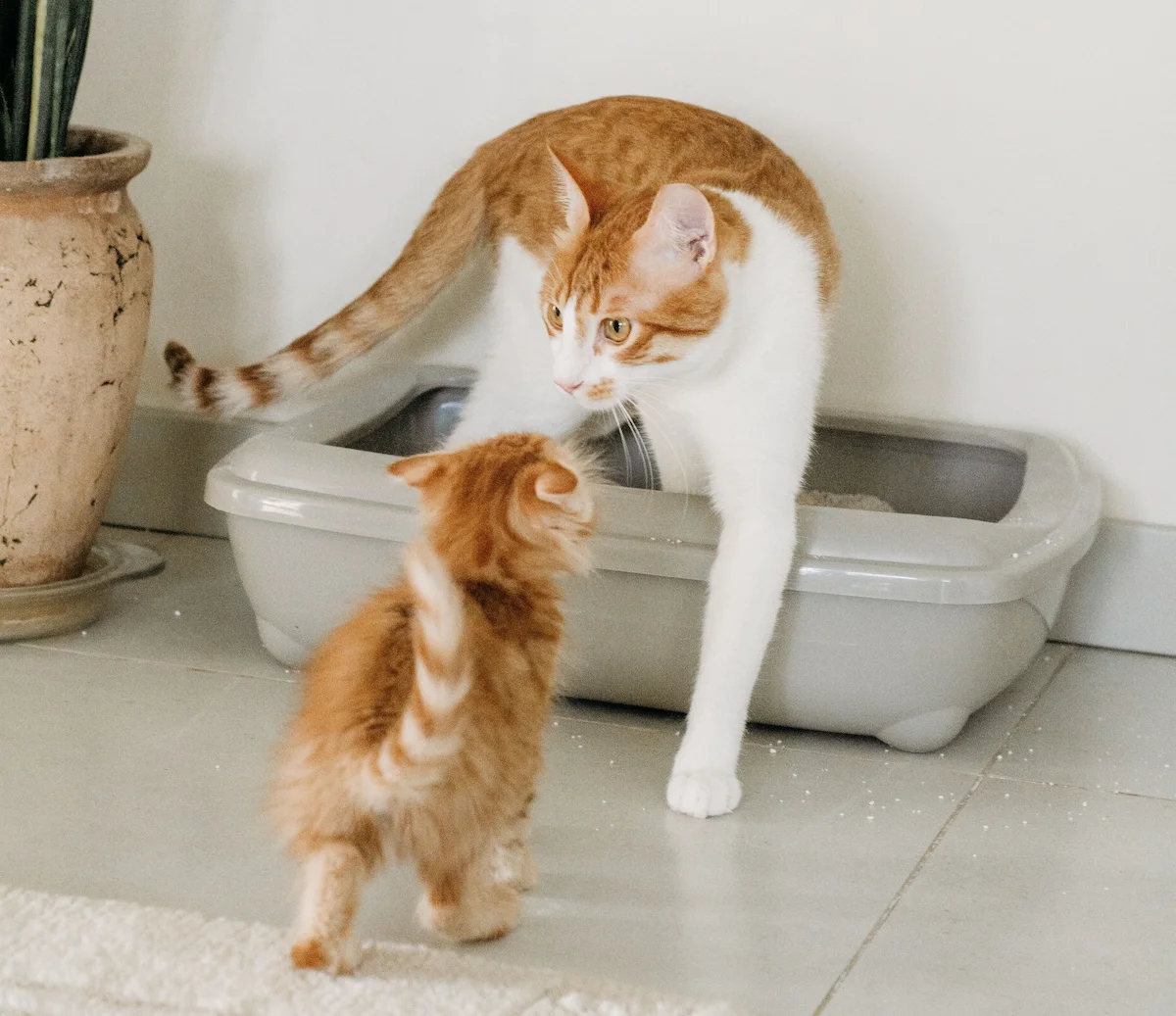
A senior cat missing the litter tray can be frustrating to clean up, but it is not usually a sign that your cat is being difficult on purpose. In many cases, an older cat may still be trying to use the tray, but something about access, comfort, positioning, timing, or confidence has become harder.
This guide explains the common reasons a senior cat may miss the litter tray, what you can safely check at home, and when it is sensible to speak to your vet.
Disclaimer: This article is for educational purposes only and is not a substitute for professional veterinary advice. If your cat is in pain, losing weight, vomiting frequently, straining, passing blood, or acting differently, speak to your vet.
Key takeaway: A senior cat missing the litter tray may still be trying to use it. Start by checking whether the tray is easy to enter, large enough to turn around in, stable underfoot, and placed somewhere your cat can reach comfortably. If the change is new, repeated, or comes with other symptoms, speak to your vet.
Quick answer: why a senior cat may miss the litter tray
If an older cat is still trying to use the litter tray but urine or faeces ends up beside it or over the edge, start by checking tray size, entry height, stability and how your cat positions themselves inside.
Older cats may find it harder to step fully into the tray, turn around, squat comfortably or keep their back end inside, especially if they are stiff, less steady or the route to the tray is awkward.
If your cat is avoiding the tray completely or toileting elsewhere in the home rather than simply missing while trying to use it, see our Senior cat peeing outside the litter tray guide instead.
Missing the tray is not always the same as avoiding it
A cat who misses the litter tray may still be trying to use it. That is slightly different from a cat who avoids the tray completely.
For example, your cat may:
- Walk into the tray, but urine goes over the side
- Put their front paws inside while their back paws stay outside
- Toilet just beside the entrance
- Scratch around the tray afterwards
- Use the tray sometimes, but not reliably
- Look awkward when turning around
- Seem to rush towards the tray but not quite make it
This distinction matters because missing the tray often points towards access, positioning, comfort, timing, or confidence.
In other words, your cat may think they are using the tray correctly, even if the mess ends up outside it.
Common reasons a senior cat may miss the litter tray
There is rarely one single explanation that fits every cat. The safest approach is to look for patterns and make simple checks.
The tray may be too small
A tray that worked well when your cat was younger may feel cramped as they age.
Your cat should have enough space to:
- Step fully inside
- Turn around
- Squat or stand comfortably
- Keep their back end inside the tray
- Leave without twisting awkwardly
If the tray is too small, your cat may enter it but still hang over the edge. From your cat’s point of view, they may feel as though they are using the tray properly, even though the mess lands outside it.
Cats Protection advises that litter trays for elderly cats should be large enough for the cat to turn around and should have a low side for easier access.
The sides may be too high
High-sided trays can reduce mess for younger, agile cats, but they can become harder for some senior cats to use.
A senior cat may step in halfway, hesitate, or avoid turning fully if the tray feels awkward. They may also place their front paws inside while their back paws remain outside.
This can lead to accidents near the entrance or over the edge.
A tray with one lower entry point can be easier than a tray with high sides all the way around. If spillage is a problem, a larger tray with a low entrance and higher remaining sides may be a better balance.
For more setup ideas, see Best litter box for senior cats: easier access, less mess.
Your cat may be standing partly outside the tray
Sometimes the tray itself is not being avoided. The issue is body position.
Watch your cat calmly if you can do so without disturbing them. Notice:
- Are all four paws inside?
- Is the back end over the edge?
- Does your cat turn around fully?
- Do they look cramped?
- Do they leave quickly?
- Do they seem unsure where to stand?
This is especially useful if you keep finding urine or faeces just outside the tray but your cat still appears interested in using it.
Stiffness or reduced mobility may make positioning harder
Some senior cats become less flexible with age. This can make ordinary movements more effortful, including stepping into a tray, turning around, squatting, or holding a comfortable toileting position.
This does not confirm arthritis or any specific condition. But if your cat seems stiff, reluctant to jump, slower on stairs, less willing to groom, or uncomfortable when moving, it is worth mentioning to your vet.
For more context on stiffness, movement changes and everyday access, see our Senior Cat Mobility & Pain guide.
Urgency may mean your cat does not quite make it
If your cat seems to rush to the tray, toilets near the entrance, or has accidents close by, urgency may be part of the pattern.
You might notice:
- More frequent visits to the tray
- Smaller amounts than usual
- Toileting just outside the tray
- Restlessness around the tray
- Crying or straining
- Changes in drinking, appetite, or energy
You do not need to diagnose the cause at home. If urgency, straining, blood, repeated trips, or obvious discomfort are present, speak to your vet for advice.
Vision changes may affect confidence
Some older cats become less confident moving through the home, especially in dim spaces or around changed furniture.
A tray that is tucked away, moved suddenly, or placed in a dark corner may become harder to find or approach comfortably. Your cat may still know where the tray is, but feel less steady getting into the right position.
Simple checks include:
- Is the route to the tray clear?
- Is the area easy to reach at night?
- Has furniture been moved recently?
- Is the tray beside anything noisy or startling?
- Is the floor slippery near the tray?
Keeping the tray area familiar can help some senior cats feel more settled.
What to check first at home
Start by watching one or two litter tray visits without hovering. Notice whether your cat enters fully, turns comfortably and keeps their back end inside the tray.
Then check the basics:
- Is the tray large enough and easy to step into?
- Is it stable and in a quiet, easy-to-reach place?
- Is the route clear and non-slip?
- Are accidents happening near the entrance, over the side or somewhere else?
- Are there any signs such as straining, crying, repeated trips or other changes in health or behaviour?
If you spot an obvious setup problem, make one small change at a time. If the toileting change is new, repeated or accompanied by other symptoms, speak to your vet.
When to speak to your vet
You do not need to panic if your senior cat misses the litter tray once. But repeated or new toileting changes are worth taking seriously, especially in an older cat.
Speak to your vet if:
- The change is new or keeps happening
- Your cat seems painful, stiff, weak, or wobbly
- Your cat is straining, crying, or visiting the tray often
- You notice blood
- There is diarrhoea or constipation
- Your cat is drinking more than usual
- Your cat is eating less or losing weight
- Your cat is vomiting
- Your cat is hiding, restless, confused, or unusually clingy
- Toileting changes happen alongside any other behaviour change
This does not mean something serious is definitely wrong. It simply means your vet is the right person to help rule out discomfort or health problems.
Simple changes that may make the litter tray easier to use
If the pattern suggests that access or positioning is part of the problem, small setup changes may help. A larger tray, lower entry, stable footing and an easier route can all make the tray more comfortable for an older cat to use.
Make changes gradually where possible, and keep watching how your cat enters, turns and positions themselves. For detailed tray-size, entry-height and setup guidance, see our Best Litter Box for Senior Cats guide.
What not to do if your senior cat misses the litter tray
A calm response helps both you and your cat.
Avoid:
- Punishing or scolding your cat
- Assuming your cat is doing it out of spite
- Blocking access to usual toileting areas suddenly
- Using strong-smelling cleaners near the tray
- Moving the tray repeatedly
- Making several big changes at once
- Ignoring repeated changes because your cat is old
Your cat is not trying to upset you. Missing the tray is usually a clue that something needs checking.
Final thoughts
A senior cat missing the litter tray can be messy and worrying, but it is often a clue rather than bad behaviour.
Start with simple checks: tray size, entry height, stability, the route to the tray, and how your cat stands inside it. Then look for patterns and any other changes in health or behaviour.
Small adjustments can make toileting easier and more dignified for an older cat. If the problem has started recently, keeps happening, or appears alongside other symptoms, speak to your vet.
If missing the tray is part of a wider change in your cat’s toileting habits, our Senior Cat Toileting Changes guide may help you look at the bigger picture.
FAQs
Why is my senior cat missing the litter tray?
A senior cat may miss the litter tray because the tray is too small, the sides are too high, they are standing partly outside, they feel stiff, they are rushing, or something else has changed. If it is new or repeated, speak to your vet.
Why does my older cat pee over the side of the litter tray?
This can happen when an older cat enters the tray but does not position their back end fully inside. A larger tray, lower entry, and watching how they stand can help you understand whether access or positioning is part of the problem.
Should I get a bigger litter tray for my senior cat?
A bigger open tray may help if your cat looks cramped, turns awkwardly, or often hangs over the edge. The tray should be easy to enter, stable on the floor, and large enough for your cat to turn around.
Can stiffness make a senior cat miss the litter tray?
Stiffness or reduced flexibility can make stepping in, turning, squatting, or positioning harder. This does not confirm a specific condition, but if stiffness is new, worsening, or affecting daily life, speak to your vet.
When should I speak to my vet about litter tray accidents?
Speak to your vet if the accidents are new, repeated, or happen with straining, blood, pain signs, diarrhoea, constipation, vomiting, weight loss, drinking more, weakness, hiding, confusion, or other behaviour changes.
External references
Cats Protection — Elderly cats: care guide for older cats