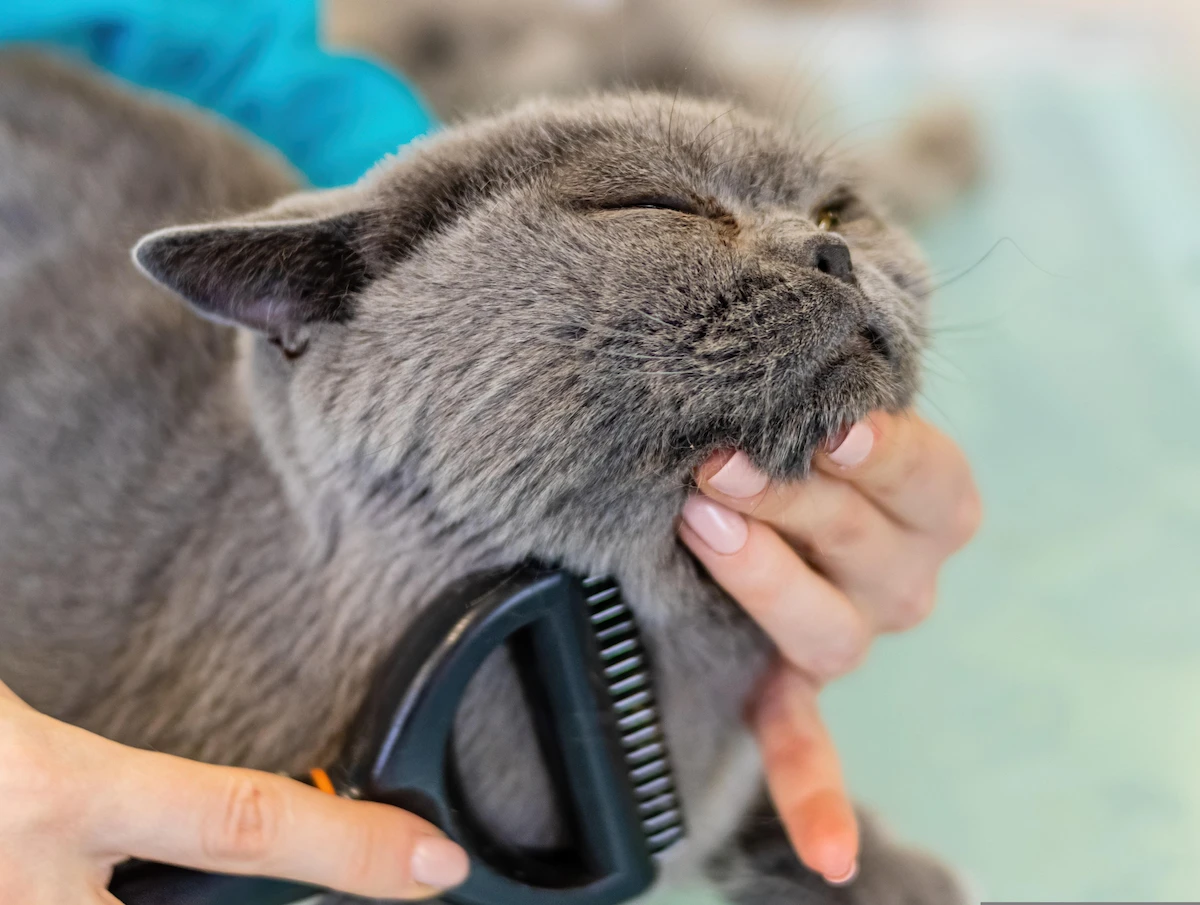
A senior cat oily coat can be worrying, especially if your cat used to look smooth, clean and well-groomed. You may notice greasy fur, clumps, dull patches, dandruff, mats, or a coat that seems harder for your older cat to keep tidy.
In senior cats, coat changes often have more than one possible explanation. Sometimes the issue is simple reduced grooming. Other times, an oily or unkempt coat may appear alongside stiffness, dental discomfort, weight change, skin irritation, or wider health changes.
Disclaimer: This article is for educational purposes only and is not a substitute for professional veterinary advice. If your cat is in pain, losing weight, vomiting frequently, drinking more, toileting differently, or acting unlike themselves, speak to your vet.
Key takeaway: A senior cat oily coat is often linked to reduced grooming, stiffness, weight changes, dental discomfort, skin irritation or wider health changes. It is not always an emergency, but it is worth speaking to your vet if the change is new, getting worse, or appears with changes in appetite, weight, drinking, toileting, movement or behaviour.
Quick answer: why does my senior cat have an oily coat?
A senior cat may develop an oily coat when they are no longer grooming as thoroughly as they used to. Older cats may find it harder to twist, stretch or reach certain areas, especially around the lower back, hips, tail base and belly.
An oily or greasy coat can also appear with:
- Stiffness or discomfort
- Weight gain or weight loss
- Dental or mouth discomfort
- Dandruff, mats or skin irritation
- Changes in appetite, thirst, toileting or behaviour
- Wider health changes that affect grooming or coat condition
You cannot tell the cause from the coat alone. The safest approach is to notice what has changed, check whether there are other signs, and speak to your vet if the oily coat is new, worsening or part of a bigger change.
For a wider overview of age-related health changes, you may also find Senior Cat Health: A Practical Guide for Older Cats helpful.
What an oily coat may look like in an older cat
An oily coat does not always look the same in every cat. Some owners describe it as greasy, waxy, clumpy, spiky, dull or generally unkempt.
You may notice:
- Fur that looks shiny or greasy in patches
- Hair separating into small clumps or spikes
- A sticky, heavy or waxy feel when you stroke your cat
- Greasy fur near the tail base or lower back
- Dandruff, flakes or dry-looking skin alongside oily fur
- Mats forming more easily than before
- A stronger coat or skin smell
- A coat that looks scruffy even though your cat used to groom well
The location matters too. Greasy fur around the lower back, hips or tail base may suggest your cat is struggling to reach those areas. Oily fur across several areas may be more noticeable if your cat is grooming less overall.
Why senior cats may develop oily or greasy fur
A senior cat oily coat does not point to one single cause. It is better to think of it as a visible clue that your cat’s grooming, comfort or general wellbeing may have changed.
Reduced grooming with age
Many cats groom themselves less effectively as they get older. This may happen gradually, so the coat can change before owners notice anything dramatic.
Older cats may:
- Sleep more
- Groom for shorter periods
- Struggle to reach the back or tail base
- Leave some areas looking clumpy or greasy
- Develop more mats, especially if they have long or thick fur
Cornell Feline Health Center notes that older cats may benefit from more hands-on grooming support if self-grooming begins to wane, and that a sudden lack of grooming may signal a health problem.
For broader coat-care guidance, you may also find Senior Cat Grooming Problems: Mats, Dandruff, Oily Coat useful.
Stiffness or discomfort
Grooming takes flexibility. A cat needs to bend, twist, balance and reach different parts of the body. If a senior cat feels stiff or uncomfortable, they may stop grooming certain areas properly.
You might notice your cat:
- Jumps less often
- Hesitates before climbing onto furniture
- Uses stairs more slowly
- Sleeps in easier-to-reach places
- Dislikes being stroked near the hips, back or legs
- Seems irritated when brushed in certain areas
A greasy coat does not prove your cat is in pain. But if oily fur appears alongside movement changes, it is worth looking at the bigger picture.
For related signs, see Senior Cat Pain Signs: Subtle Behaviours Owners Often Miss.
Weight changes
Weight gain can make grooming harder because some cats cannot comfortably reach around their body. Weight loss can also change the way the coat sits and may make a cat look generally less well.
Watch for:
- A rounder body shape
- Difficulty reaching the back end
- A bonier spine or hips
- Loose-looking skin or a scruffier coat
- Eating more or less than usual
Do not start a weight-loss plan or diet change just because the coat looks oily. In senior cats, unexplained weight change is a good reason to speak to your vet.
Dental or mouth discomfort
Cats use their mouth and tongue to groom. If your cat’s mouth feels uncomfortable, grooming may become less appealing.
Possible signs to notice include:
- Drooling
- Bad breath
- Eating on one side
- Dropping food
- Pawing at the mouth
- Avoiding hard food
- Grooming less than usual
These signs can have different causes, so they should not be used to self-diagnose. They are useful details to mention to your vet.
Skin irritation, dandruff or mats
Sometimes oily fur appears with skin changes. You may notice flakes, scabs, redness, scratching, licking, bald patches, mats or odour.
If the coat also looks flaky or dry, our guide to senior cat dandruff explains what owners may notice and when to speak to your vet.
Mats can be especially uncomfortable because they may pull on the skin. They can also hide irritation underneath, particularly in long-haired or thick-coated cats.
Do not cut mats out with scissors. Cat skin is thin and can be easy to nick, especially when mats sit close to the body. If mats are tight, painful, smelly or close to the skin, speak to your vet or a qualified groomer who is comfortable working with older cats.
Wider health changes
Sometimes a greasy or unkempt coat appears alongside wider health changes. This does not mean you should assume the worst, but it does mean the coat should not be viewed in isolation.
For example, Cornell Feline Health Center notes that cats with hyperthyroidism may sometimes have an unkempt, matted or greasy coat, usually alongside other changes such as weight loss, increased appetite, increased thirst, increased urination, vomiting, diarrhoea or increased activity.
That does not mean an oily coat equals hyperthyroidism. It simply shows why coat changes are worth mentioning when they appear with other changes.
For more on this specific condition, see Hyperthyroidism in Older Cats: Common Signs Owners May Notice.
What to check alongside a senior cat oily coat
Before speaking to your vet, it can help to note what else has changed. You do not need to interpret these signs yourself. The aim is simply to give your vet a clearer picture.
| What to check | What to notice |
|---|---|
| Appetite | Eating more, eating less, fussier eating or dropping food |
| Weight | Weight loss, weight gain or a bonier feel |
| Drinking | Drinking more or less than usual |
| Litter tray | More urine, less urine, diarrhoea, constipation or accidents |
| Movement | Less jumping, stiffness, slower stairs or avoiding favourite spots |
| Grooming | Grooming less, over-grooming, licking one area or mats |
| Skin | Redness, flakes, scabs, odour or sore-looking areas |
| Behaviour | Hiding, restlessness, irritability, clinginess or confusion |
A short note on your phone can be enough. Include when the coat change started, where it appears, whether it is getting worse, and whether your cat seems comfortable being touched.
When to speak to your vet
Speak to your vet if your senior cat’s oily coat is new, worsening, persistent or appears with other changes.
It is especially sensible to ask for advice if you notice:
- Weight loss or weight gain
- Drinking more or urinating more
- Vomiting, diarrhoea or toileting changes
- Reduced appetite or eating differently
- Bad breath, drooling or dropping food
- Stiffness, limping or reluctance to jump
- Hiding, restlessness, confusion or unusual behaviour
- Redness, scabs, flakes, odour or sore-looking skin
- Mats close to the skin
- Grooming that seems painful or stressful
You do not need to know the cause before booking a vet check. It is enough to say:
“My older cat’s coat has become oily, and I’ve noticed these other changes.”
That gives your vet a clear starting point.
For practical help with brushing and gentle coat care, see our Senior Cat Grooming guide.
What not to do if your senior cat’s coat looks oily
Some well-meaning home care can make things worse, especially if the skin underneath is sore or the coat change has a health-related cause.
Avoid:
- Using human shampoo
- Using essential oils
- Using medicated shampoos unless your vet advises them
- Cutting mats with scissors
- Forcing brushing if your cat seems painful or frightened
- Bathing your cat without advice if they are frail or stressed
- Starting supplements to “fix” the coat
- Changing diet suddenly without veterinary guidance
- Assuming it is “just old age” if other signs are present
A gentle brush is one thing. Trying to treat the coat without knowing why it has changed is different.
Can an oily coat be normal ageing?
Mild coat changes can happen as cats get older, especially if grooming becomes less thorough. A senior cat may have a slightly less glossy coat, more dandruff, or a few areas that need more brushing help.
But “normal ageing” should not be used to dismiss a clear change.
An oily coat is more concerning if it is:
- Sudden
- Getting worse
- Patchy or smelly
- Linked with mats or sore skin
- Happening alongside weight, appetite, drinking, toileting, movement or behaviour changes
Age can explain why grooming becomes harder, but it does not prove the coat change is harmless.
FAQs
Why is my senior cat’s fur greasy near the tail?
The tail base and lower back can be hard for older cats to reach. Greasy fur in this area may be linked to reduced grooming, stiffness, weight changes, skin irritation or mats.
If the area looks sore, smells unusual, has scabs or flakes, or your cat reacts when touched, speak to your vet.
Should I bathe my senior cat if their coat is oily?
Most senior cats do not need routine bathing, and bathing can be stressful. It may also fail to address the reason the coat has become oily.
Speak to your vet before using shampoos, wipes or medicated products, especially if your cat’s skin looks red, flaky, sore or irritated.
Can arthritis make a cat’s coat look greasy?
Stiffness or discomfort can make grooming harder, especially around the back, hips and tail base. A greasy or unkempt coat does not prove arthritis, but it can be one clue to mention if your cat is also jumping less, moving more slowly or avoiding certain positions.
Is oily fur in an older cat always a health problem?
Not always. Some older cats groom less thoroughly as they age. However, oily fur is worth taking seriously if it is new, worsening, patchy, smelly, or appears with changes in weight, appetite, drinking, toileting, skin, movement or behaviour.
What should I tell my vet about my cat’s oily coat?
Tell your vet:
When you first noticed it; where the fur looks oily or greasy; whether it is getting worse; whether there are mats, flakes, scabs, odour or sore areas; whether your cat is eating, drinking, toileting or moving differently; and whether grooming seems painful, stressful or difficult.
Photos can also help if the coat change comes and goes or is hard to describe.
Final thoughts
A senior cat oily coat is not something to panic about, but it is worth noticing. In older cats, greasy or unkempt fur may simply mean grooming has become harder. It can also sit alongside discomfort, dental issues, skin irritation, weight changes or wider health changes.
The most helpful step is to look at the whole picture. Note where the coat looks oily, what else has changed, and whether your cat seems comfortable. If the change is new, worsening or linked with other signs, speak to your vet.
If the coat change is part of a wider pattern, your notes on grooming, appetite, weight, movement and behaviour can help your vet understand what has changed.
External references
- Cornell Feline Health Center: Loving Care for Older Cats
- Cornell Feline Health Center: Hyperthyroidism in Cats