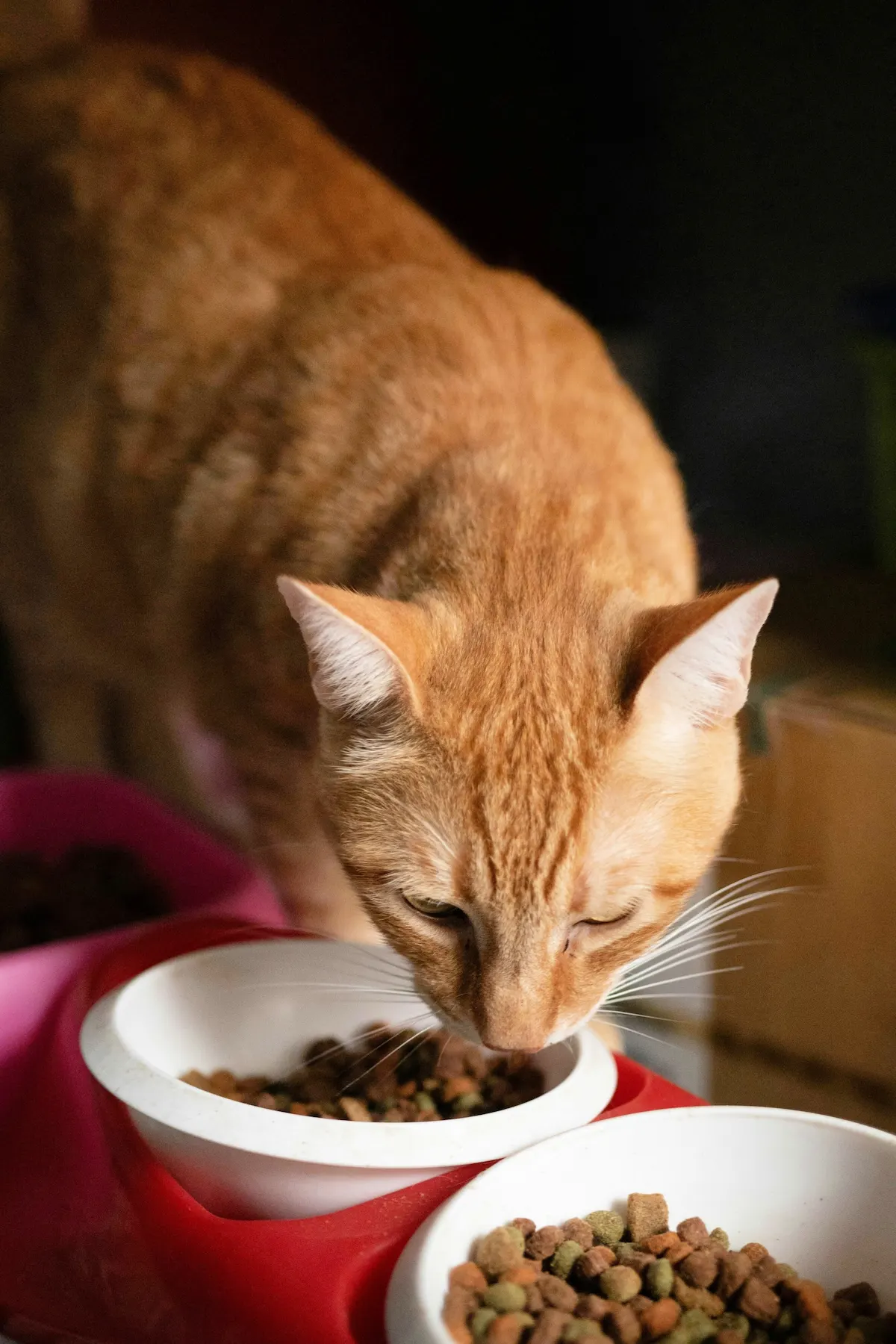
Senior cat tooth resorption can be difficult to spot because some cats continue eating even when their mouth is uncomfortable. Owners may instead notice slower eating, chewing differently, dropping food, drooling, bad breath or behaviour changes.
These signs do not confirm tooth resorption, but they are useful changes to mention to your vet.
Disclaimer: This article is for educational purposes only and is not a substitute for professional veterinary advice. If your cat is in pain, losing weight, vomiting frequently, or acting differently, speak to your vet.
Key takeaway: Senior cat tooth resorption may cause subtle eating and behaviour changes, including chewing on one side, dropping food, drooling or becoming less interested in harder food. Cats can still eat despite mouth discomfort, so new or persistent changes are worth discussing with your vet.
Quick answer: signs of tooth resorption in cats
Senior cat tooth resorption can be difficult to recognise at home. Owners may notice slower eating, chewing on one side, dropping food, swallowing food with little chewing, preferring softer food, drooling, bad breath, pawing at the mouth or behaviour changes.
These signs can have other causes and do not confirm tooth resorption. A veterinary dental assessment is needed to understand what is happening.
What is tooth resorption in senior cats?
Tooth resorption is a dental condition where part of a cat’s tooth structure gradually breaks down. It can affect cats of different ages, but it is especially worth being aware of in older cats because dental changes, appetite changes, and behaviour changes can overlap.
Cornell Feline Health Center describes tooth resorption as a common condition in cats and explains that dental radiographs are often important when a vet is assessing suspected tooth resorption.
For owners, the most important point is simple: you do not need to diagnose tooth resorption yourself. Your role is to notice changes, track patterns, and ask clear questions at the vet appointment.
Tooth resorption is only one possible reason for mouth discomfort or eating changes in an older cat. Other dental issues, oral pain, illness, stress, nausea, or appetite changes can sometimes look similar from the outside.
For a broader overview of health changes in older cats, see our Senior Cat Health guide.
Why tooth resorption can be hard to spot
Cats often show mouth discomfort through small changes rather than obvious signs of pain. A senior cat may still eat, use the litter tray and follow familiar routines while something in the mouth is bothering them.
The change may be easier to notice in how your cat eats or behaves rather than whether they eat at all. This is why comparing current habits with your cat’s usual pattern can be useful.
These changes do not prove tooth resorption. Some dental problems are also difficult to assess from the outside, and your vet may need a closer examination or dental imaging to understand what is happening below the gumline.
Signs owners may notice at home
Senior cat tooth resorption signs can be subtle. Some cats show several changes, while others show very little.
| What owners may notice | Why it is worth noting |
|---|---|
| Chewing on one side | May suggest mouth discomfort or an attempt to avoid a sore area |
| Dropping food | Can happen when chewing feels awkward or painful |
| Swallowing dry food with little chewing | May suggest your cat is avoiding pressure on the teeth |
| Preferring wet food over dry food | Could reflect mouth sensitivity, though there are other possible reasons |
| Eating more slowly | A change in pace can be easier to spot than obvious pain |
| Pawing at the mouth | May suggest irritation, soreness, or discomfort |
| Drooling | Worth mentioning to your vet, especially if new |
| Bad breath | Can be linked with dental disease, but needs proper assessment |
| Less grooming | Mouth discomfort may make grooming harder or less appealing |
| Hiding or irritability | Pain or discomfort can affect behaviour |
| Weight loss or appetite change | Always worth discussing in a senior cat |
Can a senior cat still eat with tooth resorption?
Yes. A cat can continue eating even when their mouth is uncomfortable, which is one reason dental problems can be easy to miss.
Rather than stopping altogether, some cats change how they eat — for example, eating more slowly, favouring softer food or seeming interested in a meal but not managing it as comfortably as before.
These changes are not specific to tooth resorption, but they are useful observations to share with your vet.
If your senior cat is eating less, losing weight or seems unwell, speak to your vet rather than waiting for the signs to become more obvious.
What your vet may check
Your vet may start by asking what you have noticed at home. They may want to know when the changes started, what type of food is affected, and whether your cat has any other symptoms.
Depending on your cat’s situation, your vet may check:
- weight and general body condition
- appetite history
- gum and tooth appearance
- signs of dental disease
- signs of pain around the mouth
- whether more than one tooth or area may be involved
- whether other health issues could be contributing
- whether dental X-rays or further dental assessment are needed
Some dental changes may be visible around the gumline, but many problems are difficult to assess fully at home. This is why a veterinary dental check is important if your senior cat has new or persistent mouth, eating, or behaviour changes.
For more about veterinary dental care and safe home support, see Senior cat teeth cleaning.
Questions to ask your vet about tooth resorption
It can be hard to remember what to ask once you are in the appointment. Taking a short list can help.
Here are sensible questions to consider:
- Could tooth resorption be one possible reason for the signs I am seeing?
- Are there signs of dental pain or other dental disease?
- Can you see anything concerning around the teeth or gums?
- Would dental X-rays be needed to see below the gumline?
- Are other teeth affected, or is one area more concerning?
- Could another health issue be contributing to the eating change?
- What changes should I monitor at home?
- What signs would mean I should contact you sooner?
- How can I keep feeding comfortable while waiting for the next step?
- Is a dental procedure or further assessment likely to be needed?
You do not need to use every question. Choose the ones that match what you have noticed.
What to track before the appointment
A simple note can be more useful than trying to inspect your cat’s mouth.
Simple senior cat dental notes checklist
Before the appointment, write down:
- when the change started
- whether it is getting better, worse, or staying the same
- whether dry food, wet food, or treats are affected
- whether your cat drops food
- whether your cat chews on one side
- whether your cat paws at the mouth
- whether there is drooling
- whether you have noticed bad breath
- whether grooming has changed
- whether your cat seems quieter, grumpier, or more withdrawn
- whether your cat has lost weight
- whether appetite, thirst, toileting, or behaviour have changed
Short videos can also help if they are easy to take without stressing your cat. For example, a brief clip of your cat dropping food or chewing differently may be useful for your vet.
Do not force your cat’s mouth open to get a photo. If your cat pulls away, growls, hides, or seems uncomfortable, leave it and speak to your vet instead.
When to speak to your vet
Speak to your vet if your senior cat has new, persistent, or worsening changes around eating, chewing, grooming, or behaviour.
It is especially worth arranging a vet check if you notice:
- chewing on one side
- dropping food repeatedly
- avoiding dry food or treats they used to enjoy
- drooling
- pawing at the mouth
- bad breath that is new or stronger than usual
- bleeding, swelling, or obvious mouth soreness
- weight loss
- reduced appetite
- hiding, irritability, or withdrawal
Seek prompt veterinary advice if your cat stops eating, seems very painful, appears weak, or seems generally unwell.
What owners can safely do at home
At home, the safest role is to observe what has changed and avoid anything that could make a sore mouth more uncomfortable.
Do not force mouth checks, scrape or pull at the teeth, use human pain relief, or start dental treatments or supplements as a substitute for veterinary advice.
If eating, chewing or behaviour changes continue, speak to your vet. For more about gentle dental care and what owners can safely do between checks, see Senior Cat Teeth Cleaning.
Can tooth resorption be prevented at home?
There is no simple home routine that guarantees tooth resorption will not happen.
Good dental care may still be valuable for overall mouth health, but tooth resorption is not something owners can reliably prevent or fix themselves. The most helpful steps are regular vet checks, noticing eating or behaviour changes early, and asking whether dental assessment is needed.
If your cat already seems sore around the mouth, avoid starting brushing or mouth handling until you have spoken to your vet. A painful mouth can make handling stressful and may make your cat avoid you.
Final thoughts
Senior cat tooth resorption can be easy to miss because some cats continue eating despite mouth discomfort. Changes such as dropping food, chewing differently, drooling or becoming less interested in harder food can provide useful clues.
These signs do not confirm tooth resorption. Note what has changed and speak to your vet if the pattern is new, persistent or worsening.
For a broader overview of dental changes in older cats, see our Senior Cat Dental Health guide
FAQs
Can tooth resorption make a senior cat stop eating?
Tooth resorption can contribute to mouth discomfort, which may affect eating. However, not every appetite change is caused by tooth resorption. In a senior cat, a new or persistent eating change is worth discussing with your vet.
Can a cat have tooth resorption and still eat?
Yes. Some cats continue eating even when their mouth is uncomfortable. Owners may notice slower eating, chewing on one side, dropping food, or avoiding harder food.
Can I tell if my cat has tooth resorption at home?
No, not reliably. You may notice signs that something is wrong, but a vet dental exam and sometimes dental X-rays are needed to assess tooth resorption properly.
What does tooth resorption look like in cats?
Owners may not see anything obvious. Sometimes the gumline may look abnormal or sensitive, but many changes can be hidden or hard to judge. Avoid forcing your cat’s mouth open if they resist.
Is tooth resorption painful for cats?
Tooth resorption can be painful, especially when sensitive parts of the tooth are affected. Because cats often hide pain, eating and behaviour changes may be the first clues owners notice.
What should I ask my vet about tooth resorption?
Ask whether tooth resorption could explain the signs, whether dental X-rays may be needed, whether other teeth are affected, and what you should monitor at home.
External references
Cornell Feline Health Center: Tooth Resorption
International Cat Care: Dental disease in cats