Senior cat water bowl placement can make drinking easier for older cats, especially when bowls are quiet, clean, easy to reach, and comfortable to use.
For many senior cats, hydration is not just about how much water is available. It is also about whether water is placed somewhere they feel relaxed and can reach without stairs, slippery floors, noisy appliances, or busy household traffic.
Small changes to bowls, fountains, and water placement can make daily drinking easier without turning it into a stressful routine.
Disclaimer: This article is for educational purposes only and is not a substitute for professional veterinary advice. If your cat is not drinking normally, losing weight, vomiting, having diarrhoea, urinating differently, or acting unlike themselves, speak to your vet.
Key takeaway: Senior cat hydration is often supported by simple setup changes: clean wide bowls, quiet placement, more than one water station, and careful observation of drinking habits.
Quick answer: senior cat water bowl placement that usually helps
The best senior cat water bowl placement is usually a quiet, clean, easy-to-reach spot away from the litter tray, noisy appliances, busy walkways and awkward corners.
Many older cats also benefit from more than one water station, especially if they rest upstairs and downstairs, avoid stairs, share the home with other pets, or spend most of the day in one favourite room.
A good starting point is one wide, stable bowl in your cat’s usual area, plus a second bowl near a calm resting spot. Keep the old bowl available while you test the new location, then watch which one your cat chooses.
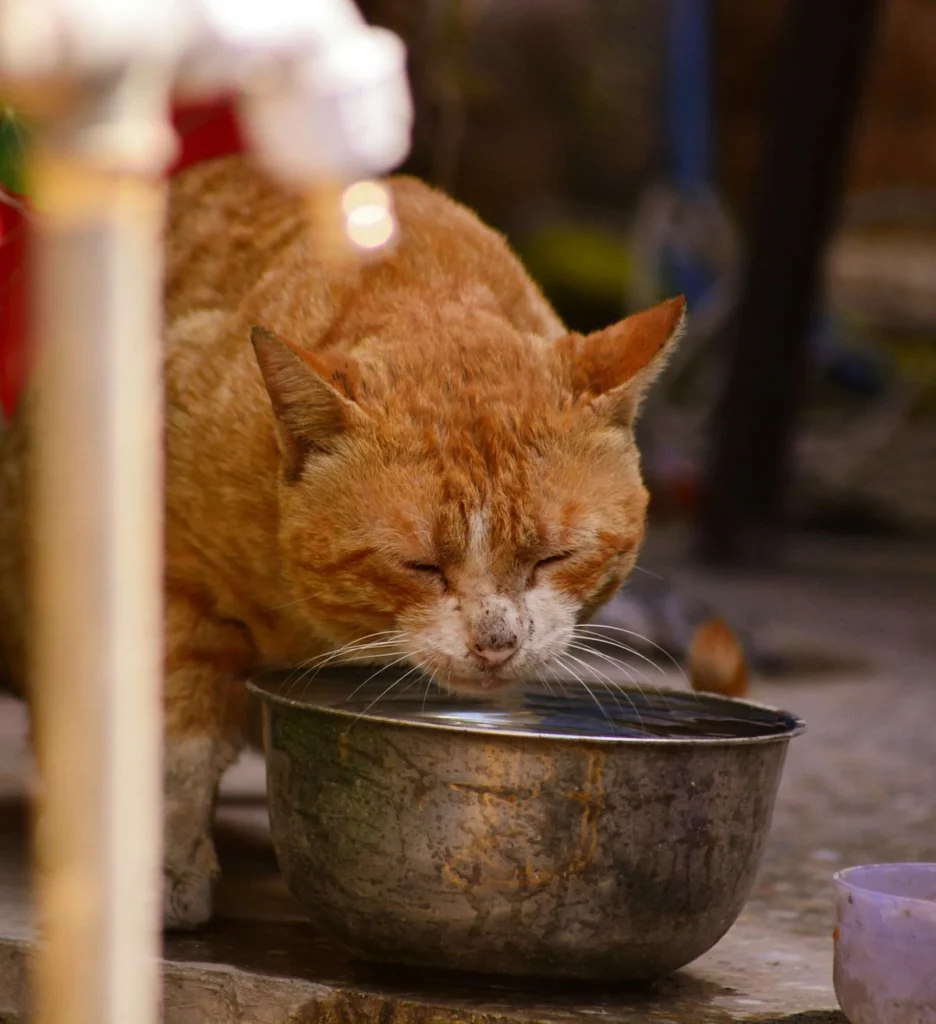
Senior cat hydration starts with easy access
As cats get older, they may spend more time resting and less time moving around the home. A water bowl that worked perfectly well years ago may not be as convenient now.
This is where senior cat water bowl placement matters most: the easier the bowl is to reach calmly, the more likely your older cat is to use it consistently.
Your cat may still be able to drink normally, but small barriers can make water less appealing. These might include:
- stairs
- slippery floors
- noisy appliances
- busy doorways
- other pets
- bowls placed too close to food or litter trays
- deep bowls that feel awkward to use
If your cat is finding stairs, slippery floors, or daily movement harder, Senior Cat Comfort & Lifestyle guide may help you make the home easier to navigate.
The aim is simple: make water easy to find, easy to reach, and calm to use.
Choosing the best water bowl setup for a senior cat
The best bowl is not always the newest or most expensive one. It is the bowl your cat will actually use comfortably.
Use a wide, shallow bowl
Many cats prefer a bowl that lets them drink without pushing their whiskers against the sides. A wide, shallow bowl can feel more comfortable than a deep, narrow one.
For a senior cat, a wide bowl may also make drinking feel less fiddly. Your cat can approach, drink, and move away without having to lower their head into a deep container.
Good options often include:
- a wide ceramic bowl
- a shallow stainless steel bowl
- a low glass dish
- a stable bowl with a broad base
Avoid making every change at once. If your cat already uses one bowl reliably, keep it available while you test a second option nearby.
Choose a stable bowl
A bowl that slides around can put some cats off. This is especially true if your senior cat feels less steady on hard floors.
A simple setup can help:
- use a heavier bowl
- place it on a non-slip mat
- avoid wobbly stands
- keep the area flat and easy to approach
- make sure your cat does not have to stretch awkwardly
Raised bowls may suit some cats, but they are not essential for every senior cat. If you try one, watch whether your cat seems more comfortable or less comfortable using it.
Think carefully about bowl material
Cats Protection suggests using ceramic, metal, or glass bowls, and notes that plastic can taint the water and put some cats off drinking. They also advise keeping water away from food and litter trays.
For many homes, a ceramic, stainless steel, or glass bowl is a sensible starting point because these materials are usually easy to clean and less likely to hold smells than plastic.
The practical rule is simple:
Choose a bowl that is clean, stable, easy to wash, and comfortable for your cat to use.
Senior cat water bowl placement: where to put bowls around the home
Water placement can make a big difference, especially for an older cat who has become more routine-based or less keen to move around the house.
Keep water away from the litter tray
Most cats prefer drinking, eating, sleeping, and toileting areas to be separate.
Avoid placing water:
- beside the litter tray
- directly outside the litter tray entrance
- in a small utility area where smells build up
- close to cleaning products or strong household odours
A quiet, clean area is usually more appealing.
Try water away from food
Some cats drink happily beside their food bowl. Others prefer water placed somewhere separate.
If your senior cat rarely drinks from a bowl next to their food, try adding another bowl in a different quiet spot. Do not remove the original bowl straight away if your cat is used to it.
A simple test is to place a second bowl:
- across the room
- near a favourite resting area
- in a calm hallway corner
- in a room your cat already chooses to spend time in
Then watch which bowl your cat uses more often.
Add more than one water station
One water bowl may be enough for some cats, but many senior cats benefit from extra choice.
This can be especially helpful if your cat:
- avoids stairs
- sleeps in one room most of the day
- shares the home with other pets
- seems nervous in busy areas
- has become less active
- tends to ignore one water location
Good senior cat water station locations include:
- near a favourite resting area
- on each floor your cat uses
- away from noisy appliances
- away from litter trays
- away from busy doorways
- somewhere with an easy approach and exit
The aim is not to cover the house in bowls. It is to remove small barriers that might make drinking less convenient.
Are water fountains good for senior cats?
A water fountain can be useful for some senior cats, but it is not essential.
Some cats like moving water. Others ignore fountains completely. A fountain is worth considering if your cat already shows interest in taps, sinks, or running water.
Why a fountain may help
A fountain may help because:
- moving water can attract some cats
- the sound or movement may spark curiosity
- it may suit cats that already seek running water
- it gives another drinking option
Cornell Feline Health Center notes that water fountains may encourage some cats to drink more, although not every cat will prefer moving water.
The important word is may. A fountain is not a guaranteed fix, and it should not be used as a replacement for veterinary advice if your cat’s drinking has changed suddenly.
Why a fountain may not help
A fountain may not suit every senior cat.
Possible downsides include:
- some cats dislike the sound
- filters need regular changing
- fountains still need cleaning
- cables can limit safe placement
- some cats prefer still water
- nervous cats may avoid the movement at first
If your cat is easily startled, choose placement carefully. A fountain near a noisy appliance or busy doorway may be less appealing than a simple bowl in a quiet room.
How to introduce a fountain gently
If you try a fountain, keep your cat’s normal water bowl available.
A gentle introduction works best:
- place the fountain in a quiet area
- keep the usual bowl nearby
- let your cat investigate in their own time
- avoid moving all water sources at once
- clean the fountain as instructed
- remove it if it clearly unsettles your cat
For a senior cat, familiarity matters. New things are often easier when the old routine is still available.
What not to do if you are worried about hydration
Avoid:
- forcing water into your cat’s mouth
- syringing water unless your vet has specifically advised and shown you how
- adding milk, broths, flavourings, supplements or electrolyte products without checking they are suitable
- suddenly replacing every familiar bowl
- relying on a fountain if your cat’s drinking has changed suddenly
- delaying veterinary advice when your cat seems unwell
The aim is to make drinking easier and more comfortable, not to pressure your cat.
Senior cat water station checklist
Use this quick checklist to review your cat’s setup.
- Is the bowl wide and easy to drink from?
- Is the bowl stable and non-slip?
- Is the water refreshed daily?
- Is the bowl washed regularly?
- Is water placed away from the litter tray?
- Is there a second water station in a quiet area?
- Can your cat reach water without using stairs?
- Is the bowl away from noisy appliances?
- Can your cat approach and leave the bowl easily?
- Is your cat still using the bowl as normal?
- Have drinking, eating, weight, or litter tray habits changed?
If several answers are “no”, start with one or two small changes. For example, add a second wide bowl in a quiet room before buying anything new.
What to notice when testing a new water setup
When you add a new bowl, fountain or water location, watch whether your cat approaches it comfortably, drinks from it and chooses to return to it. Keep their familiar water source available while you compare preferences.
If your cat starts drinking noticeably more or less than usual, stops drinking normally, or seems unwell, speak to your vet rather than assuming the new setup is responsible.
When to speak to your vet
Speak to your vet if your senior cat:
- drinks much more than usual
- drinks much less than usual
- stops drinking normally
- has appetite changes alongside drinking changes
- loses weight
- urinates more or less than usual
- vomits or has diarrhoea
- seems weak, withdrawn, restless, or unlike themselves
- has a sudden or persistent change in drinking habits
Do not rely on a new bowl or fountain if your cat seems unwell. Bowls and placement can support comfort, but they cannot replace a veterinary check when drinking habits change.
If your older cat seems to be drinking less than usual, our Senior Cat Not Drinking guide explains what to notice and when to speak to your vet.
Final thoughts
Senior cat hydration is often about small, practical changes.
A clean wide bowl, a quieter location, a second water station, or an optional fountain may make drinking easier for your older cat. The best setup is the one your cat uses calmly and consistently.
At the same time, changes in drinking are worth taking seriously in senior cats. If drinking changes alongside appetite, weight, toileting, vomiting, diarrhoea, or behaviour, speak to your vet.
For a broader overview of age-related changes, read Senior Cat Health: A Practical Guide for Older Cats.
For broader context on hydration, feeding routines and diet changes in older cats, see our Senior Diet for Cats guide.
FAQs
Where should I put my senior cat’s water bowl?
Put your senior cat’s water bowl somewhere quiet, clean, and easy to reach. Keep it away from the litter tray and away from noisy appliances. Many older cats also benefit from a second water station near a favourite resting area.
Should my cat’s water bowl be next to their food?
Some cats drink happily beside their food, but others prefer water placed separately. If your cat rarely uses a bowl next to their food, try adding another bowl in a different quiet location and see which one they choose.
Are water fountains good for senior cats?
Water fountains can be good for some senior cats, especially cats that already like taps or running water. They are not essential, and some older cats dislike the noise or movement. Keep a normal water bowl available too.
How many water bowls should a senior cat have?
At least one clean water bowl should always be available. Two or more water stations can help if your cat avoids stairs, uses different rooms, or shares the home with other pets.
Why does my senior cat drink from taps but not their bowl?
Some cats prefer moving water, cooler water, or a different location. Try a clean wide bowl in a quieter spot, or consider a fountain while keeping the usual bowl available.
When should I speak to my vet about my senior cat’s drinking?
Speak to your vet if your senior cat drinks much more or less than usual, stops drinking normally, loses weight, urinates differently, vomits, has diarrhoea, or seems unlike themselves.
External references
Cornell Feline Health Center — Hydration
Cats Protection — Cats and drinking