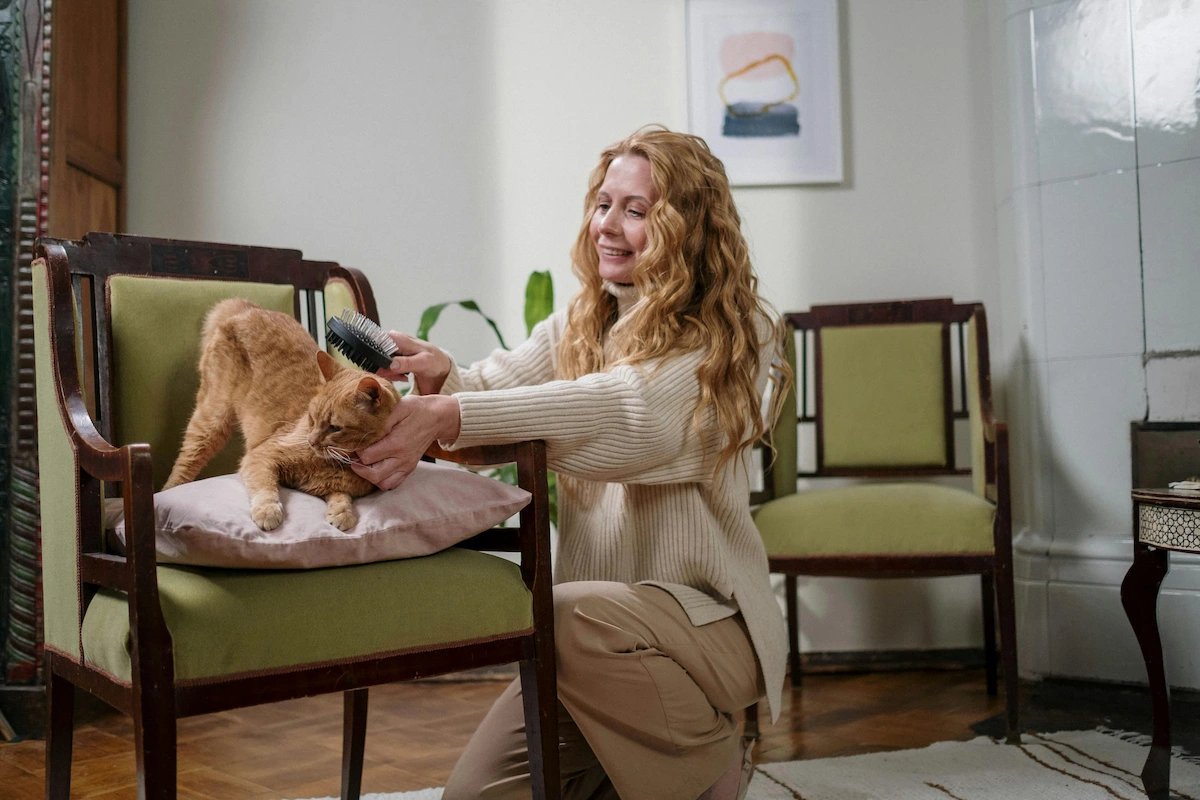
Senior cat grooming problems can creep up gradually. You may notice more tangles, a few more flakes in the coat, or fur that looks greasier than it used to. In many older cats, these changes happen because self-grooming becomes less effective with age. Older cats may be less flexible than before and some need more hands-on help with coat care, especially if they are long-haired or finding certain movements harder.
Senior cat grooming problems are usually easier to manage when you notice small coat changes early, rather than waiting until mats, flakes or greasy fur become harder to deal with.
Disclaimer: This article is for educational purposes only and is not a substitute for professional veterinary advice. If your cat is in pain, losing weight, vomiting frequently, or acting differently, speak to your vet.
Key takeaway: Mats, dandruff, and an oily coat can be fairly common in older cats because grooming may become harder with age. But if the change is new, marked, getting worse, or appears alongside weight, appetite, mobility, mouth, or behaviour changes, it is worth mentioning to your vet.
Quick answer: senior cat mats, dandruff and oily coat
Mats, dandruff and greasy or clumped fur can become more noticeable in older cats when self-grooming is less effective. The most useful thing to notice is whether the coat looks clearly different from your cat’s usual condition, whether the change is getting worse, and whether there are other changes at the same time.
A small tangle or a few flakes may not always be significant on their own. But frequent mats, increasing dandruff, a newly oily or unkempt coat, skin irritation, discomfort, weight or appetite changes, stiffness, mouth discomfort or behaviour changes are worth mentioning to your vet.
If the main issue is that your cat is grooming less overall and you want practical help with brushing and coat care, see our Senior Cat Grooming guide.
Senior cat mats: what’s common
Mats are especially common when loose fur is not being worked through the coat properly. Instead of being smoothed and separated during normal grooming, the hair starts to tangle and tighten.
Where mats often show up
Mats often appear in places that are harder to reach or keep tidy, such as:
- along the lower back
- near the hips
- under the front legs
- around the back end
- along the belly in some long-haired cats
Long-haired older cats are usually more prone to this than short-haired cats, simply because there is more coat to manage.
What may be fairly common
A small tangle now and then, or a tendency for the same awkward area to get knotty, can happen more often in older cats. This is especially true if your cat:
- has become less flexible
- has gained weight
- is less keen on being handled
- no longer grooms as thoroughly as before
When mats are worth mentioning
It is worth speaking to your vet if:
- mats are becoming frequent
- they are tight, large, or close to the skin
- your cat seems sore or irritated when touched
- the coat overall looks much more neglected than it used to
- you are noticing other changes at the same time, such as stiffness, weight loss, eating less, or changes in behaviour
If your cat also seems stiffer or less willing to jump, Arthritis in Senior Cats may be helpful.
Senior cat dandruff: what’s common
Dandruff may become more noticeable if an older cat is grooming less effectively. You might see a light scattering of white flakes, particularly along the back or on darker fur.
What matters most is whether this is a small occasional change or part of a wider coat problem. Increasing flakes, skin irritation, hair loss, greasy or clumped fur, discomfort, or other changes in your cat are worth mentioning to your vet.
If dandruff is the main coat change you are noticing, see our Senior Cat Dandruff guide for a closer look.
Senior cat oily coat: what’s common
An older cat’s coat may sometimes look greasier, flatter or more clumped when self-grooming becomes less effective. This may be most noticeable along the back or around the tail base.
A mild change is different from a coat that has become clearly oily, smelly, increasingly clumped or uncomfortable. If the change is new, worsening, or appears alongside weight loss, appetite changes, mouth discomfort or other changes in your cat, speak to your vet.
If greasy or clumped fur is the main coat change you are noticing, see our Senior Cat Oily Coat guide for a closer look.
Other signs the grooming change may not be just age
This is often the most useful question to ask yourself: is this only a coat change, or is it part of a wider change?
It is more worth mentioning when mats, dandruff, or an oily coat appear alongside:
- eating less
- weight loss
- changes around eating, chewing, or mouth comfort
- stiffness, reluctance to jump, or moving differently
- sleeping much more than usual
- hiding more
- irritability when touched
- a clear drop in normal self-care
If nail overgrowth or reduced self-care is part of the same pattern, see Senior cat nail care: why claws thicken with age and safe trimming tips.
For practical help with brushing, coat care and gently supporting an older cat that is grooming less effectively, see our Senior Cat Grooming guide.
When to speak to your vet
It is sensible to speak to your vet when:
- the change is new rather than longstanding
- it is clear, ongoing, or getting worse
- your cat seems uncomfortable
- grooming changes are happening alongside other physical or behaviour changes
- you are not sure whether the coat change is minor or part of a bigger issue
You do not need to panic over every knot or flake. But it is worth paying attention when your cat’s coat starts to look noticeably different from their usual standard.
The bottom line
Senior cat grooming problems can be part of normal ageing in the sense that older cats often find self-grooming harder than they used to. That is why mats, dandruff, and an oily coat can become more common with age.
But common does not mean ignore it. If the change is mild, occasional, and your cat seems comfortable, gentle help at home may be enough. If it is new, marked, worsening, or linked with other changes, it is worth mentioning to your vet.
For a broader look at everyday care for older cats, see our Senior Cat Care guide.
If grooming problems are part of wider comfort, mobility or home setup changes, our Senior Cat Comfort & Lifestyle guide may help you look at the bigger picture.
FAQs
Is dandruff common in senior cats?
It can be. A few flakes may be more noticeable in older cats if grooming has become less effective. But a clear increase, especially with an oily or unkempt coat, is worth mentioning to your vet.
Why is my senior cat getting mats?
Mats often happen because an older cat is no longer grooming as thoroughly, especially in hard-to-reach areas. Long-haired cats are particularly prone to this.
Why does my older cat’s coat look greasy?
A greasy-looking coat can appear when self-grooming starts to slip. The fur may look flatter, clumped, or less fresh than usual.
Can arthritis affect grooming in older cats?
It can make grooming harder. If twisting, bending, or reaching certain areas has become uncomfortable, coat care may become less effective.
When should I mention coat changes to my vet?
It is sensible to mention them when the change is new, obvious, getting worse, or appearing alongside other changes such as reduced appetite, weight loss, stiffness, mouth discomfort, or behaviour changes.