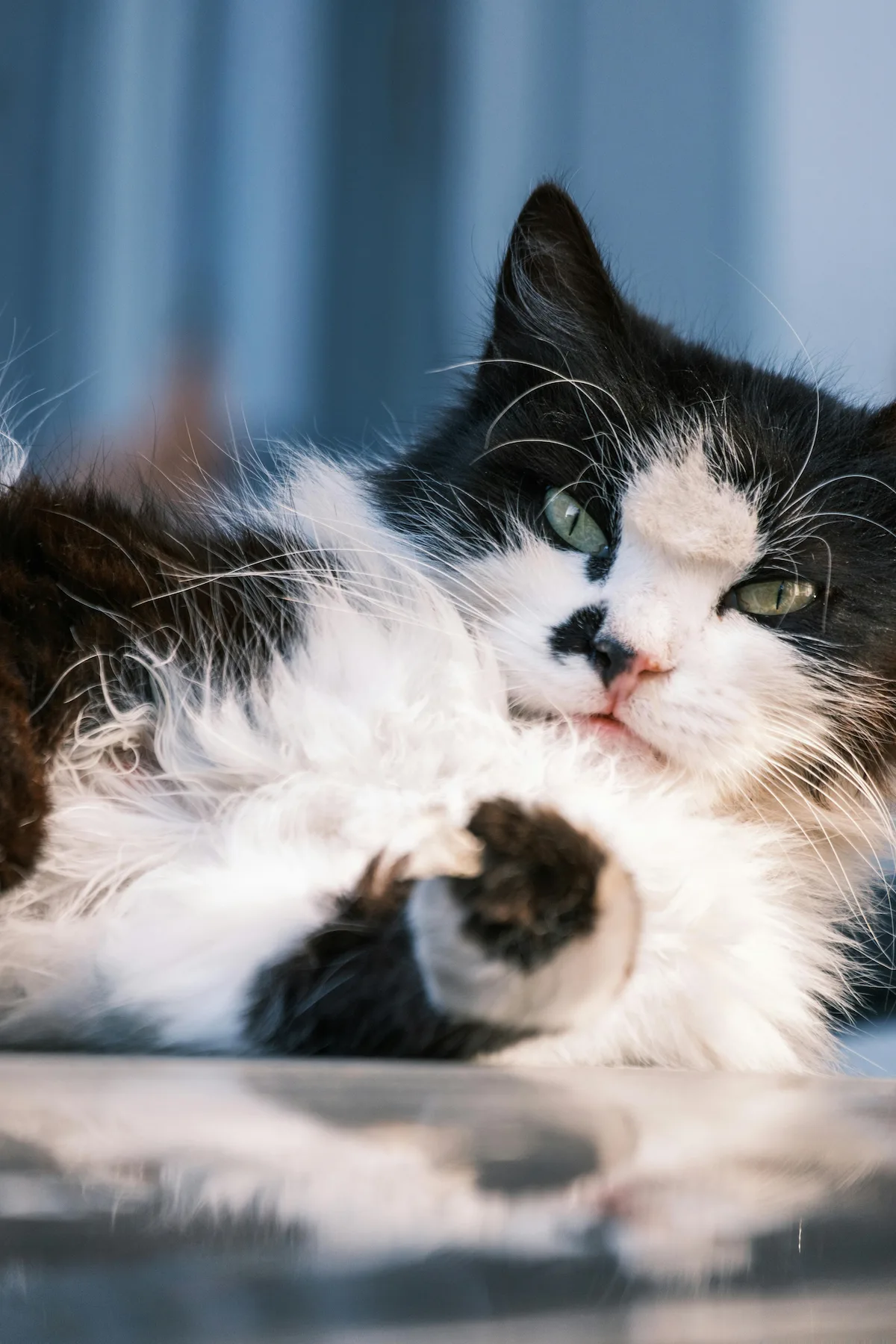
Senior cat nail care can become more important with age, even in cats who never needed much help before. Some older cats scratch less, wear their claws down less effectively, or find it harder to retract them fully. Over time, that can lead to claws that look thicker, longer, more curved, or more likely to catch on carpet, bedding, or furniture.
Disclaimer: This article is for educational purposes only and is not a substitute for veterinary advice. If your cat seems painful, has a claw curling into the pad, is bleeding, limping, or has a sudden change in claw appearance, speak to your vet.
Key takeaway: In many older cats, thicker or more overgrown claws are a common age-related change rather than a sign of poor care. The safest approach is regular gentle checks, small trims when needed, and speaking to your vet if a claw looks painful, is curling into the pad, or has changed suddenly.
Quick answer: why do senior cat claws get thicker?
Senior cat claws can become thicker, longer, more curved, or more likely to snag because older cats may scratch less, move less, or wear their claws down less effectively than before.
A gentle weekly claw check can help you notice overgrowth early. Speak to your vet if a claw is curling into the pad, bleeding, swollen, painful, suddenly different, or repeatedly catching despite regular checks.
Why senior cat claws often change with age
Older cats do not always use their claws in quite the same way they did when they were younger. A cat who once scratched often, climbed more, and moved around the house with ease may simply do less of that in later life.
Some older cats scratch less, so their claws are not worn down as naturally. Claws can also become thicker, more brittle, or more curved with age. International Cat Care notes that some senior cats do not retract their claws as fully as they once did, which can make snagging more common.
So when owners notice thicker claws with age, that can be a genuine ageing pattern. It does not automatically mean something is badly wrong, but it does mean nail checks often need to become a more regular part of senior cat care.
What owners may notice at home
The first clue is often practical rather than dramatic.
You may notice:
- claws catching on carpet, throws, bedding, or upholstery
- one claw looking longer, thicker, or more hooked than the others
- a nail that seems sharper than usual
- dewclaws getting long quite quickly
- less interest in scratching posts than before
- your cat seeming slightly less comfortable on certain surfaces
Sometimes the change is gradual and easy to miss. Many owners only really notice it when a claw snags repeatedly, or when they hear it tapping slightly on the floor.
That is why this topic matters. Senior cat nail care is rarely about one big grooming session. More often, it is about noticing small everyday changes early.
Is thickening always just old age?
Not always.
Mild thickening, more frequent trimming needs, and overgrowth can all happen as part of normal ageing. That is the reassuring side of this topic. In many older cats, claws simply need more maintenance than they used to.
At the same time, it is still sensible not to dismiss every change as “just old age”. A claw that has been slowly thickening over time may simply need more routine care. But a claw that changes suddenly, causes obvious discomfort, or looks very different from the others is worth mentioning to your vet.
A useful rule of thumb is this: common does not mean ignore.
Safe trimming tips for senior cats
The safest trimming advice for older cats is simple, gentle, and realistic.
Choose a calm moment
Try to check or trim claws when your cat is sleepy, settled, or already relaxed beside you. This usually works better than choosing a time when your cat is alert, playful, or already irritated.
For some senior cats, timing matters more than technique.
Use good light
Good light makes it much easier to see what you are doing and stay conservative. This is especially useful with thicker nails, where the shape may be a little harder to judge at a glance.
Trim only the very tip
Keep the trim small. The aim is usually just to remove the sharp hook at the end, not to make the claw look dramatically shorter.
With senior cats, less is often better. A tiny trim that prevents snagging is usually more helpful than trying to do too much in one go.
Do fewer nails if needed
You do not have to finish every claw in one sitting.
One nail, two nails, or just the dewclaws is still useful progress. Older cats can be less tolerant of handling for lots of sensible reasons, including stiffness, reduced patience, or simple preference. A short calm session is often the better option.
Stop if your cat seems sore, stressed, or fed up
If your cat starts pulling away, tensing up, vocalising, or clearly trying to leave, stop and try again another time. Nail care should not become a wrestling match.
The safest approach is the one your cat can tolerate reasonably well.
Ask your vet or vet nurse to show you
If you are unsure how much to trim, or your senior cat has darker, thicker, or awkwardly curved claws, asking for a demonstration is sensible. It builds confidence and reduces the chance of trying to do too much at home.
How often to check claws as part of senior cat nail care
For many senior cats, a quick weekly claw check is a good routine.
That does not mean a full trim every week. It simply means having a look often enough that overgrowth does not creep up on you.
Cornell advises weekly nail checks in older cats, especially as some seniors scratch less and claws can become overgrown more easily.
Weekly checks matter most if your cat:
- is less active than before
- has become stiffer with age
- rarely uses scratching posts
- has had snagging before
- dislikes claw handling, which makes infrequent checks harder to manage
Pay extra attention to dewclaws
Dewclaws often need the closest watching because they may not wear down much at all. If any claw is going to become overly curved sooner, it is often one of these.
You do not need to make this sound dramatic. Just keep it practical: dewclaws are easy to forget and worth checking.
Simple weekly senior claw check checklist
Use this as a quick at-home routine:
- look for claws catching on fabric
- check whether any claw looks longer or more curved than usual
- look closely at the dewclaws
- notice whether one nail looks different from the others
- watch for pulling away when the paw is handled
- notice any change in walking comfort
- make a note of anything new to mention at the next vet visit
This kind of checklist helps keep the routine calm and observational.
When to speak to your vet
A lot of senior cat claw changes can be managed as routine care. But some patterns are worth mentioning sooner rather than later.
Speak to your vet if:
- a claw is curling into or toward the paw pad
- there is bleeding
- the nail area looks swollen
- there is discharge or a bad smell
- your cat seems painful when walking
- your cat resents paw handling much more than before
- one claw has changed suddenly or looks very different from the others
- snagging is happening repeatedly despite regular checks
This does not mean every thick claw is a warning sign. It just means the pattern matters. Gradual age-related thickening is one thing. Pain, sudden change, or a claw growing into the pad is another.
Helping senior cats manage claws more comfortably
Trimming is only part of the picture.
Some older cats benefit from a setup that makes normal claw use easier. That may include:
- keeping favourite resting places easy to reach
- making sure scratching surfaces are stable
- offering scratchers in places your cat already likes to pass through
- noticing whether reduced mobility seems to be affecting self-care
If your cat is moving less freely these days, our guide to Arthritis in Senior Cats may help you spot related patterns.
For broader context on age-related health changes, you could also read Senior Cat Health: A Practical Guide for Older Cats.
Final thought
Senior cat nail care is usually about small, regular checks rather than perfect grooming. Older claws often do thicken, overgrow more easily, or catch more often with age.
That can be a normal ageing pattern. It is also still worth paying attention to.
Good enough is exactly that here: notice the change, keep trims small and gentle, and speak to your vet when a claw looks painful, sudden, or difficult to manage safely at home.
For a broader overview of grooming and daily support, see our Senior Cat Care guide.
If claw changes are part of wider coat, grooming or self-care changes, our Senior cat grooming guide may help you look at the bigger picture.
FAQs
Why do senior cat claws get thicker?
Older cats may wear their claws down less effectively, and age-related claw changes can make nails look thicker, longer, or more brittle.
Is it normal for an older cat’s claws to snag?
Yes, it can be. Older cats may find it harder to retract their claws fully, and overgrown nails can catch more easily as a result.
How often should I check my older cat’s claws?
Weekly is a sensible routine for many senior cats, especially if they scratch less than they used to.
What if my senior cat hates nail trimming?
Keep sessions very short, stop before your cat becomes distressed, and ask your vet or vet nurse to show you a gentle approach. You do not need to do every nail in one sitting.