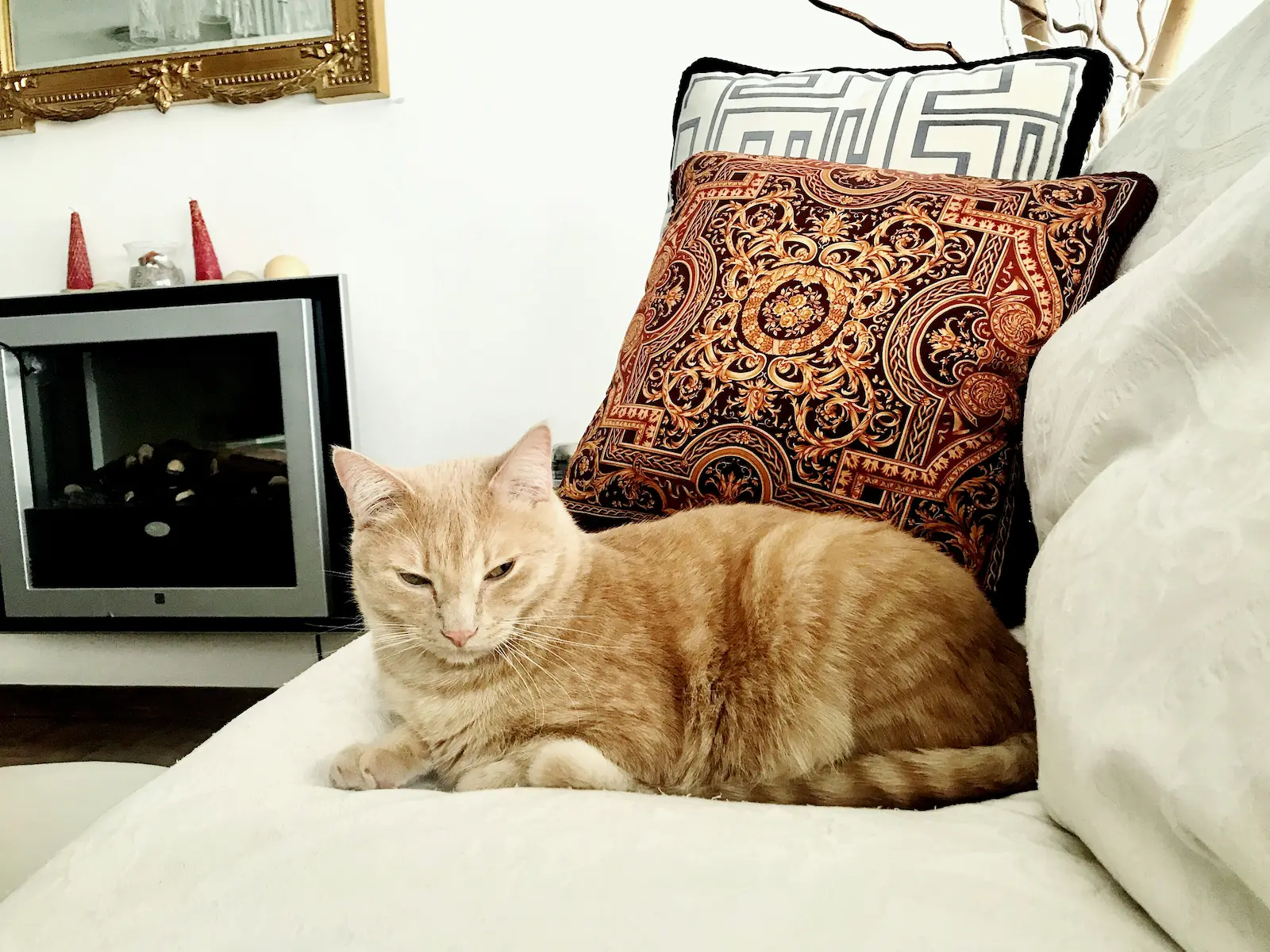
Older cats often still want to be on the sofa, the bed, or by a sunny window — they just don’t always feel as confident jumping up and down as they used to. A well-placed ramp or set of steps can make a big difference, and cat ramps for older cats to get on bed are one of the simplest ways to reduce big jumps at home.
This guide walks you through what to choose, how to set it up so your cat actually uses it, and when it’s worth speaking to your vet.
For a broader overview of safer routes, resting spots, cat stairs and simple home changes, see our Senior Cat Comfort & Lifestyle guide.
Disclaimer: This article is for general education and is not a substitute for veterinary advice. If your cat’s jumping changes suddenly, seems uncomfortable, or you’re worried about their mobility, contact your vet.
Key takeaway
- A well-placed ramp can reduce big jumps and awkward landings.
- Steps can work well when your cat can still do small step-ups comfortably.
- Setup matters more than price: stable, grippy, and placed on the “natural route” usually wins.
- If the change in jumping is sudden, or you suspect discomfort, speak to your vet.
Quick answer: cat ramps for older cats to get on bed
Cat ramps for older cats to get on bed can help reduce big jumps, awkward landings and hesitation around favourite sleeping spots. The safest setups are usually stable, low-slip, wide enough for confidence, and placed where your cat already tries to approach the bed.
A ramp may suit a cat who hesitates, seems stiff, or looks unsure with steps. Steps may suit a cat who can still manage small step-ups comfortably. If your cat has suddenly stopped jumping, seems painful, is slipping often, or is moving differently alongside appetite, grooming, toileting or behaviour changes, speak to your vet.
Why older cats may stop jumping as confidently
As cats age, it’s common to see small changes that affect jumping and climbing, such as:
- Stiffness (especially after resting)
- Less muscle strength
- Reduced balance or confidence
- Minor vision changes (misjudging distances)
- Slips on smooth floors
None of this means your cat “can’t” get to their favourite spots — it often means they need a safer way to do it.
If you want a calm overview of common age-related changes, see our Senior Cat Health Guide.
For life stage context, see Senior Cat Lifespan.
Ramps vs steps: which is better for bed access?
There isn’t one “best” option — it depends on how your cat moves right now.
Very high beds usually need a longer ramp or a two-stage setup, because a short steep ramp can feel less secure for older cats.
Steps usually suit cats who…
- Still step up easily, but struggle with one big jump
- Prefer short, predictable “hop points”
- Like climbing in stages from floor, to step, to bed
Ramps usually suit cats who…
- Hesitate to lift legs high
- Look unsure on steps or pause mid-way
- Prefer a steady walk up (especially to higher beds)
What to look for in a bed ramp (and why it matters)
Before you buy or set anything up, run through this checklist:
- Stability: does it wobble when you press down?
- Grip: non-slip surface on the ramp/steps (and on the floor underneath)
- Gentle incline: a gradual slope is usually easier than a steep climb
- Width: enough space for your cat to walk without feeling precarious
- Secure landing: the top should meet a stable part of the bed (not a shifting duvet edge)
- Easy to clean: realistic for daily life (fur, dust, the occasional hairball)
International Cat Care highlights the value of traction and easier access to favourite places for older cats, including ramps, steps and non-slip surfaces.
How to set up a ramp your cat will actually use
The most common reason ramps “fail” is placement — not the cat.
1) Place it on the route your cat already takes
- Watch where your cat normally approaches the bed
- Line the ramp up with that approach
- Avoid awkward angles that make your cat “turn” mid-climb
2) Make the first step feel safe
- Start with the bottom of the ramp close and obvious
- If the surface is new, add a familiar blanket/towel for scent (secure it so it won’t slide)
3) Prevent sliding (this matters a lot)
- Put a non-slip mat underneath
- If you have hard flooring, add a runner where your cat walks up to it
For more detail on slippery floors, landing spots and safer walking routes, see our Non-slip flooring for senior cats guide.
4) Let your cat explore (no forcing)
- Give it time
- Keep the area calm at first (especially if you have other pets or children)
Cornell suggests simple “box steps”, ramps, or pet stairs to help older cats reach favourite places more comfortably, according to the Cornell Feline Health Center.
Favourite spots: simple setups that work
Getting onto the bed (main scenario)
- Aim the ramp at a stable landing (bed frame edge is usually better than the duvet)
- Keep the incline gentle and the surface grippy
- If your bed is very high, consider a two-stage route, such as floor to low surface, then ramp to bed
Sofa setup
- Put steps or a short ramp at the end your cat already uses
- Aim for a secure “landing” (firm cushion edge or sofa arm)
- If the cushion shifts, place the landing beside a firmer section
Window ledge setup
- Create a two-stage route, such as floor to low surface, then low surface to ledge
- Add grip on the approach (mat/runner) and at the landing
- If the ledge is narrow, prioritise a wider intermediate step so your cat can pause safely
Cat tree/perch setup
- Reduce the “jump gaps” between platforms
- Move the tree closer to a stable launch point (sofa/chair) if needed
- If your cat seems uncertain, prioritise one lower favourite perch instead of multiple high levels
When the route needs more than a ramp
If slippery flooring or the wider route is also making access difficult, see our Non-Slip Flooring for Senior Cats guide for traction around approaches and landing spots. For broader changes to beds, resting areas and everyday routes, see our Senior Cat Comfort & Lifestyle guide.
When to speak to your vet
This article is about practical home setup — but it’s worth checking in with your vet if you notice:
- A sudden change in jumping/climbing ability
- Your cat seems unusually quiet, withdrawn, or reluctant to move
- Repeated slipping, falling, or misjudging landings
- Changes in appetite, grooming, or toileting alongside reduced movement
If reduced jumping is part of several subtle changes, such as hiding, grooming less, appetite changes, sensitivity to touch or moving more carefully, our Senior Cat Pain Signs guide may help you look at the wider pattern.
If the main change is that your cat has suddenly stopped jumping, our Senior Cat Suddenly Not Jumping guide may help you compare what else to notice.
You don’t need to “wait it out” — a quick chat can be reassuring and helps you support your cat safely.
For a wider guide to movement changes, stiffness and comfort in older cats, see our Senior Cat Mobility & Pain guide.
FAQs
Are cat ramps for older cats to get on bed better than steps?
It depends on how your cat moves. Ramps can suit cats who are hesitant about jumping or find step-ups awkward, while steps can work well for cats who still manage short, steady climbs comfortably. The best option is the one your cat can use confidently and without hesitation.
At what age do cats have trouble jumping?
There’s no fixed age. Some cats stay springy well into their teens, while others become cautious earlier. What matters most is change over time — especially if it’s sudden.
How do I get my cat to use a ramp?
Put it where your cat already approaches
Make it stable and grippy
Let them investigate without pressure
Use familiar scent (a secure blanket/towel) to make it feel “theirs”
Are ramps better than steps for stiff older cats?
Some cats that seem stiff or reluctant to lift their legs high may find ramps easier. If you’re concerned your cat may be uncomfortable or in pain, it’s best to speak to your vet.
References
- International Cat Care (ISFM) — home-environment guidance for older cats (traction, easy access, ramps/steps)
- Cornell Feline Health Center — “Loving Care for Older Cats” (steps/ramps/pet stairs to reach favourite places)