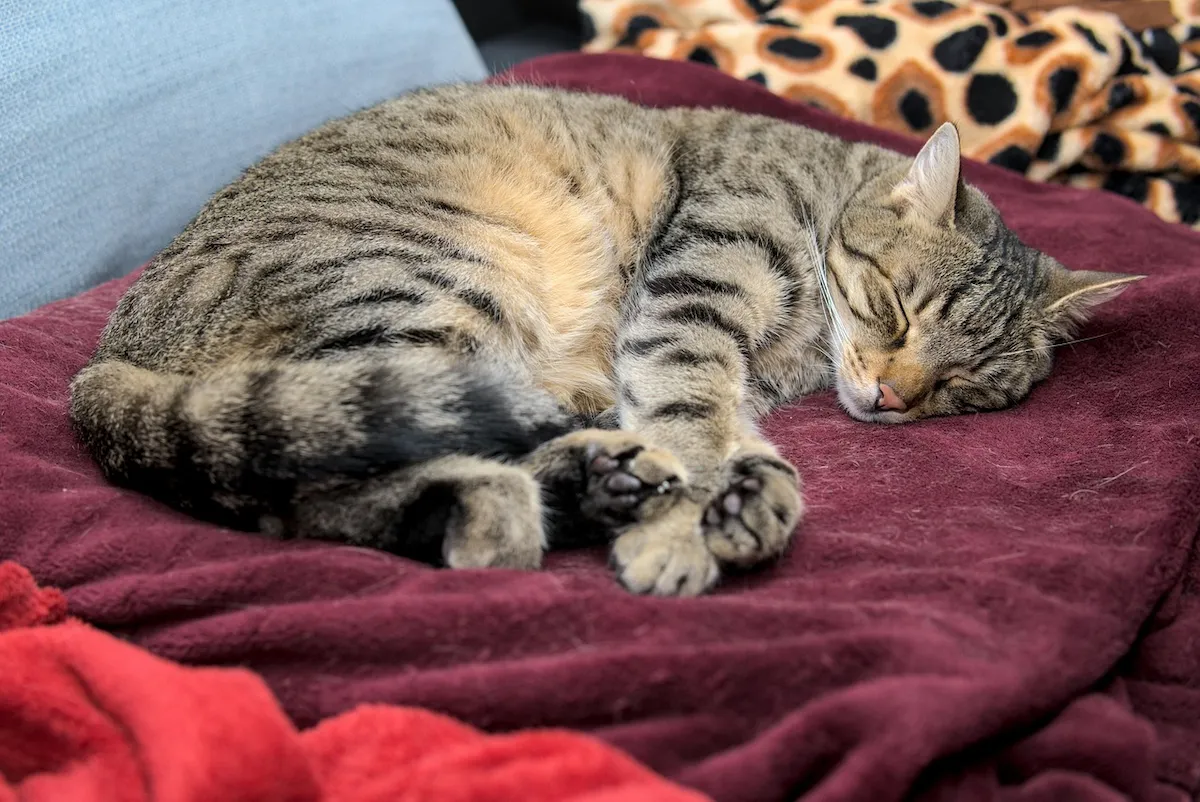
Do cats snore? Cats can make all sorts of sleepy noises — soft snuffles, little whistles, and the occasional snore. If you’ve noticed your cat snoring, it’s natural to wonder whether it’s normal, especially if your cat is older or the sound seems new.
Snoring can be harmless. The part that matters most is pattern and change: has it always been like this, or is it new, louder, or happening more often?
Disclaimer: This article is for educational purposes only and is not a substitute for professional veterinary advice. If your cat seems to be struggling to breathe, looks distressed, or you’re worried about their comfort or safety, speak to your vet.
Key takeaway: Some cats do snore, especially in deep, relaxed sleep. The most useful question is whether it’s unchanged (often just a quirk) or new / getting louder (worth mentioning). If you notice noisy breathing when awake, mouth breathing, or clear breathing effort, treat that as more urgent and speak to your vet.
Do cats snore?
Yes — cats can snore, particularly when they’re in a deep, relaxed sleep. Snoring usually happens when airflow becomes a bit noisy as it moves through the nose and throat.
On its own, snoring doesn’t tell you what’s causing it. The most useful way to think about it is:
- Occasional and unchanged (often normal-ish)
- New or changing (worth speaking to your vet about)
Is it normal for cats to snore?
It can be normal, especially when it:
- Happens only during sleep
- Is mild (not suddenly very loud)
- Occurs now and then, not constantly
- Has been stable over time
- Comes with a cat who otherwise seems well (normal appetite, energy, and behaviour)
If your cat has always been a light snorer and nothing else has changed, it’s often just one of their quirks. If you’re unsure, it’s always reasonable to mention it at a routine vet visit.
Common reasons cats snore (that aren’t automatically scary)
Below are some common, non-alarmist reasons you might hear snoring — especially in older cats.
Sleep position and relaxed tissues
Just like people, cats can snore more in certain positions. When the head and neck are tucked in, or they’re sprawled in a very relaxed way, breathing can become noisier. Often, the sound stops when they shift position.
A temporarily stuffy nose
Mild, temporary congestion can make breathing sound louder than usual — for example, after a dusty day, in very dry air, or with minor irritation. The key word here is temporary. If it’s lingering or getting worse, that’s a different picture.
Facial shape and airway anatomy
Some cats are naturally noisier breathers, particularly those with shorter noses or flatter facial shapes. This doesn’t automatically mean anything is wrong — it just means that airflow can be a bit louder, especially during sleep.
Body condition (weight)
In some cats, carrying extra weight can contribute to louder sleep sounds. This isn’t about blame — it’s simply one factor that can affect airflow. If you’re concerned about weight, a vet can advise you safely and appropriately for your cat.
Age-related changes
Older cats often sleep more deeply and for longer stretches, which can make snoring more noticeable. Some may also settle into favourite sleeping positions that encourage more “sleep noises”. Again, the most important clue is whether it’s new or changing.
When to speak to your vet about snoring
It’s worth speaking to your vet if snoring is:
- New, especially in an adult or senior cat
- Suddenly louder, more frequent, or happening in more sleep positions than before
- Happening alongside noisy breathing when awake (not just during sleep)
- Paired with signs your cat may not feel well, such as reduced appetite, lower energy, or seeming “not quite themselves”
- Occurring with ongoing sneezing, coughing, gagging, or nasal discharge
If the change is less about snoring itself and more about breathing sounds or breathing patterns during sleep, our guide to senior cat breathing changes during sleep may be helpful.
More urgent (same day) signs
If you notice any of the following, treat it as more urgent rather than “just snoring”:
- Breathing through the mouth when resting
- Breathing looks like hard work (visible effort in the chest or belly)
- Blue-tinged or grey gums, sudden collapse, or severe distress
If you’re ever unsure whether your cat is breathing comfortably, it’s safest to treat it as urgent and speak to your vet.
For broader context on age-related changes, see Signs of Ageing in Cats: What Changes Are Normal as Cats Get Older.
If your cat seems otherwise well and the snoring is mild, simply notice whether it becomes louder, more frequent, or starts happening while your cat is awake. A clear change in the pattern is more useful to your vet than trying to work out the cause yourself.
FAQs
Why does my cat snore?
Often it’s down to sleep position, relaxed tissues during deep sleep, mild temporary congestion, or natural anatomy. The main thing is whether it’s always been the same or it’s changing.
Why does my cat snore so loud?
Louder snoring is more worth noting, especially if it’s new, increasing, or accompanied by other changes (like nasal discharge, coughing, or noisy breathing while awake).
My cat only snores sometimes — is that okay?
Occasional snoring that only happens in certain sleep positions and stays the same over time is often within the range of normal.
Should I wake my cat if they’re snoring?
Usually no. Let them sleep and simply observe. If you ever see signs of breathing distress (open-mouth breathing, struggling, or severe effort), treat that as urgent.
Can kittens snore too?
Yes, kittens can make sleep noises too. The same rule applies: if it’s persistent, worsening, or paired with illness signs, it’s worth a vet check.