Fast breathing in a senior cat can be unsettling to notice, especially if your cat is resting, hiding, or seems quieter than usual. Some cats breathe more quickly for a short time after stress, warmth, movement, or travel, but breathing that stays fast, looks effortful, or feels unusual for your cat should not be brushed off as “just old age”.
This guide explains what fast breathing may look like, what details are useful to note, and when to speak to your vet.
Disclaimer: This article is for educational purposes only and is not a substitute for professional veterinary advice. If your cat is struggling to breathe, breathing with their mouth open, seems weak or distressed, collapses, or is acting differently, speak to your vet promptly.
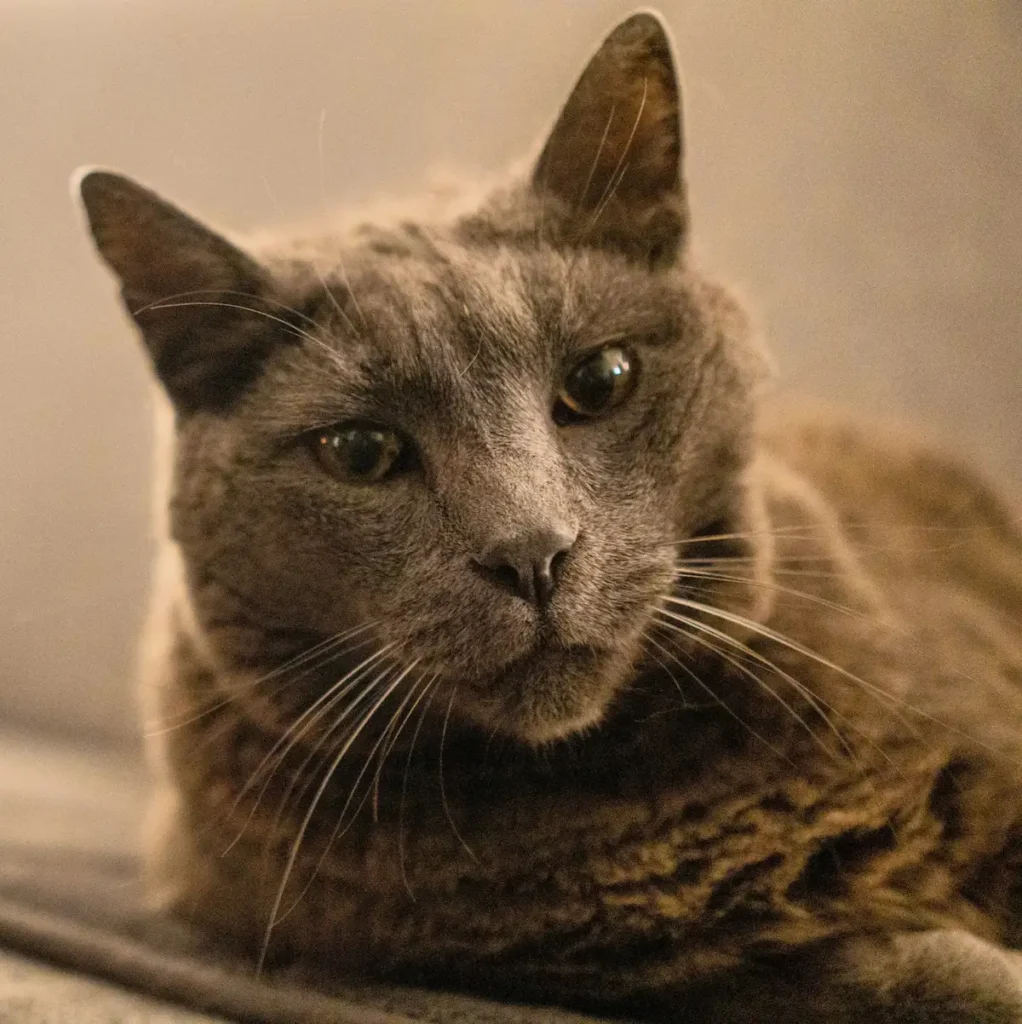
Key takeaway: Fast breathing in a senior cat is worth noting carefully, especially if it happens while your cat is resting or looks effortful. Watch the breathing pattern, posture, energy, appetite, and any other changes, and speak to your vet promptly if the breathing is new, persistent, or worrying.
Quick answer: fast breathing in a senior cat
Fast breathing in a senior cat may look like quicker chest movement, shallow breaths or more movement through the sides or belly. Stress, warmth, activity, handling or travel can briefly make breathing faster, but it should begin to settle once your cat is calm.
Speak to your vet promptly if the breathing remains fast while resting, looks effortful, is noisy or open-mouth, or appears alongside weakness, collapse, reduced appetite, unusual gum colour or obvious distress.
Fast breathing in a senior cat can be worrying
Cats are often quiet about discomfort, so breathing changes can feel especially alarming when you first notice them. You may see your cat’s chest moving faster than usual, the sides working more than normal, or your cat sitting in a posture that does not seem relaxed.
Fast breathing does not tell you the cause by itself. It can happen for different reasons, and some are more serious than others. Cornell Feline Health Center explains that difficulty breathing is a clinical sign rather than a single disease, with several possible underlying causes.
For that reason, the safest approach is not to guess at home. Instead, observe calmly, avoid stressing your cat, and contact your vet if the breathing change is new, persistent, or paired with other signs.
For a wider overview of age-related health changes, you may also find Senior Cat Health: A Practical Guide for Older Cats helpful.
What fast breathing may look like in an older cat
Fast breathing is not always dramatic. In some cats, it may be a subtle change that you notice only when they are lying still.
You may notice:
- the chest rising and falling faster than usual
- breathing that seems shallow
- the sides or belly moving more than normal
- restlessness or difficulty settling
- a crouched, tucked, or stretched posture
- breathing that seems unusual while your cat is resting
- hiding, weakness, reduced appetite, or unusual quietness
- coughing, wheezing, or noisy breathing
- open-mouth breathing or panting
The important point is not whether you can name the breathing pattern perfectly. It is more useful to describe what you see in plain English: “her sides are moving more”, “he is breathing fast while lying down”, or “she seems unable to settle”.
Fast breathing vs laboured breathing
Owners often use the phrase “fast breathing” for several different breathing changes. Two useful descriptions are fast breathing and laboured breathing.
Fast breathing
Fast breathing means your cat appears to be taking more breaths than usual. This may be most noticeable when your cat is resting or asleep.
It can look like:
- quicker chest movement
- shorter, shallower breaths
- breathing that does not seem to slow once your cat is calm
- a pattern that looks different from your cat’s normal resting breathing
If you mainly notice the change while your cat is asleep, our Senior cat breathing changes during sleep guide explains what to observe and when to speak to your vet.
Laboured breathing
Laboured breathing means your cat seems to be working harder to breathe. This is more concerning than speed alone.
It may look like:
- the belly or sides moving strongly with each breath
- open-mouth breathing or panting
- noisy breathing
- a stretched neck or unusual posture
- reluctance to lie down
- distress, weakness, or collapse
If your cat looks as though breathing is hard work, treat that as more urgent than simply “breathing a bit faster”.
When fast breathing needs urgent veterinary advice
Some breathing changes should be treated as urgent. PDSA advises contacting a vet straight away if a cat is struggling to breathe, open-mouth breathing, or has collapsed, and notes that breathing problems may include fast, shallow, noisy, or heavy breathing.
Seek urgent veterinary advice if your senior cat has:
- open-mouth breathing or panting
- breathing that looks effortful
- fast breathing that continues while resting
- blue, grey, very pale, or unusual gum or tongue colour, if safely visible
- collapse or severe weakness
- noisy breathing
- sudden or severe lethargy
- breathing changes with coughing, hiding, not eating, or obvious distress
- a breathing change that feels sudden, severe, or very unlike your cat
Try to keep your cat calm while you seek advice. Avoid repeated handling, chasing, or forcing your cat to move if they seem distressed.
What to note before speaking to your vet
If you notice fast breathing in a senior cat and your cat is stable enough to observe safely, a few details can help your vet understand what has changed. You do not need to complete every point before contacting them, especially if your cat looks distressed.
Fast breathing checklist:
- When did the fast breathing start?
- Was your cat resting, sleeping, moving, hot, stressed, or recently handled?
- Is the mouth open or closed?
- Is the breathing quiet, noisy, shallow, or effortful?
- Are the chest, sides, or belly moving more than usual?
- Is your cat eating and drinking normally?
- Is your cat hiding, weak, restless, coughing, vomiting, or unusually quiet?
- Has this happened before?
- Does the breathing settle when your cat is calm?
- Can you take a short video without disturbing your cat?
A short video can be useful because breathing changes are sometimes easier to show than describe. Only take one if you can do it calmly and without stressing your cat.
Should you count your cat’s breaths?
Your vet may ask about your cat’s breathing rate. If your cat is calm and resting, you can quietly count the rise and fall of the chest for 15 or 30 seconds and write down what you notice.
A breathing rate can be useful information, but it should not be used on its own to decide that your cat is safe. Pay attention to the overall pattern, including breathing effort, posture, energy and behaviour.
If your cat will not settle, seems distressed, is open-mouth breathing or appears to be working hard to breathe, skip the counting and contact your vet promptly.
Why senior cats deserve extra caution
Older cats can develop health changes gradually, and they may hide signs until they are more noticeable. Fast breathing in a senior cat does not prove one specific problem, but it is still worth taking seriously.
Breathing changes can sometimes appear alongside other signs, such as reduced appetite, hiding, coughing, weakness, weight loss, or lower tolerance for activity. These signs can have several possible explanations, so they are best discussed with your vet rather than guessed at home.
If you are also reading around possible heart-related signs, Senior cat heart disease: signs owners report and why early checks matter may be helpful.
What not to do at home
When a senior cat is breathing fast, it is natural to want to help straight away. But some well-meaning actions can add stress or delay care.
Avoid:
- giving human medicine
- trying home remedies
- forcing food or water
- forcing exercise or movement
- repeatedly picking up or disturbing a cat who seems distressed
- assuming the breathing change is just due to age
- waiting too long if the breathing remains fast or looks effortful
The safest step is to keep your cat calm, note what you can, and speak to your vet if you are concerned.
Related senior-cat signs worth reading about
Breathing changes can overlap with other signs owners notice in older cats. You may also find these guides useful:
- Senior cat coughing: what to note and when to speak to your vet
- Senior cat panting: when it can happen and when to seek advice
Final thoughts
Fast breathing does not always mean the worst, but in a senior cat it deserves attention when it happens at rest, does not settle, looks effortful or appears alongside hiding, weakness, coughing, reduced appetite or unusual quietness.
Observe calmly, avoid stressing your cat and note what you can. Speak to your vet if the change is new, persistent or worrying, and seek prompt advice if breathing looks difficult.
FAQs
Why is my senior cat breathing fast while resting?
Fast breathing while resting can happen for different reasons, and it is not possible to diagnose the cause by watching alone. In a senior cat, breathing that remains fast at rest is worth discussing with your vet, especially if it is new or paired with other changes.
Is fast breathing in an older cat an emergency?
It can be. Fast breathing is more urgent if it is laboured, open-mouth, noisy, sudden, persistent, or paired with weakness, collapse, pale or bluish gums, hiding, or severe lethargy. If your cat seems to be struggling to breathe, seek urgent veterinary advice.
What does laboured breathing look like in a cat?
Laboured breathing may involve strong belly or side movement, open-mouth breathing, noisy breathing, a stretched posture, distress, weakness, or difficulty settling. It means your cat appears to be working harder than normal to breathe.
Should I count my cat’s breaths per minute?
You can count your cat’s breaths if they are calm and resting, and write down what you notice. However, do not delay veterinary advice if your cat looks distressed, is open-mouth breathing, seems weak, or appears to be struggling.
Can stress or heat make a senior cat breathe faster?
Yes, stress, warmth, travel, handling, or activity may make breathing faster for a short time. But if the breathing does not settle when your cat is calm, happens at rest, looks effortful, or seems unusual for your cat, speak to your vet.
External references
Cornell Feline Health Center — Dyspnea (Difficulty Breathing)
PDSA — Breathing problems in cats